
In short
- There is no appeal for a Canada visitor visa refusal. IRCC says so clearly.
- Read the officer decision notes first. Since 29 July 2025 most visitor visa refusals come with them. They tell you much more than the refusal letter does.
- You can reapply at any time unless your letter says otherwise. But reapplying with the same information will most likely get the same result.
- Other routes exist but are narrow. An informal reconsideration request is free but most are refused. Judicial review at the Federal Court must be filed within 60 days of the decision if you applied from outside Canada.
- Biometrics stay valid for 10 years, even after a refusal. A new application costs CAD 100 per person.
Why Canada refuses visitor visas
The legal test is in section 179(b) of the Immigration and Refugee Protection Regulations: the officer must be satisfied that you will leave Canada by the end of your authorised stay. IRCC's own report to Parliament says that the most common refusal reason is a negative assessment of exactly that point.
Officers weigh the same few factors in almost every file: your employment, your family ties in India compared with family in Canada, your financial means, the purpose of the visit, and your travel history. Your refusal letter ticks one or more of these.
What each reason really means, and what answers it
| Reason on the letter | What the officer usually saw | What answers it next time |
|---|---|---|
| Family ties in Canada and in your country of residence | Close family (a son, daughter or spouse) in Canada and fewer visible ties in India, or the whole family travelling together with nobody and nothing left behind. | Proof of what keeps you in India: spouse or children staying back, elderly parents you care for, property, business, a job you return to. Show these ties clearly, not only the host's documents. |
| Purpose of visit | A purpose that was unclear, too long for the reason given, or looked like a cover for work or study. | A clear, dated plan: the event (a convocation, a delivery, a wedding), its date, a trip length that fits, and an invitation letter with the host's status in Canada. |
| Financial situation / assets | Funds that looked too low, a sudden large deposit, or a sponsor whose income did not cover the trip. | Steady balances over several months, ITR for 2 to 3 years, salary slips or business proof. If the host pays, add their job letter, pay stubs, bank statements and Notice of Assessment. |
| Employment prospects / current employment | A new job, no approved leave, unclear self-employment, or an unemployed applicant with no other ties. | An employer letter on letterhead (role, salary, years of service, approved leave and return date), or GST and business registration and returns for the self-employed. |
| Travel history | No earlier international travel, so less evidence that you return on time. | Not a refusal reason alone. Past trips to Dubai, Thailand, Singapore or Europe with timely return help. If you have none, make everything else stronger. |
Step 1: read the officer decision notes
From 29 July 2025, IRCC sends officer decision notes with most temporary resident refusals, including visitor visas. They are a short version of what the officer wrote in the system (GCMS). Some text may be removed, but the notes usually show the real concern, for example "applicant's funds not sufficiently demonstrated" or "strong family ties in Canada".
If you want your whole file, there are two official routes:
| Route | Who can ask | Fee |
|---|---|---|
| Privacy Act request | Citizens, permanent residents and foreign nationals, wherever they live. An applicant in India can ask for their own file. | Free |
| Access to Information request | A Canadian citizen, a permanent resident, or a person or company present in Canada. Each adult on the file must sign a consent form. | CAD 5 |
For most visitor refusals the decision notes are enough to plan the next step. Ask for the full file when the notes are unclear or when you are considering court.
Step 2: choose your route
| Route | Deadline | Cost | When it fits |
|---|---|---|---|
| New application | Any time (unless your letter says otherwise) | CAD 100 per person (CAD 500 for a family of 5 or more). Biometrics are not repeated if still valid. | Most cases, once something real has changed or you can now prove what was missing. |
| Reconsideration request to the visa office | No fixed deadline, and it does not stop the court clock | No fee | Only for an obvious error, for example the officer says a document was missing when it was uploaded. IRCC reports that a large portion of these requests are refused. |
| Judicial review, Federal Court | 60 days from the decision if you applied from outside Canada (15 days if inside) | Court and lawyer costs | A decision that is unreasonable or unfair on the record. The court checks the process; it does not re-decide your visa. |
Sources: IRCC help centre on refused applications, IRPA section 72 and IRCC report on recourse for temporary resident visas.
Judicial review needs a Canadian lawyer licensed for Federal Court work. Bluebird Next does not file court cases. We can put together your timeline, documents and notes for the lawyer.
Step 3: rebuild the application
- Write the officer's concern in one line, using the decision notes. Each new document must answer that line.
- Change something real. IRCC's advice is to reapply only if your situation has changed significantly or you have new information. Examples: approved leave you did not have before, a clearer purpose with a fixed event date, a sponsor's full income proof, a shorter and more believable stay.
- Write a new letter of explanation. Mention the refusal openly, say what the officer was concerned about, and show what is new. Use our cover letter guide.
- Show money as a history, not a moment. Several months of statements, fixed deposits with dates, ITR, and an explanation of any large credit.
- Show ties as a picture. Who stays behind, what you own, what you run, what you must come back to, with documents for each.
- Answer the refusal question honestly. The form asks if you have ever been refused a visa. Say yes and give the details. Hiding it is misrepresentation, which under section 40 of the Act can make you inadmissible for five years.
- Check the whole file against IRCC's document checklist for your country of residence before you submit.
Special cases
Parents visiting a son or daughter in Canada
This is the most common family case we see. Officers look at the child's status in Canada (work permit, PR, citizenship), their income, and above all what brings the parents back: the family home, pension, other children, responsibilities. A one-to-three-month visit around a clear event is easier to accept than an open six-month stay. Parents who want to stay longer should look at the super visa, which has its own income and insurance rules.
Spouse of a student or worker in Canada
A visitor visa to "visit" a spouse who lives in Canada is often refused because the officer doubts the return. Depending on the spouse's permit, an open work permit or study permit route may be the honest option. Ask us to check before reapplying as a visitor.
Young, single applicants with a new job
Keep the trip short, get approved leave in writing, and show savings that are yours. If your only tie is a job you started last month, it may be better to wait and build history first.
Refused more than once
Stop and get the full file. Repeated refusals for the same reason mean the problem has not been fixed, and every new refusal adds to the history.
Mistakes to avoid
- Reapplying within days with the same documents and a new date.
- Paying anyone who promises a "100% approval" or "inside contacts". IRCC warns that such people are likely just after your money.
- Hiding the Canada refusal when you apply for a US, UK or Schengen visa.
- Adding fake job letters or bank statements. That turns a simple refusal into a five-year ban.
- Letting the 60-day court deadline pass while waiting for a reconsideration reply.
Reapplication checklist for Canada
| Document | Why it matters after a refusal |
|---|---|
| Letter of explanation (new) | Names the earlier refusal, the officer's concern from the decision notes, and what is different now. |
| Employer letter with approved leave | Answers "employment" and "ties": role, salary, joining date, leave dates and return date, on letterhead with a contact number. |
| Bank statements (4 to 6 months) and fixed deposits | Answers "financial situation" with a history, not a moment. |
| ITR acknowledgements (2 to 3 years) | Shows that the income on paper is real and taxed. |
| Property, business or family documents | Shows what you return to: land records, GST registration, school letters for children. |
| Host's invitation, status and income (family visits) | Letter of invitation, PR card or work permit, job letter, pay stubs, Notice of Assessment. |
| Travel history pages | Visas and stamps from earlier trips with on-time return. |
A sensible timeline after a Canada refusal
- Day 1 to 3: read the refusal letter and decision notes. Note the decision date because the 60-day court limit counts from it.
- Week 1: decide the route. If the notes look clearly wrong, speak to a Canadian lawyer now, not in week 7.
- Weeks 1 to 4: collect what was missing: leave approval, sponsor's full income proof, missing statements.
- When the gap is closed: submit the new application. If nothing can change for months, wait. A quick second refusal on the same file does more harm than a delay.
Sample opening for your letter of explanation
Adapt this to your own facts; never copy it word for word:
"My visitor visa application (number ...) was refused on [date]. The officer was not satisfied that I would leave Canada at the end of my stay, mainly because of my family ties in Canada and my financial situation. Since then, my employer has approved my leave from [date] to [date] with a confirmed joining date, and I enclose six months of bank statements and my income tax returns for the last three years. My wife and our two children remain in Ludhiana, where I own our family home."
Ask yourself before reapplying
- Can I name the officer's main concern in one sentence?
- Which new document answers it, and is it genuine and verifiable?
- Is the trip length right for the purpose?
- Have I answered "yes" to the refusal question and given the details?
- Would a neutral person reading my file believe I will come back?
How Bluebird Next helps
- Free refusal review: share your letter and decision notes. A counsellor explains what went wrong, in plain words: get a free refusal review.
- An honest plan: reapply now, wait and strengthen, or talk to a Canadian lawyer.
- File preparation: letter of explanation, sponsor documents, the document list and a final check.
We cannot promise a visa. IRCC decides. We promise a careful, truthful file. For fees, documents and processing times, see our Canada tourist visa guide. To test your profile first, try the free Visa Chance Calculator.
Related guides
- Visa refused? What to do next (all countries)
- Student visa refusal
- How to make a travel itinerary for a visa
Official sources
- IRCC: my application was refused, can I appeal?
- IRCC: can I apply again after a refusal?
- IRCC: officer decision notes
- IRPR section 179 and IRPA section 40 (misrepresentation)
- IRCC fee list and biometrics validity
Facts checked on 22 November 2026 against the official pages above. Always follow the instructions on your own decision letter.
Visa requirements by country
Fees, documents and processing time for each country, depending on where you apply from.
 Canada tourist visa
From Australia · fee 100 CAD + 85 CAD biometrics
Canada tourist visa
From Bahrain · fee 100 CAD + 85 CAD biometrics
Canada tourist visa
From Denmark · fee 100 CAD + 85 CAD biometrics
Canada tourist visa
From Finland · fee 100 CAD + 85 CAD biometrics
Canada tourist visa
From Germany · fee 100 CAD + 85 CAD biometrics
Canada tourist visa
From India · fee 100 CAD + 85 CAD biometrics
Canada tourist visa
From Ireland · fee 100 CAD + 85 CAD biometrics
Canada tourist visa
From Italy · fee 100 CAD + 85 CAD biometrics
Canada tourist visa
From Kuwait · fee 100 CAD + 85 CAD biometrics
Canada tourist visa
From Malaysia · fee 100 CAD + 85 CAD biometrics
Canada tourist visa
From New Zealand · fee 100 CAD + 85 CAD biometrics
Canada tourist visa
From Oman · fee 100 CAD + 85 CAD biometrics
Canada tourist visa
From Portugal · fee 100 CAD + 85 CAD biometrics
Canada tourist visa
From Qatar · fee 100 CAD + 85 CAD biometrics
Canada tourist visa
From Saudi Arabia · fee 100 CAD + 85 CAD biometrics
Canada tourist visa
From Singapore · fee 100 CAD + 85 CAD biometrics
Canada tourist visa
From Spain · fee 100 CAD + 85 CAD biometrics
Canada tourist visa
From United Arab Emirates · fee 100 CAD + 85 CAD biometrics
Canada tourist visa
From United Kingdom · fee 100 CAD + 85 CAD biometrics
Canada tourist visa
From USA · fee 100 CAD + 85 CAD biometrics
Frequently asked questions
Can I appeal a Canada visitor visa refusal?
How soon can I reapply after a Canada visitor visa refusal?
How do I get the officer's notes for my refused Canada visa?
Do I need to give biometrics again after a refusal?
Does a Canada refusal affect my US or UK visa?
Can an agent or consultant guarantee approval after a refusal?
Related articles
 US B1/B2 Visa Chances From India: What Actually Gets You Approved (2027)
21 Nov 2026
 UK Visitor Visa Approval Rate From India: What Officers Really Check (2027)
20 Nov 2026
 Dubai Visa for Indians: Rejection Reasons, Approval Chances & Real Cost (2027)
19 Nov 2026
 How Much Bank Balance to Show for a Canada Tourist Visa From India (2027)
17 Nov 2026
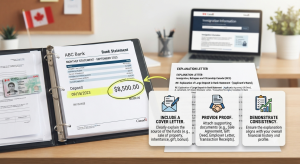 Canada Visitor Visa Bank Statement: How to Explain Large Deposits in 2026
14 Sep 2026
 Canada Visitor Visa: Prove You’ll Return to India
11 Sep 2026
All our articles on this topic (11)
United Kingdom
Canada
United Arab Emirates
More visa guides
- UK visa refused? What the Pre-Action Protocol (PAP) is and when it helps
- Visa Refused? What to Do Next
- How to Write a Cover Letter for a Visa Application (with Samples)
- Travel Itinerary for Visa: How to Make One (with Samples)
- SOP for Student Visa: How to Write (with Structure)
- Schengen Visa Documents Checklist for Indians (2026)





