
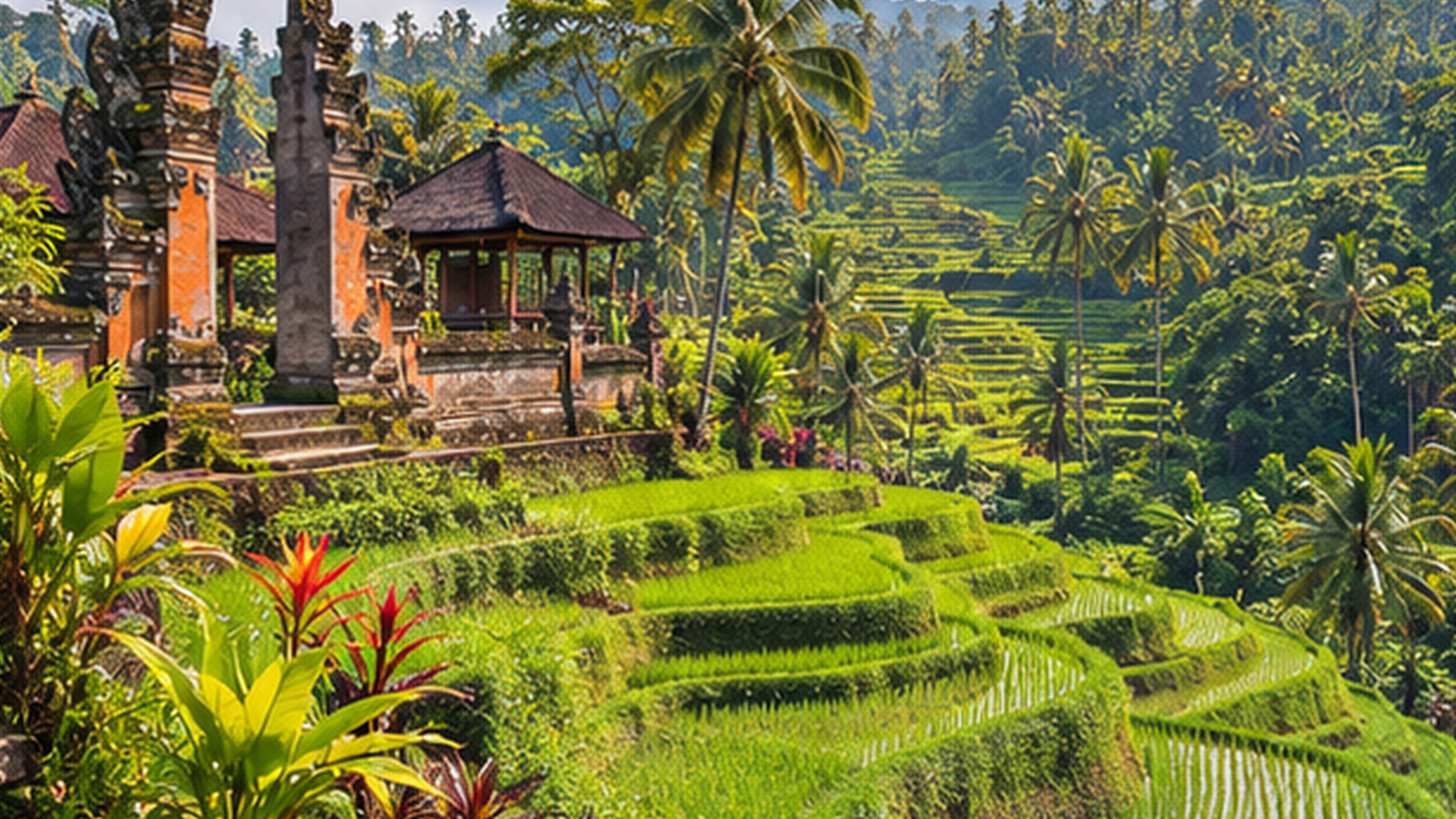
The green, cultural heart — rice terraces, temples, the Monkey Forest, yoga and wellness retreats.
Rice-terrace valleys, clifftop temples, surf beaches and some of the best-value villas in the world — Bali is the tropical honeymoon Indians fall for.

Bali has become the honeymoon and friends-trip of choice for a whole generation of Indian travellers, and it is easy to see why. This single Indonesian island squeezes in emerald rice terraces, clifftop sea temples, black-sand volcanoes, world-class surf and a villa scene where a private-pool stay often costs less than a mid-range city hotel back home. Add a Hindu culture that feels both exotic and familiar — daily flower offerings, temple festivals, Ramayana dances — and you have a destination that photographs like a dream and treats your wallet gently.
Bali is really several holidays in one. Ubud, inland, is the cultural and wellness heart — rice paddies, yoga, temples and monkey forests. The south (Seminyak, Canggu, Uluwatu) is beaches, surf, sunset bars and cafes. And a short boat ride away, the Nusa and Gili islands deliver the turquoise-water, snorkel-with-turtles postcard. Stitch two or three of these together and you have an unforgettable week.
This guide is written for Indian travellers: the real trip cost in rupees from your city, the exact visa-on-arrival rule and the new Bali tourist levy as they stand today, how to pay with cards and UPI, where vegetarians and Jain travellers eat well, and honest, dated advice you can plan around.
Indians love Bali for the villa-for-the-price-of-a-hotel luxury, the Hindu temples and offerings that feel culturally close, and the picture-perfect scenery that makes it a honeymoon favourite. Visa-on-arrival keeps entry simple, the rupee stretches a long way against the rupiah, English is widely spoken, and vegetarian food is genuinely easy thanks to Bali’s own plant-forward cuisine and a big cafe scene.
💡 From our visa desk: Most couples we help love Bali most when they split the week — two or three nights in a quiet Ubud villa, then the beaches of the south. The commonest mistake is underestimating drive times: Ubud to Uluwatu can take two hours in traffic, so cluster your sights by area and keep a private driver for the long days.
Indonesia Visa-on-Arrival (VoA) for Indian citizens — pay on arrival or pre-apply as an e-VoA online.
Indian passport holders can get an Indonesia Visa-on-Arrival for Bali — a 30-day stay that is extendable once by another 30 days. You can pay on landing at Denpasar or pre-apply for an e-VoA online to skip the queue. Bali also charges a separate tourist levy. Carry a passport valid 6+ months, a return or onward ticket and proof of funds.
Full Bali tourist visa requirements & documents →Bali has two seasons: dry and wet. The dry season (roughly April to October) is the best time to visit, with sunny days and calmer seas. See the month-by-month table below to match your dates to the weather, crowds and Indian holiday windows.
| Season | What it's like & who it suits |
|---|---|
| Dry (Apr–Oct) | Best weather — sunshine, lower humidity, ideal for beaches, island hopping and temples. July–August is peak season and busiest. |
| Shoulder (Apr–Jun, Sep–Oct) | The sweet spot: good weather, fewer crowds and better villa rates. Perfect for honeymoons. |
| Wet (Nov–Mar) | Humid with afternoon downpours (rarely all day) and lush green scenery; lowest prices. Snorkelling visibility drops a little. |
| Month | Weather & what’s on (incl. Indian holiday windows) |
|---|---|
| January | Wet season — warm, humid, short heavy showers; lush and cheap. Fine for villas, spas and Ubud; book flexible beach days. |
| February | Still wet but easing; good value and green. Occasional ceremonies add colour. |
| March | Transition month; drying out. Nyepi (Balinese Day of Silence, usually March) shuts the island for 24 hours — magical but plan around it. |
| April | Dry season begins — one of the best months: sunny, green and not yet crowded. Overlaps Indian summer holidays. |
| May | Excellent — dry, sunny, calm seas and good villa rates. A top pick for honeymoons. |
| June | Dry and reliable; the Bali Arts Festival starts. Great all-round weather before the peak. |
| July–August | Peak season — the best island-hopping weather but the busiest and priciest. Overlaps Indian summer break; book early. |
| September | Still dry and slightly quieter than August — arguably the sweet spot of the year. |
| October | Dry season tailing off; warm, good value, fewer crowds. Great around Diwali. |
| November–December | Wet season returns with afternoon showers; lush and cheaper, with a festive peak around Christmas and New Year. |
The green, cultural heart — rice terraces, temples, the Monkey Forest, yoga and wellness retreats.

Stylish beach town of boutiques, beach clubs and sunset bars — the honeymoon favourite.
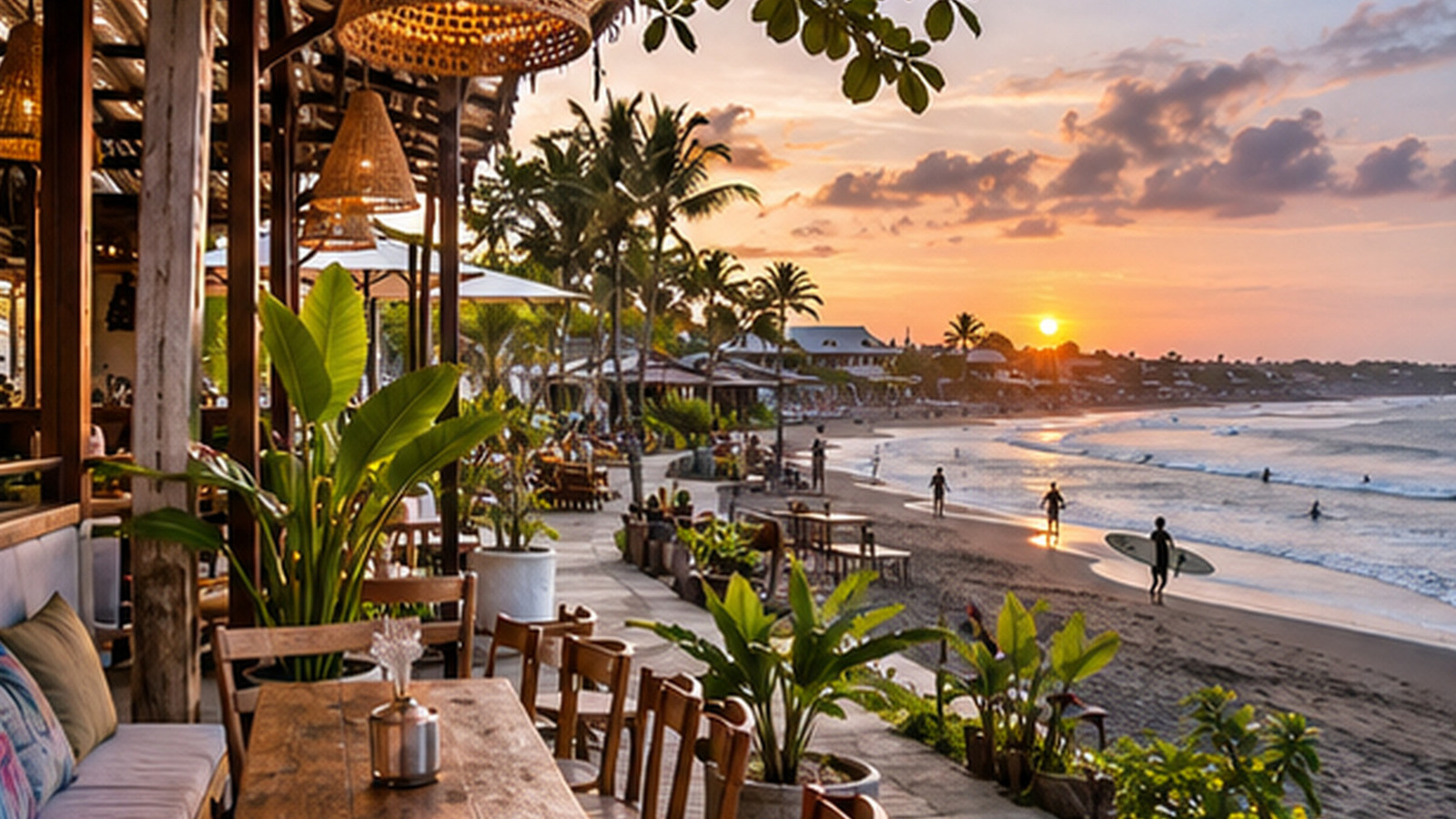
Hip surf-and-cafe district popular with younger travellers and digital nomads.
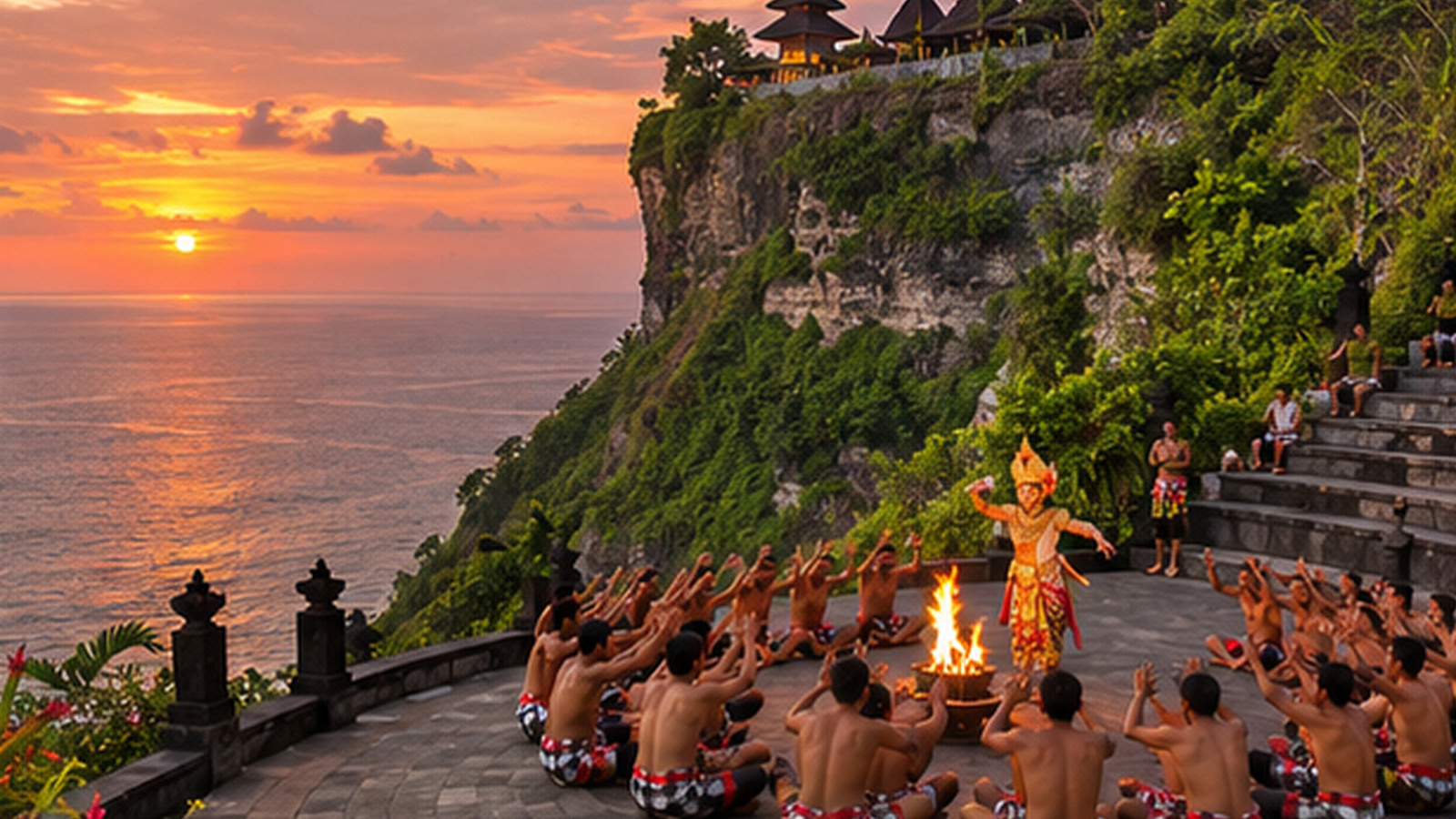
Dramatic clifftop temples, world-class surf breaks and the famous Kecak fire dance at sunset.
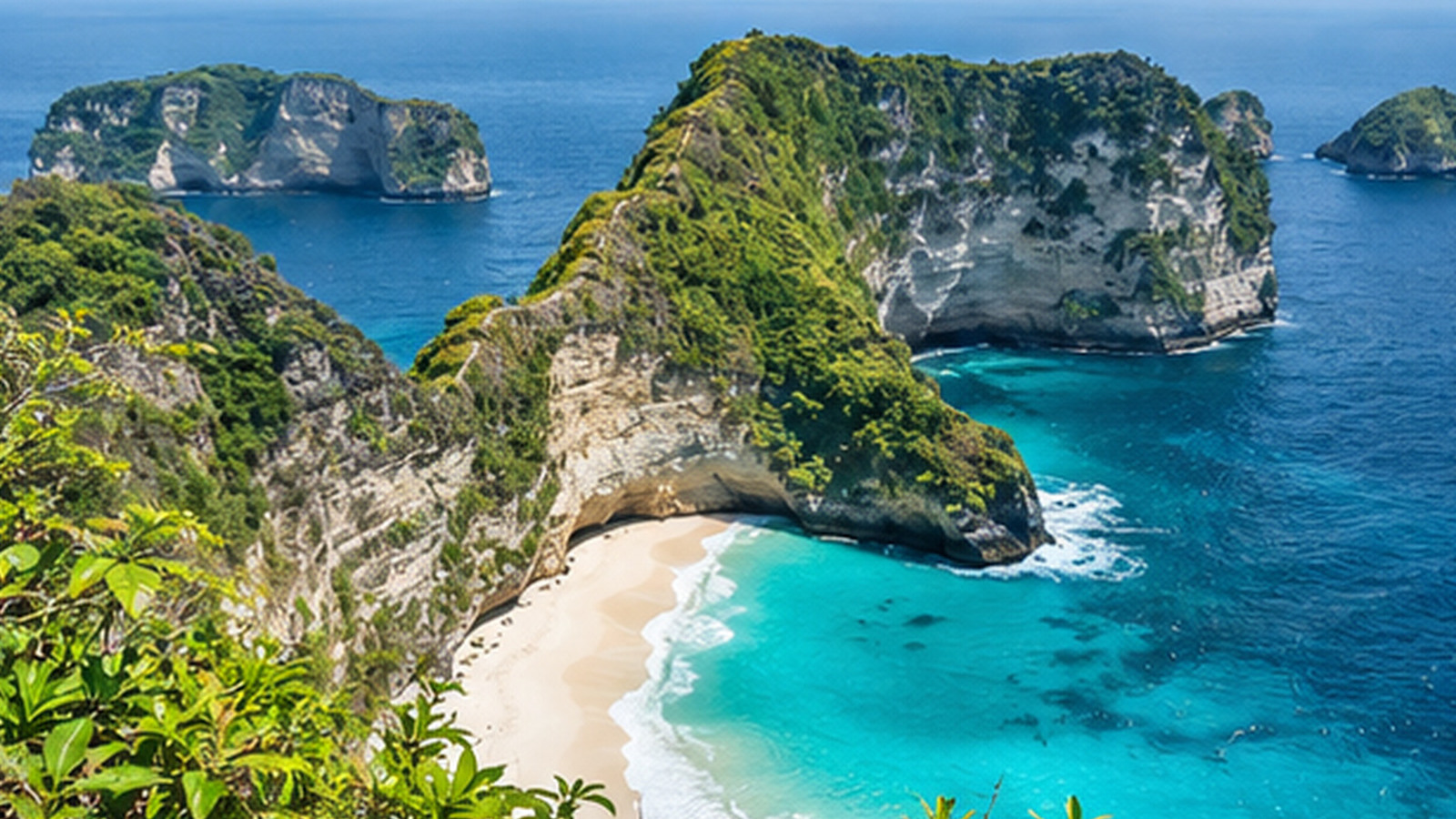
Short boat rides to turquoise bays, snorkelling with turtles and manta rays, and car-free island calm.
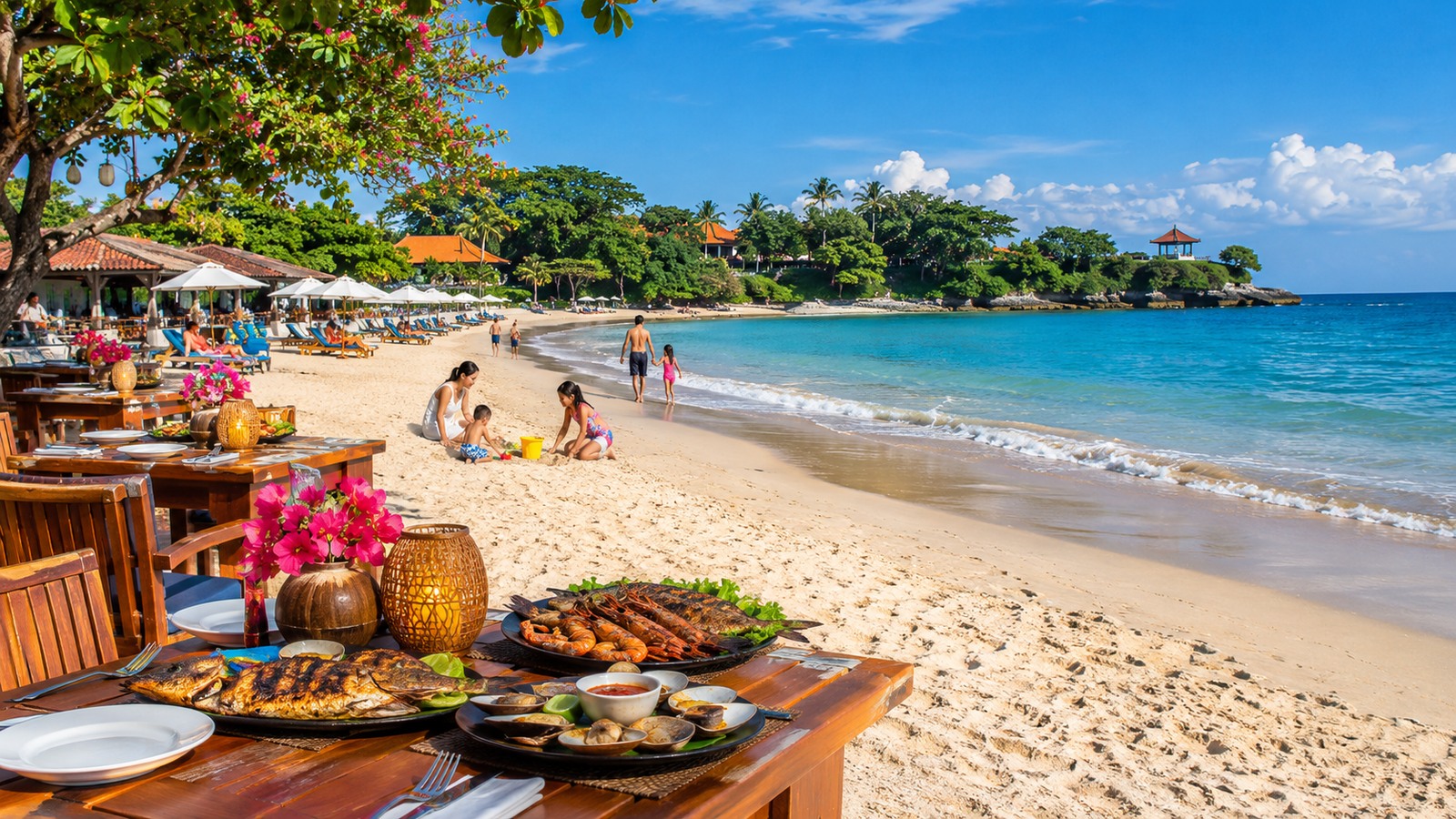
Calm, family-friendly resort beaches and seafood grills in the south.

The iconic stepped-green paddies near Ubud, with the famous Bali Swing nearby.

A clifftop sea temple with a sunset fire-and-chant performance above the Indian Ocean.
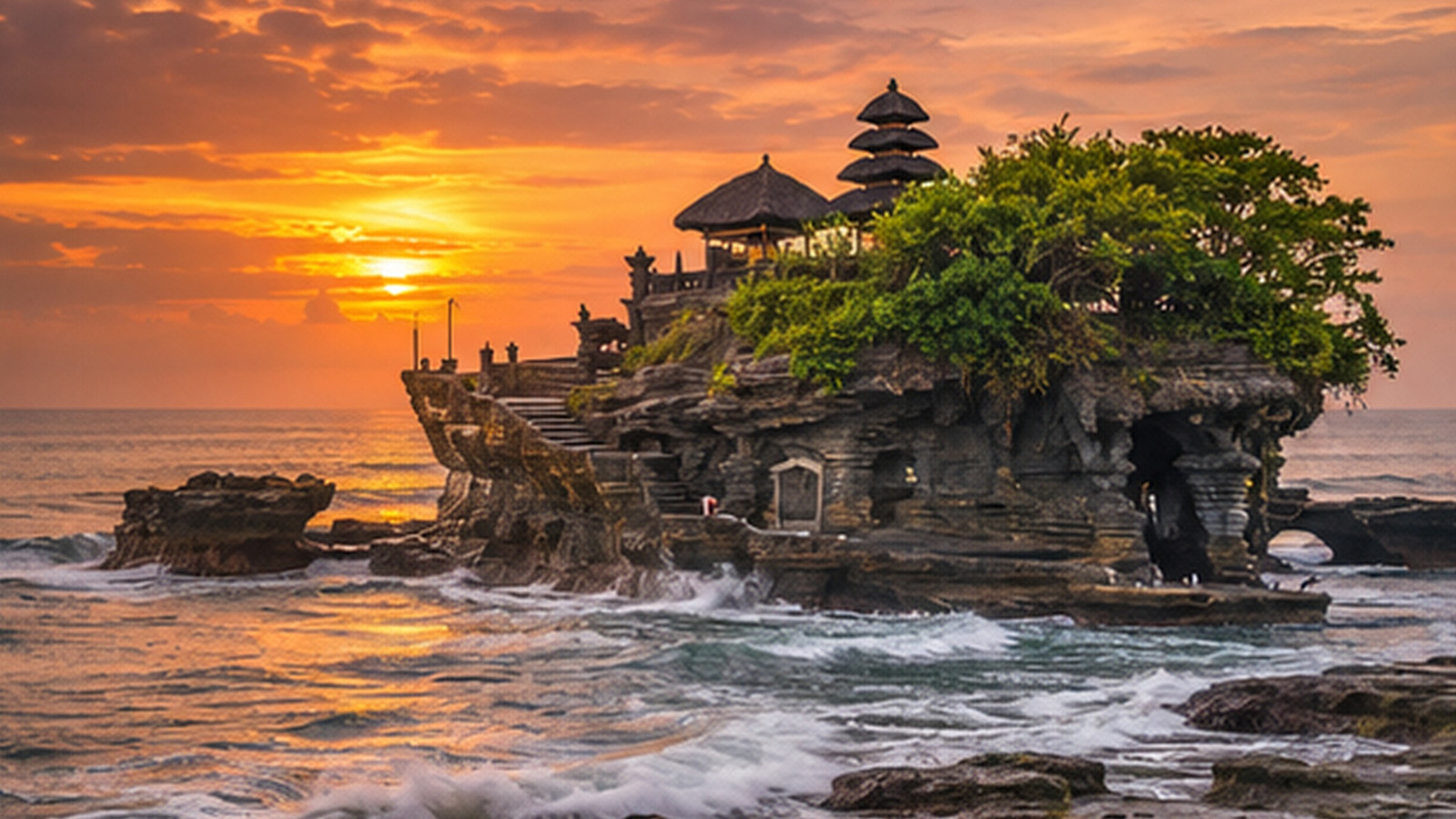
A photogenic temple on a rock in the sea, best at sunset — one of Bali’s most photographed spots.
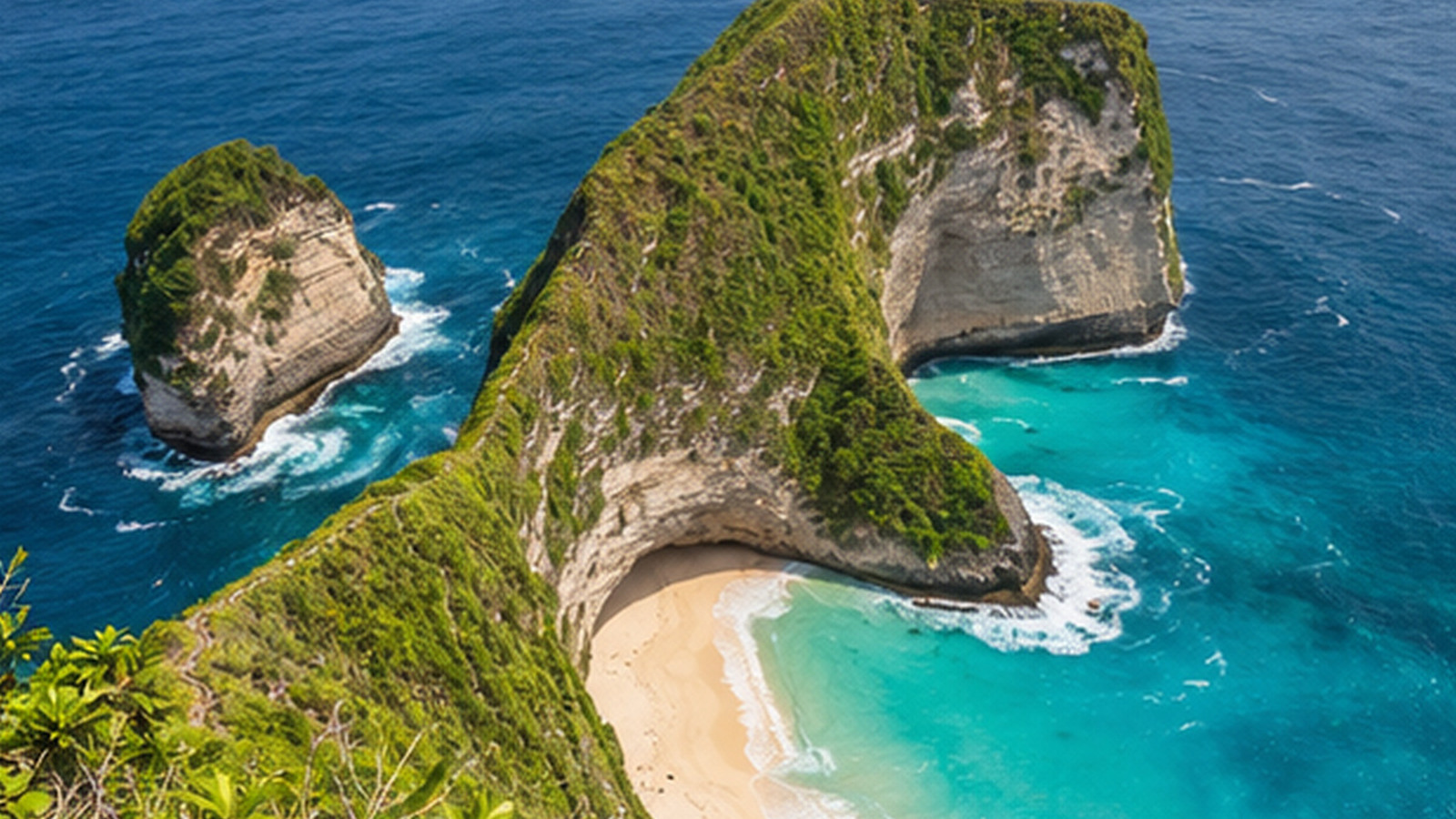
The T-Rex-shaped cliff viewpoint and turquoise coves — a must-do day trip by fast boat.

A pre-dawn hike up an active volcano for a sunrise above the clouds, with a hot-spring soak after.
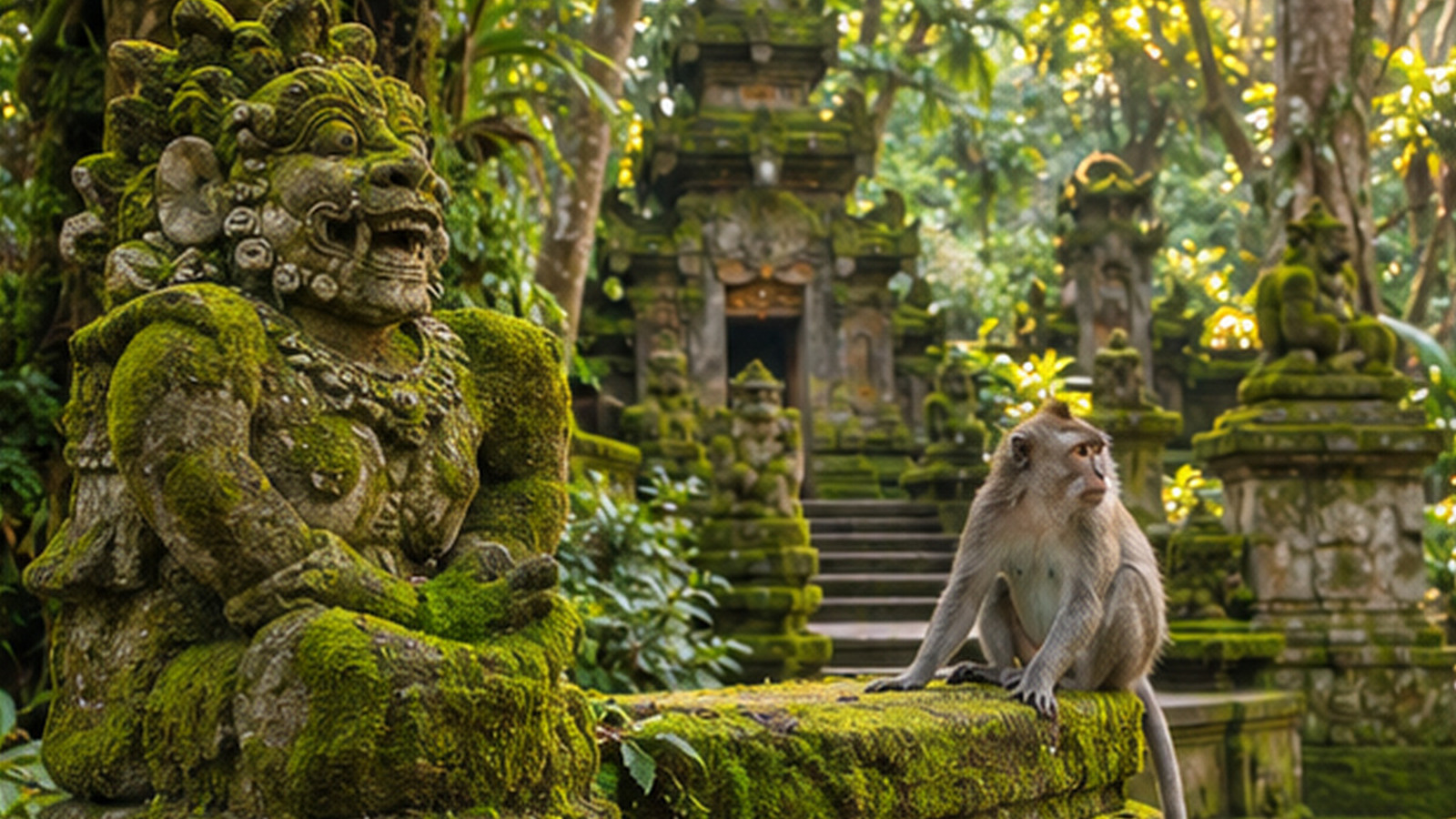
A lush sanctuary of macaques and moss-covered temples in the heart of Ubud.

Jungle waterfalls for a swim and the classic Bali photo, from easy to adventurous.

The famous split-gate photo and the misty temples of Lake Bratan (Ulun Danu Beratan) in the cool highlands.
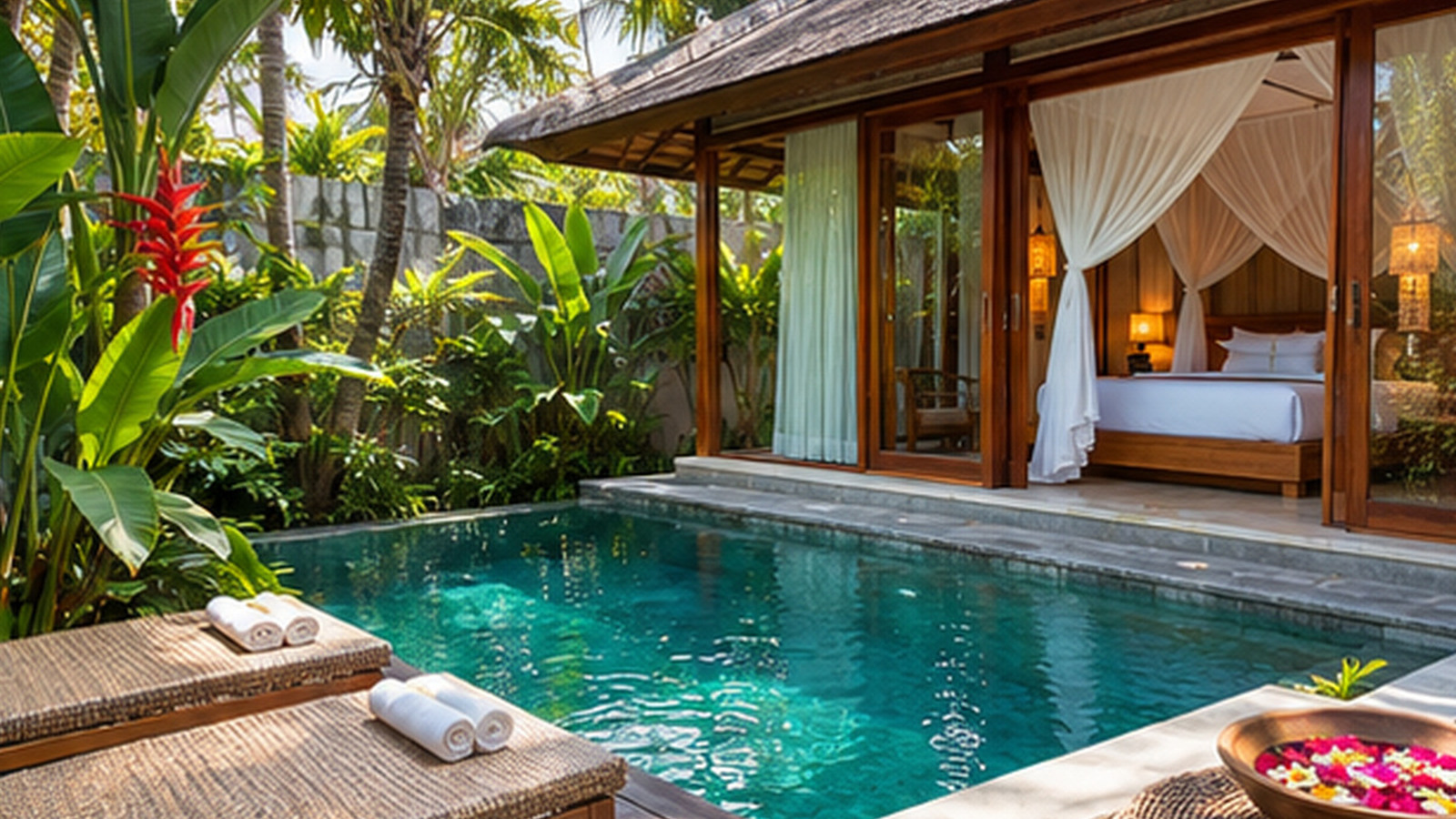
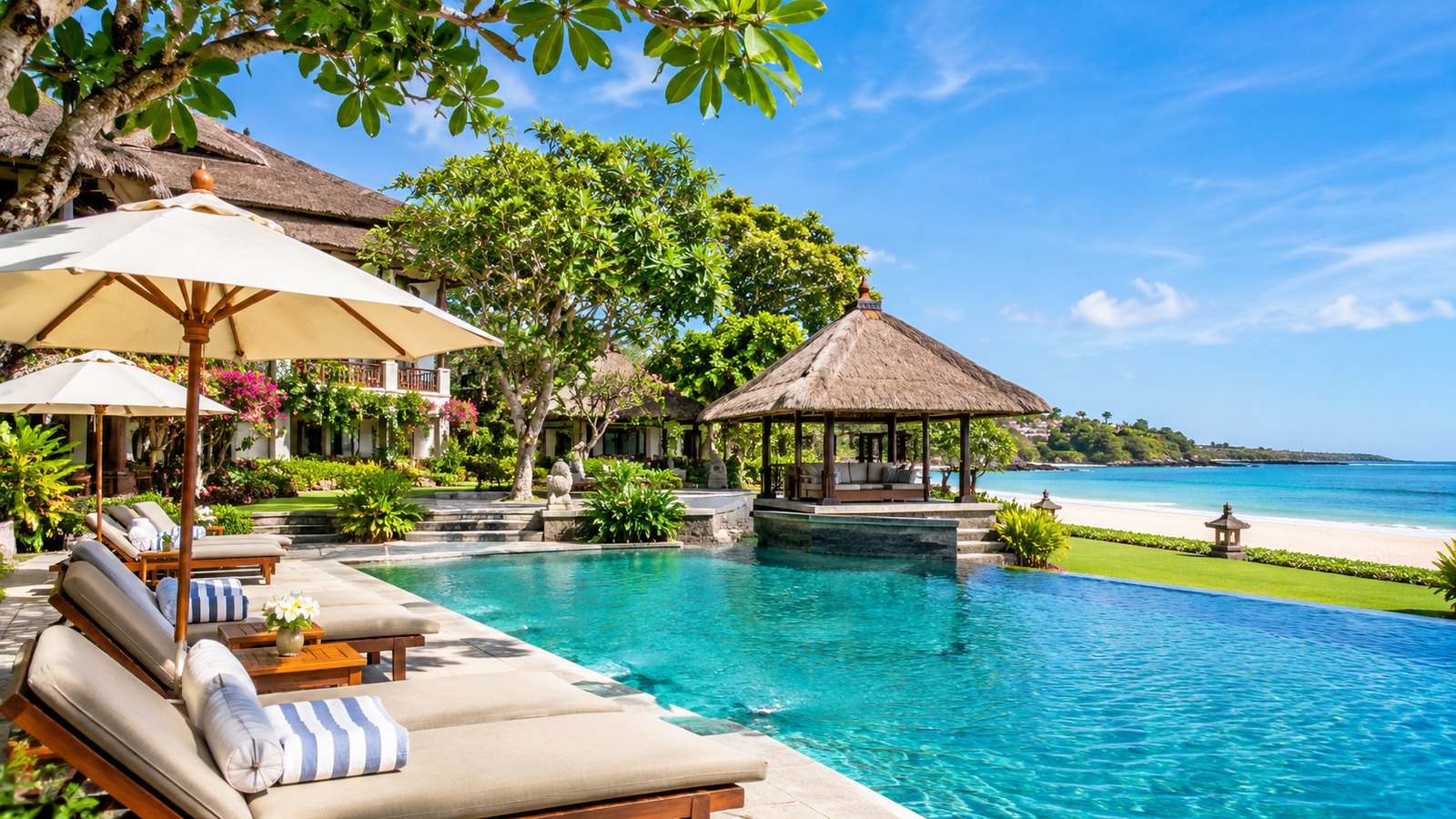
Bali’s signature splurge — a honeymoon villa with a private pool for a fraction of Western prices.
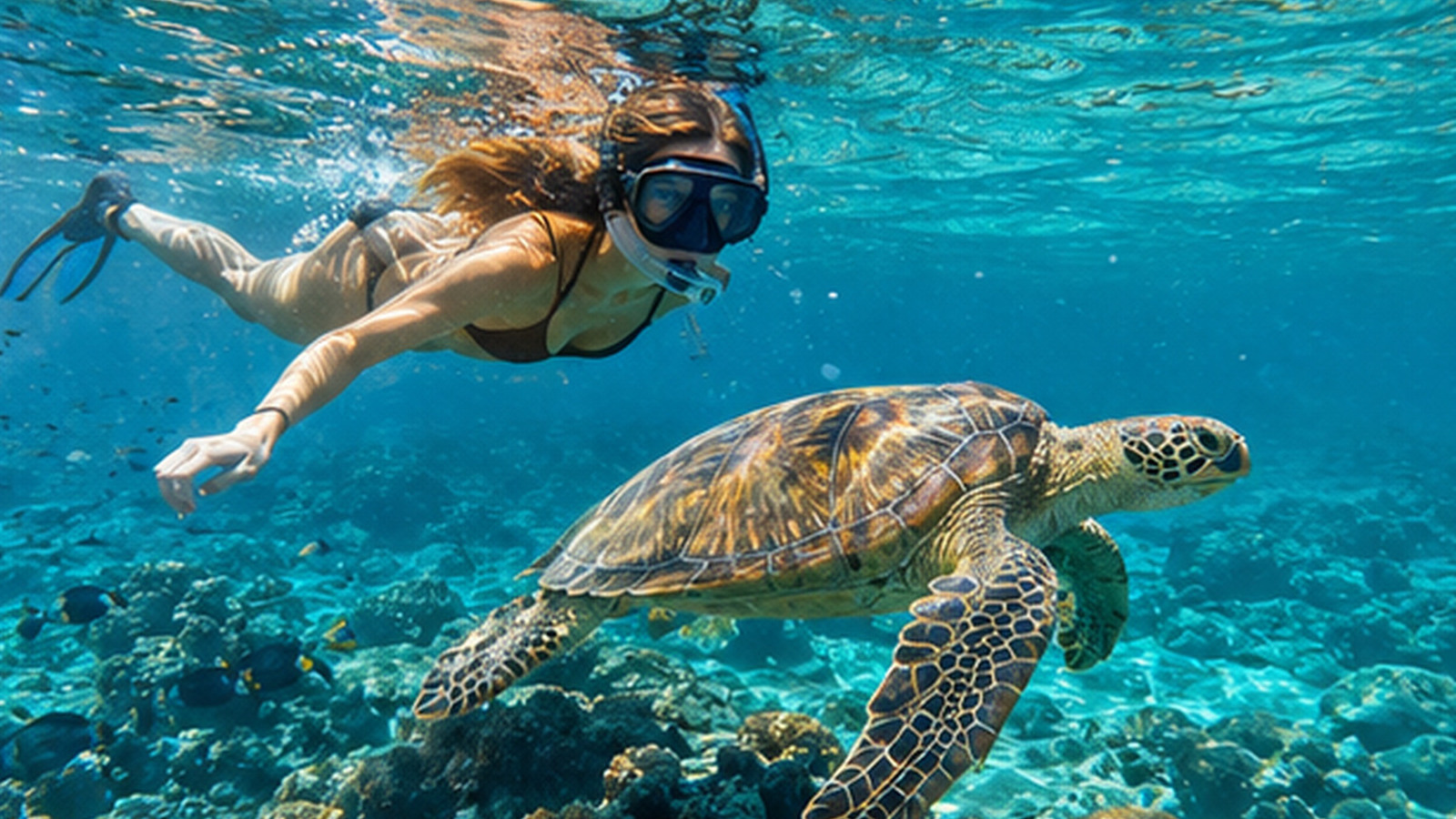
Nusa Penida, Nusa Lembongan and the Gilis for turtles, manta rays and clear water.

Beginner surf lessons at Kuta and Canggu, and sunset beach clubs in Seminyak.

Cheap Balinese massages, Ubud yoga, and jungle waterfalls like Tegenungan and Sekumpul.
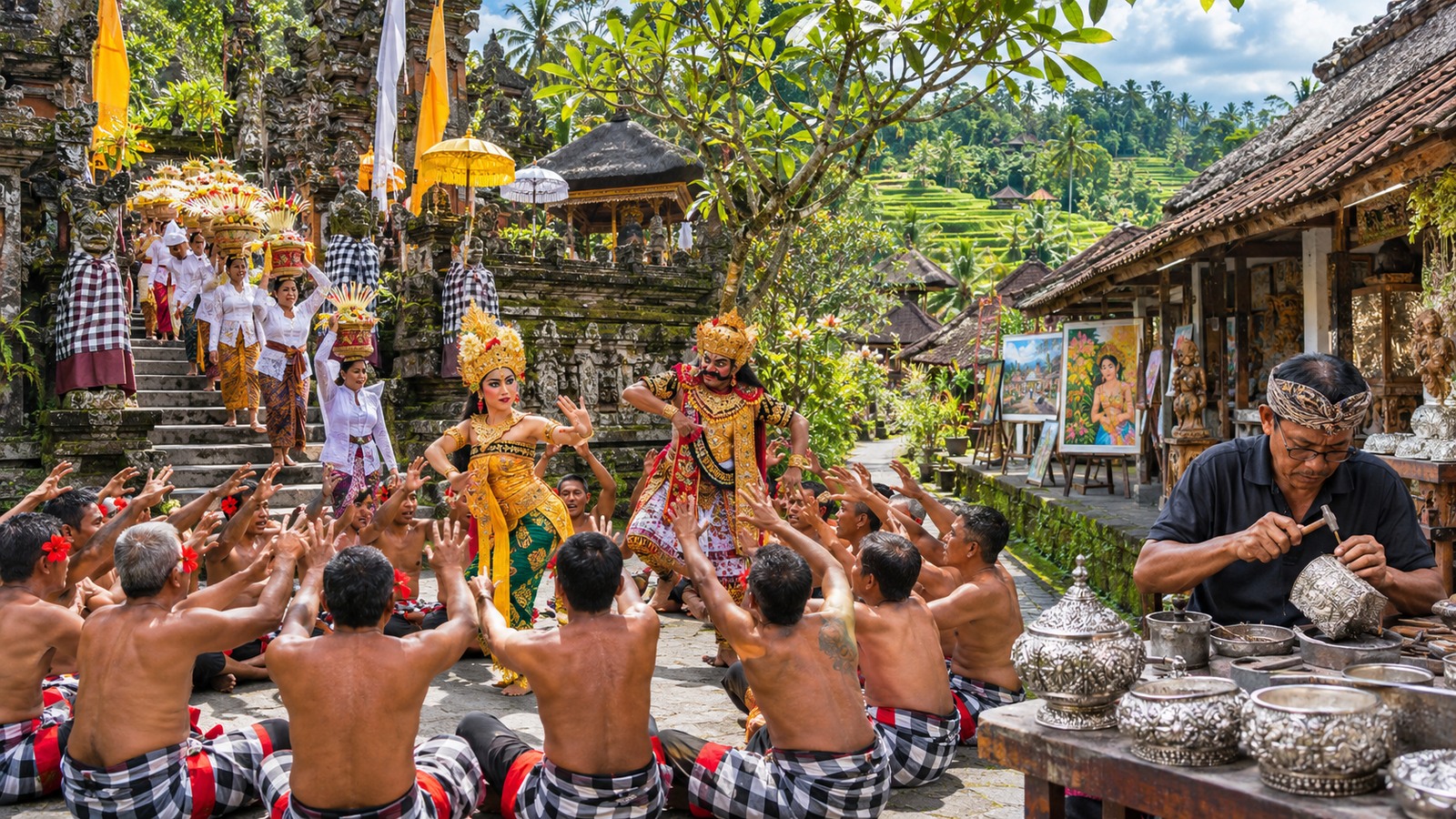
Temple festivals, the Kecak dance, silversmithing in Celuk and art villages around Ubud.
Book tours & activities through our travel partners — see options. Bluebird Next may earn a commission from partner bookings at no extra cost to you (Affiliate Disclosure).
Bali offers exceptional value — luxury villas, massages and meals cost a fraction of Western prices, so flights (usually one-stop) are the main expense. Indicative per-person figures for a 7-day trip in 2026 (prices checked Nov 2026).
| Item | Typical cost (per person) |
|---|---|
| Return flights (ex-India, 1 stop) | ₹28,000 – ₹55,000 |
| Visa-on-Arrival + Bali levy | ~₹3,400 (VoA ~₹2,600 + levy ~₹800) |
| Villas/hotels (per night, twin) | ₹3,000 – ₹9,000 (private-pool villas from ~₹6,000) |
| Island & activity tours | ₹2,000 – ₹5,000 each |
| Food (cafes + local warungs) | ₹800 – ₹2,500 / day |
| Private driver / scooter & transfers | ₹1,500 – ₹3,500 / day |
| From | Typical return airfare |
|---|---|
| Delhi | ₹30,000 – ₹55,000 (1 stop) |
| Mumbai | ₹28,000 – ₹52,000 (1 stop) |
| Bengaluru | ₹28,000 – ₹50,000 (1 stop, often via KL/Singapore) |
| Chennai | ₹28,000 – ₹50,000 (1 stop) |
| Kolkata | ₹30,000 – ₹54,000 (1 stop via Bangkok/KL) |

Jungle and rice-field villas for culture, wellness and calm.

Chic beach base with the best dining and beach clubs — a top honeymoon pick.
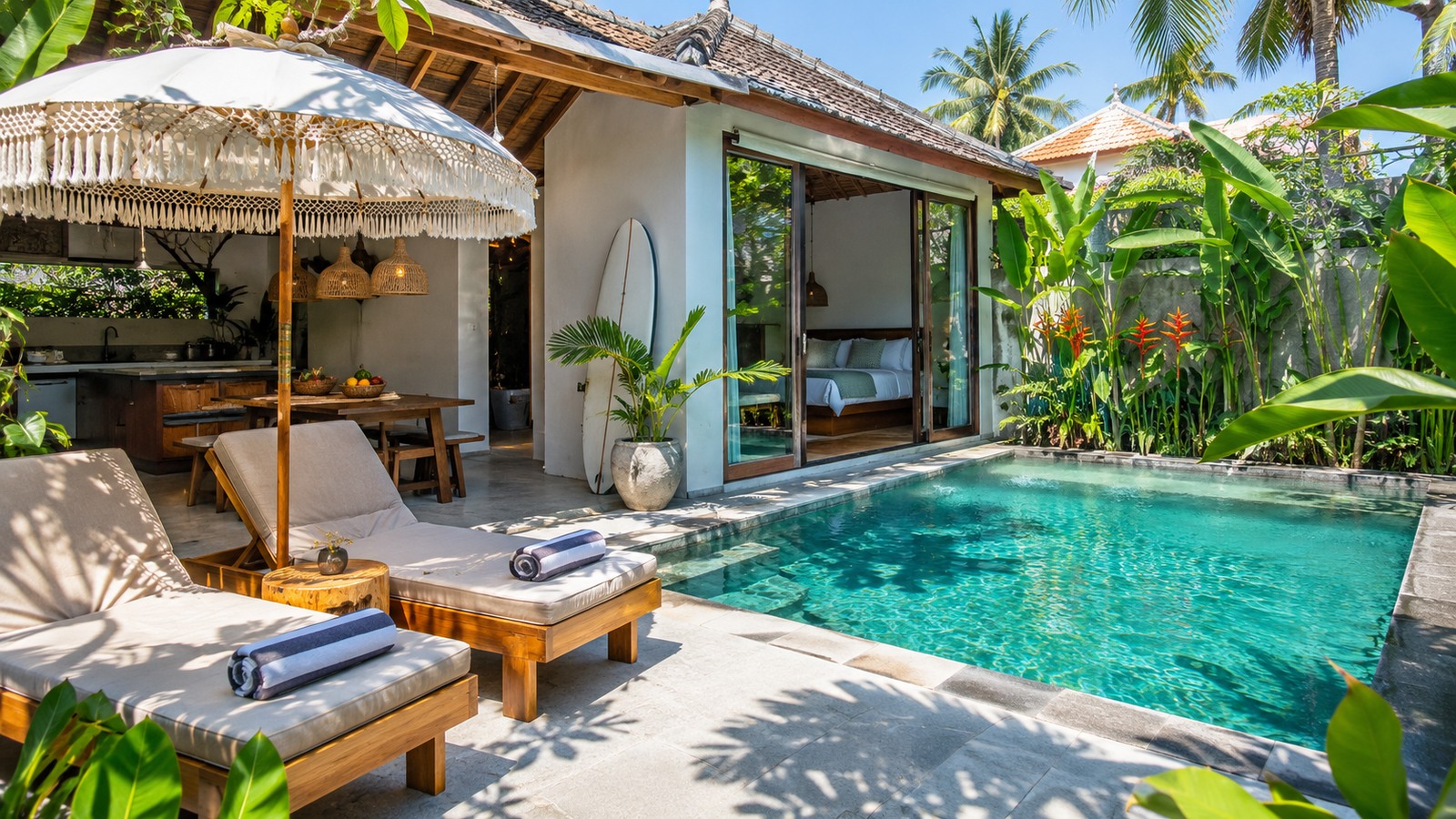
Younger surf-and-cafe vibe with good-value villas.
Calm, family-friendly resort beaches in the south.

Clifftop luxury resorts and surf stays with dramatic sunsets.
Balinese food is flavourful and often plant-forward — nasi goreng, gado-gado, satay, babi guling (for meat-eaters) and fresh tropical fruit — with one of Asia’s biggest healthy-cafe scenes in Ubud and Canggu.
Vegetarian is genuinely easy: gado-gado (veg salad with peanut sauce), tempeh and tofu dishes, nasi/mie goreng without egg or meat, and Ubud’s abundant vegan and health cafes. Being a Hindu island, meat-free food is well understood. Jain and pure-veg travellers also have Indian restaurants to fall back on.
Indian restaurants (Queen’s of India, Gateway of India and others) are easy to find in Seminyak, Kuta and Ubud — thalis and North Indian meals that are a comfort on longer stays, with Jain options on request.
The rupiah has a lot of zeros — ₹1 is roughly IDR 190, so a “100,000” note is about ₹525. Count change carefully. Cards work in hotels, malls and bigger restaurants; carry cash for warungs, markets and temples. Indonesia uses QRIS QR-code payments, and India and Indonesia are working to link UPI with QRIS, so some Indian apps may let you scan QRIS codes — check before relying on it, and keep cash and a card as backup. Use bank ATMs (count the cash before you leave the machine) and avoid airport money changers with “no commission” signs and poor rates.
Buy a Telkomsel or XL tourist SIM at the airport (cheap, with plenty of data) or install a travel eSIM before you fly so you land connected. Wi-Fi is common in villas and cafes.
There is almost no public transport, so most people hire a private driver for the day (around ₹1,500–3,000) to cluster sights. Download Grab and Gojek (ride-hailing and food delivery), Google Maps and Google Translate. Scooters are cheap but Bali’s traffic is risky — only ride if you are experienced, always helmeted and insured.
Bali runs on 230V with Type C and F (round two-pin) sockets — carry a universal adapter. It is hot and humid year-round; pack light, breathable clothing and reef-safe sunscreen.
Carry or rent a sarong for temple visits (covered legs are required). Do not step on the small flower offerings (canang sari) placed on the ground, dress modestly at temples, and use your right hand to give and receive. Balinese people are warm and courteous — a smile goes a long way.
The easiest way to see Bali — a car with driver for a full day costs around ₹1,500–3,000 and covers several sights. There is almost no public transport.
Cheap and popular, but traffic and road conditions are genuinely risky — only if you are an experienced rider, always helmeted and insured.
Fast boats from Sanur and Padangbai reach Nusa Penida, Lembongan and the Gilis in 30–90 minutes; book your return times in advance in peak season.
Bali is generally safe and welcoming, and crime against tourists is uncommon. The biggest real risks are road accidents on scooters, strong surf and rip currents, and petty theft of bags snatched from scooters or left on beaches. Drink bottled water, use registered drivers and licensed tour and dive operators, do not leave valuables unattended, be wary of “arak” (local spirit) at cheap bars, and take out travel insurance that covers adventure and water activities and medical care.
❌ Myth: Bali is only for honeymooners.
✅ Fact: It suits families (gentle beaches, waterparks, villas), friends’ groups (surf, nightlife) and solo and wellness travellers (Ubud yoga) just as well. The island is far more varied than the honeymoon label suggests.
❌ Myth: Vegetarians struggle in Bali.
✅ Fact: The opposite — being a Hindu island with a huge healthy-cafe scene, Bali is one of Asia’s easiest places to eat vegetarian or vegan, plus Indian restaurants in the main areas.
❌ Myth: You can see all of Bali from one beach hotel.
✅ Fact: Distances and traffic are deceptive; Ubud to Uluwatu can take two hours. Split your stay by area and use a private driver for the long days.
❌ Myth: Entry is complicated.
✅ Fact: Indians get a straightforward Visa-on-Arrival (or e-VoA online), 30 days, extendable once. You just also pay the small Bali tourist levy and file the customs declaration online.
❌ Myth: Bali is expensive like other beach honeymoons.
✅ Fact: It is one of the best-value tropical trips going — private-pool villas, spas and dining cost a fraction of the Maldives or Europe. Flights are the main expense.
Indians get an Indonesia Visa-on-Arrival for Bali — a 30-day stay, extendable once by 30 more days. Pay the VoA (about IDR 500,000 / ~₹2,600) on arrival at Denpasar or pre-apply for the e-VoA online, and also pay the Bali tourist levy (IDR 150,000 / ~₹800). Carry a passport valid 6+ months, a return ticket and proof of funds. Confirm the current rules before booking.
A 7-day trip is roughly ₹70,000–₹1,40,000 per person including flights, and about ₹1,40,000–₹2,60,000 for a couple sharing a villa. Flights (usually one-stop) are the biggest expense; villas, food and massages are superb value.
Six to eight days lets you combine Ubud, the southern beaches and one island (Nusa Penida or the Gilis) without rushing. Five days works for a focused honeymoon; add two or three for the Gili Islands.
The dry season, April to October, is best — sunny days and calm seas. May, June, September and October are the sweet spot for good weather with fewer crowds; July–August is peak and busiest; November to March is the green, cheaper wet season.
Ideal — private-pool villas, spas and fine dining cost a fraction of Western or even Indian city prices, making a luxury-feel honeymoon surprisingly affordable, especially in shoulder season.
Split your stay: Ubud for culture, rice fields and villas, then Seminyak or Uluwatu for beaches and sunsets. A private driver links them easily. Nusa Dua and Jimbaran suit families who want calm resort beaches.
Cards work in hotels, malls and bigger restaurants. Indonesia uses QRIS QR payments, and India and Indonesia are working to link UPI with QRIS, so some Indian apps may work — check before relying on it, and carry rupiah cash for warungs, markets and temples.
Very — as a Hindu island with a huge healthy-cafe scene, vegetarian and vegan food is everywhere (gado-gado, tempeh, tofu, veg nasi goreng), and Indian restaurants in Seminyak, Kuta and Ubud offer thalis and Jain options on request.
Yes, with common sense. The main risks are scooter accidents and strong ocean currents rather than crime. Use registered drivers, swim at flagged beaches, keep bags secure and get good travel insurance.
Hire a private driver for the day (around ₹1,500–3,000) to cover several sights — there is almost no public transport. Grab and Gojek work in the south; fast boats reach Nusa Penida and the Gilis. Ride scooters only if experienced and insured.
Strongly recommended. It covers medical care (private and costly for tourists), water sports, scooter mishaps and trip delays — essential given the island-hopping and adventure activities most visitors do.
Sources: Indonesia Tourism (Wonderful Indonesia) · Indonesia Immigration — e-VoA (molina) · Love Bali — tourist levy (official)
A licensed team that has guided thousands of Indians to their visas and admissions.
 Jitender SinghFounder & Managing Director
 Vikram SinghHead – Quality & Operations
 SanjayHead – Tourist Visa Operations
 TejaswaniHead – Counselling Team
 MahimaHead – Visa Filing & Processing
 Pratigya DuttaHead – Student Visa Processing
Free, no-pressure guidance from a real counsellor who handles your case end to end — from documents to decision.