
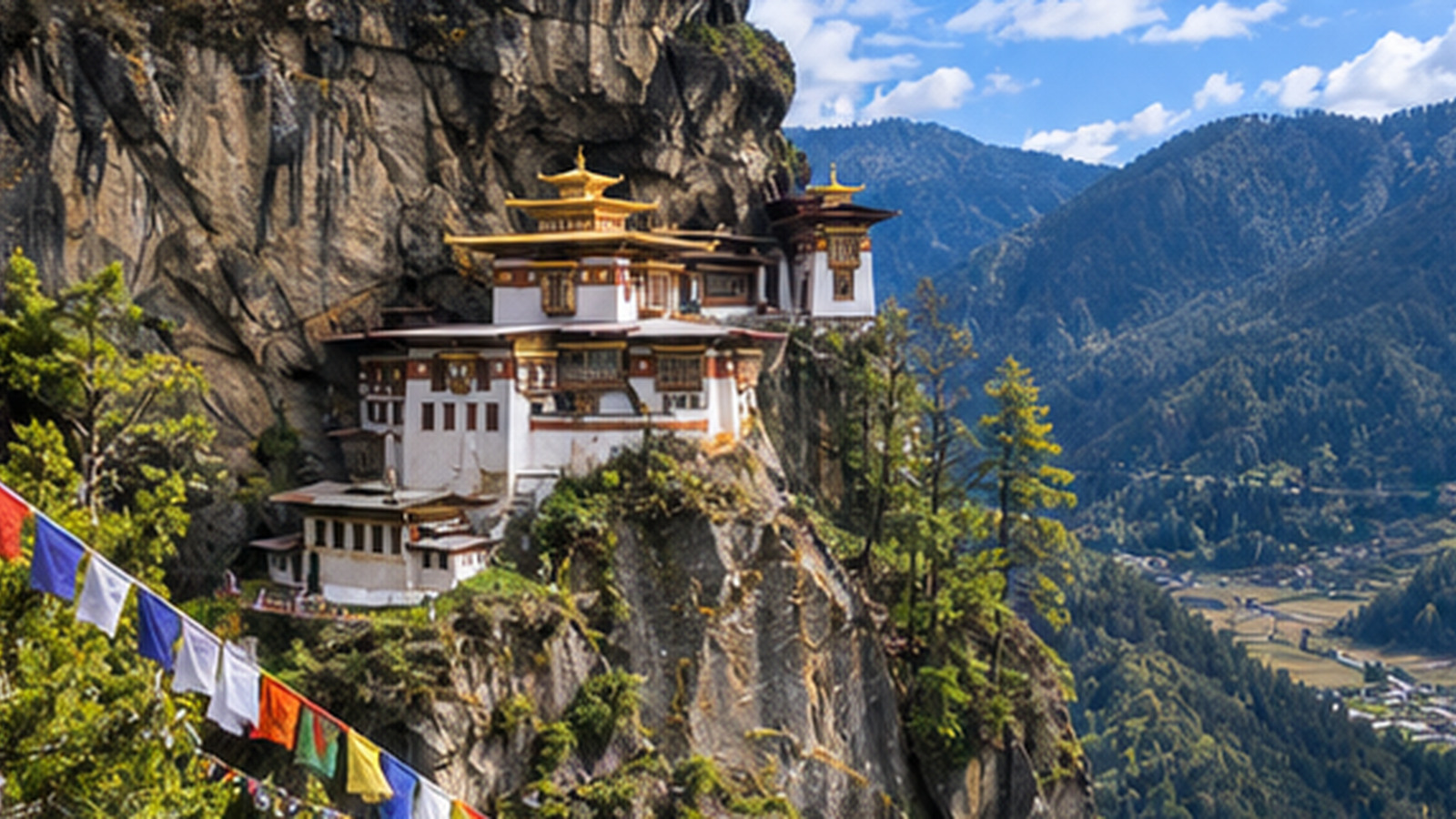
Home to the airport, the Tiger’s Nest, the Rinpung Dzong and the national museum in a beautiful valley.
The last Himalayan kingdom — cliffside Tiger’s Nest, fortress-monasteries, pristine valleys and a happiness-first culture, reached by Indians with a simple permit (no visa).
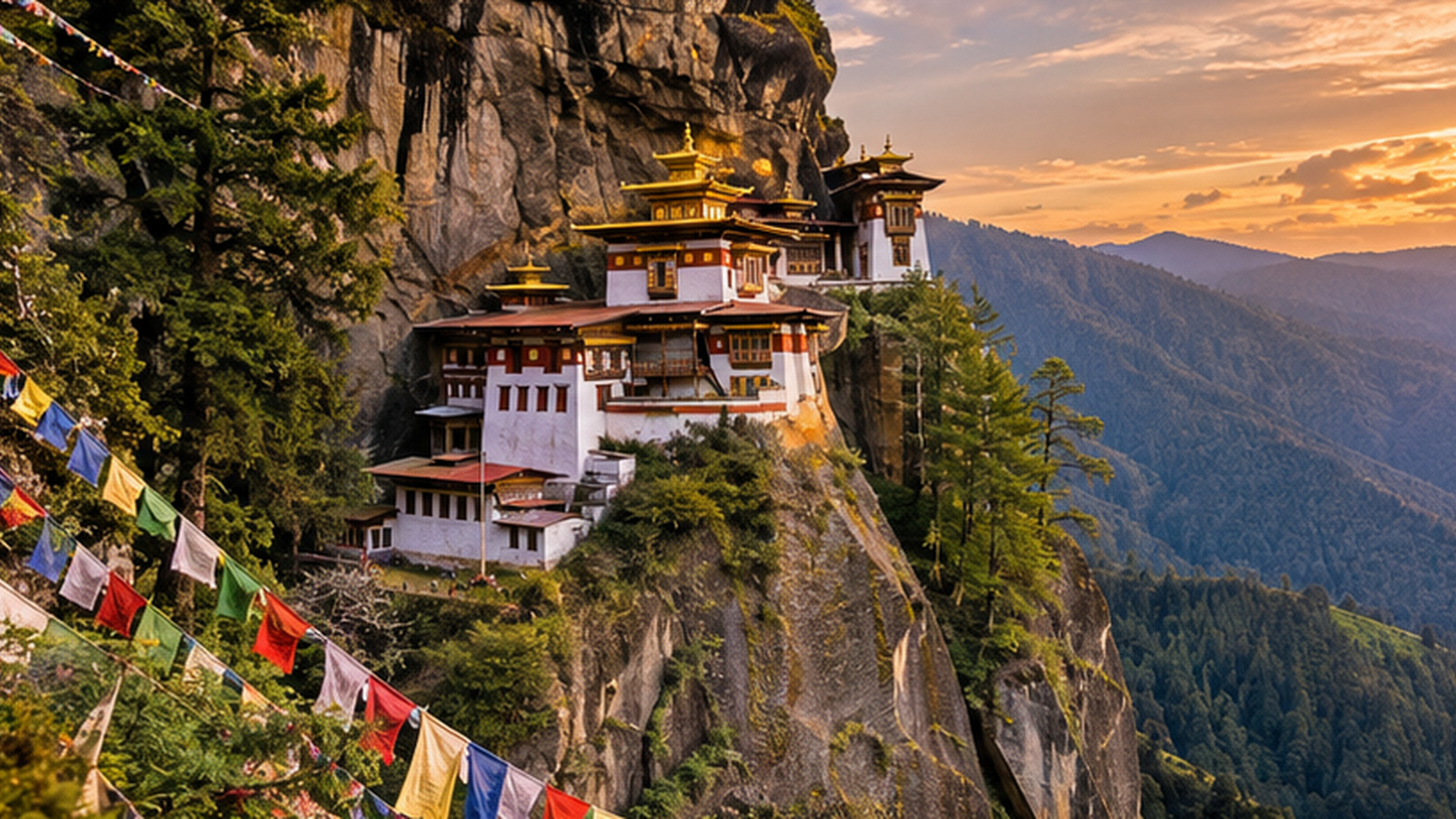
Bhutan is the last great Himalayan kingdom — a Buddhist land of cliff-clinging monasteries, towering fortress-dzongs, prayer-flag-draped passes and pristine valleys, where happiness is official policy and tourism is deliberately low-impact. For Indian travellers it is wonderfully accessible: no visa is needed, just a simple entry permit, and you can even drive across the border.
The highlight is the Tiger’s Nest (Paro Taktsang), a monastery perched on a 900m cliff and reached by a stunning half-day hike. Beyond it lie the fortress-monasteries of Paro, Thimphu and Punakha, the dramatic Dochula Pass with its 108 chortens, archery grounds, weekend markets and some of the cleanest air and friendliest people in Asia. Bhutan is not a cheap free-for-all — a daily Sustainable Development Fee applies — but it buys an unspoilt, uncrowded Himalayan experience.
This guide is written for Indian travellers: the real cost in rupees including the SDF, exactly how the permit works, where vegetarians and Jain travellers eat, the Tiger’s Nest hike, and a route through the western valleys.
Bhutan suits Indians who want an unspoilt, peaceful Himalayan trip with deep Buddhist culture — no visa (just a permit), a short flight or an overland drive from North Bengal, the Indian rupee accepted, and plenty of vegetarian food. It is ideal for couples, spiritual travellers, nature lovers and those seeking a slower, crowd-free holiday.
💡 From our visa desk: Budget for the Sustainable Development Fee (a reduced rate applies for Indians) — it is the main difference from other neighbours, and it keeps Bhutan uncrowded and clean. Focus on the western valleys (Paro, Thimphu, Punakha) on a first trip, and keep the Tiger’s Nest hike for a day when you’ve acclimatised. Carry your passport or Voter ID for the permit.
No visa for Indians — an entry permit plus a daily Sustainable Development Fee (SDF) at the concessional rate for Indian nationals.
Indian citizens do not need a visa for Bhutan but must obtain an entry permit (online or at the border) and pay a Sustainable Development Fee (SDF) per night, charged at a concessional rate for Indians. Carry a valid passport or Voter ID card (Aadhaar/driving licence not accepted). Permits cover Paro and Thimphu; visiting other districts needs a route permit, usually arranged by your hotel or agent.
Check your Bhutan entry requirement →March–May (spring blooms) and September–November (clear skies, festivals) are the best. Winter is cold but clear and quiet; the monsoon (Jun–Aug) is wet and cloudy. See the month table.
| Season | What it's like & who it suits |
|---|---|
| Mar–May | Spring — rhododendron blooms, mild weather and clear mountain views; popular. |
| Sep–Nov | Autumn — crisp, clear skies, the best Tiger’s Nest views and major tshechu festivals. Peak season. |
| Dec–Feb | Cold but clear and uncrowded; lower valleys are fine, with occasional snow at passes. |
| Month | Weather & what’s on (incl. Indian holiday windows) |
|---|---|
| March–May | Spring — mild days, blooming rhododendrons and jacarandas, and clear views. Paro’s spring tshechu festival draws crowds; a lovely, popular time. |
| June–August | Monsoon — green and lush but wet and cloudy, with some roadblocks; the quietest, cheapest season between showers. |
| September–October | Peak autumn — crisp, dry and crystal-clear, with the best mountain views and the famous Thimphu and Jakar tshechus. Book well ahead. |
| November | Clear, cool and beautiful, with black-necked cranes arriving in Phobjikha; excellent for the Tiger’s Nest. |
| December–February | Cold, especially at night and at passes, but clear and uncrowded; the western valleys stay accessible with good deals. |
Home to the airport, the Tiger’s Nest, the Rinpung Dzong and the national museum in a beautiful valley.
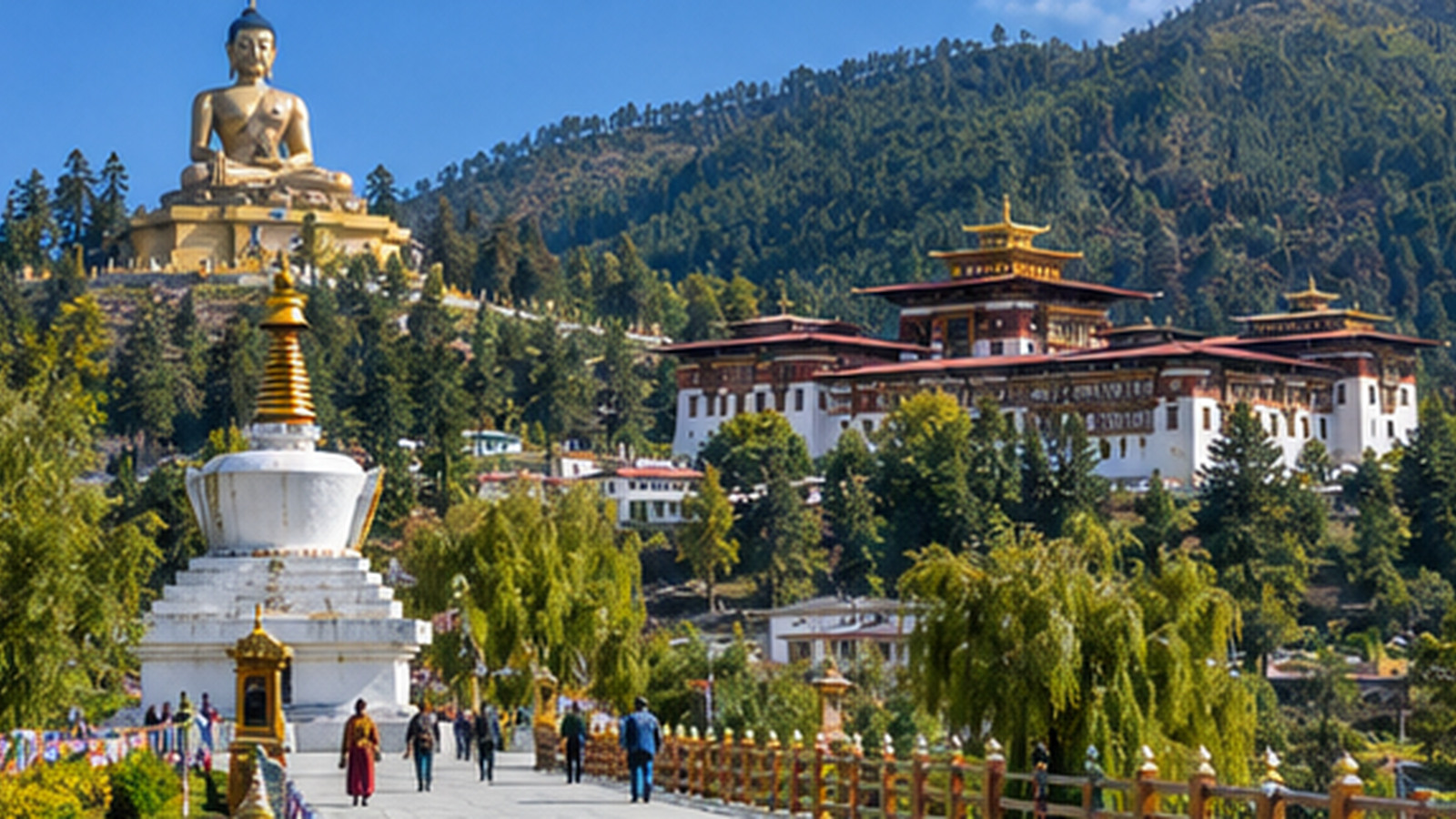
The capital — the giant Buddha Dordenma, the weekend market, Tashichho Dzong and archery grounds.
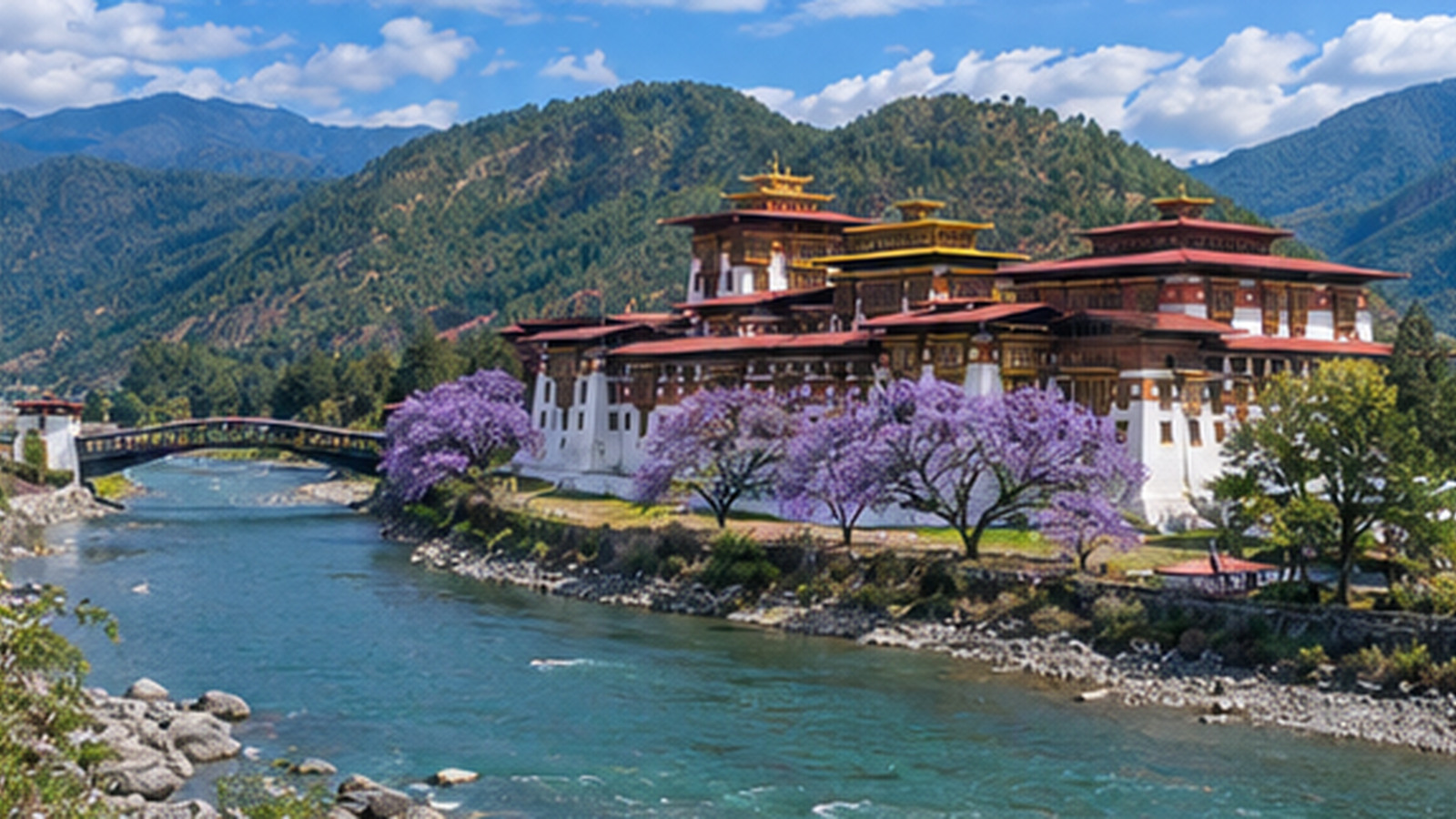
The old capital with Bhutan’s most beautiful dzong at a river confluence and the Chimi Lhakhang fertility temple.
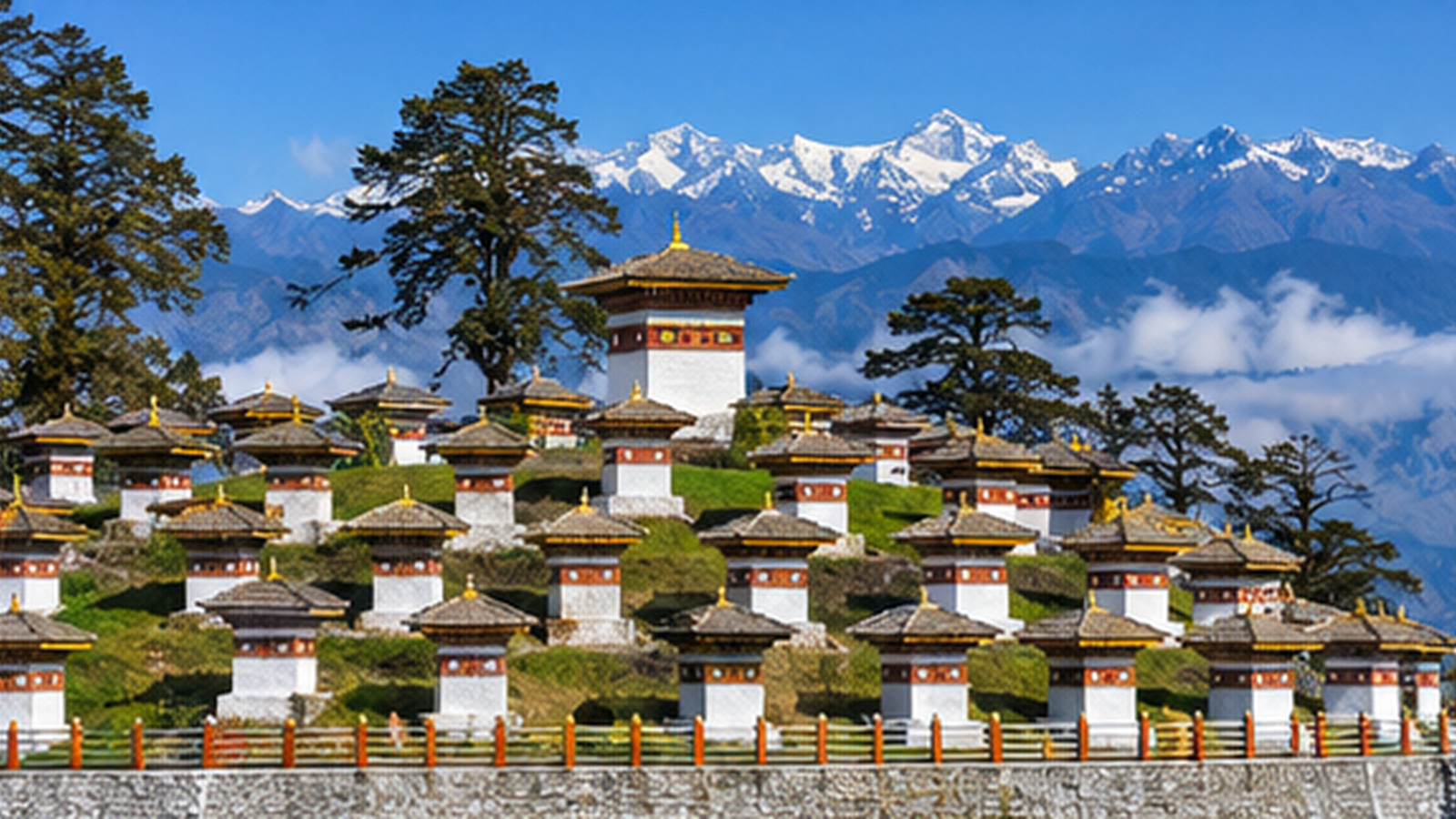
A 3,100m pass with 108 chortens and panoramic Himalayan views on the Thimphu–Punakha road.
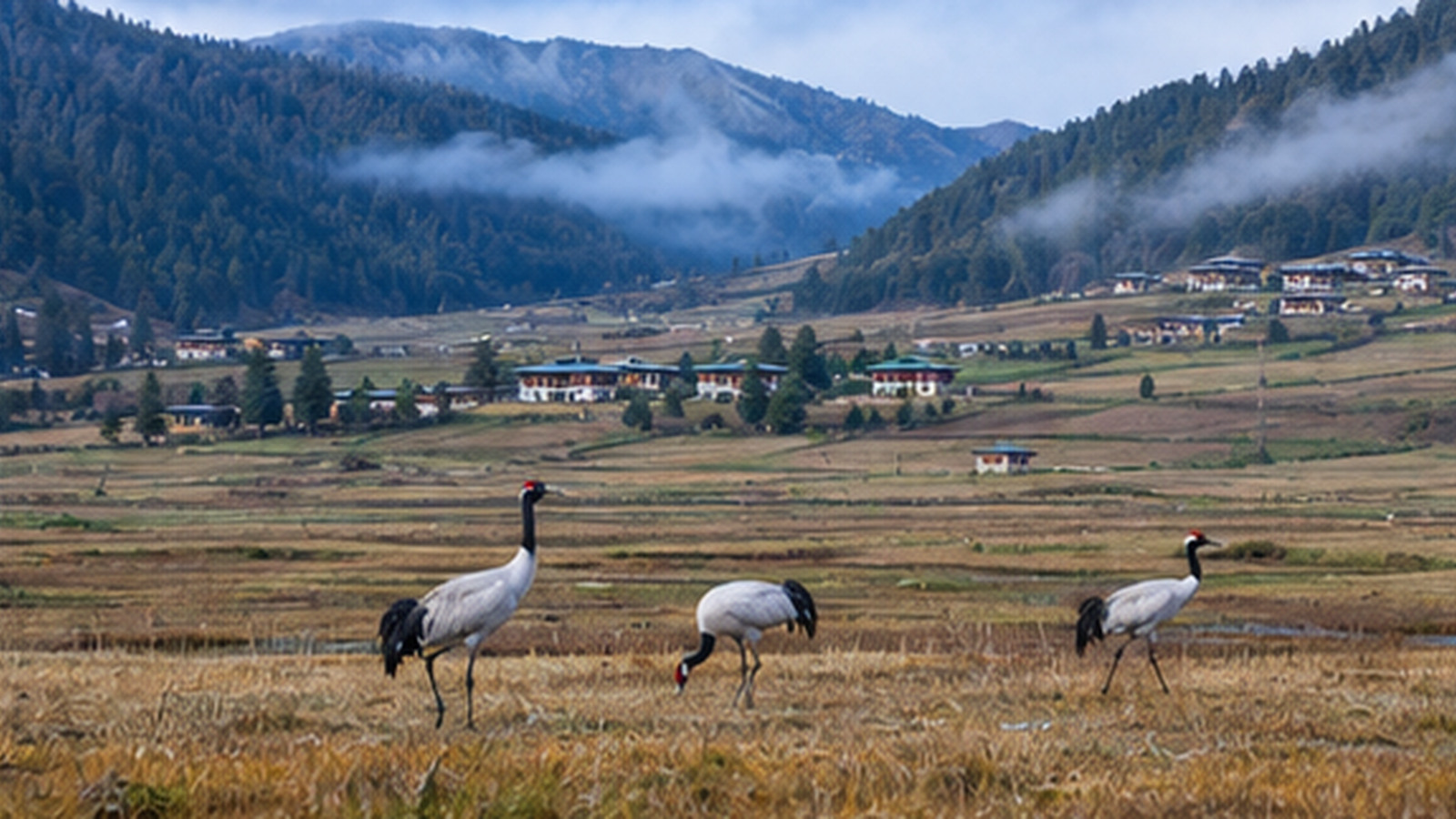
A glacial valley and winter home of the rare black-necked cranes.
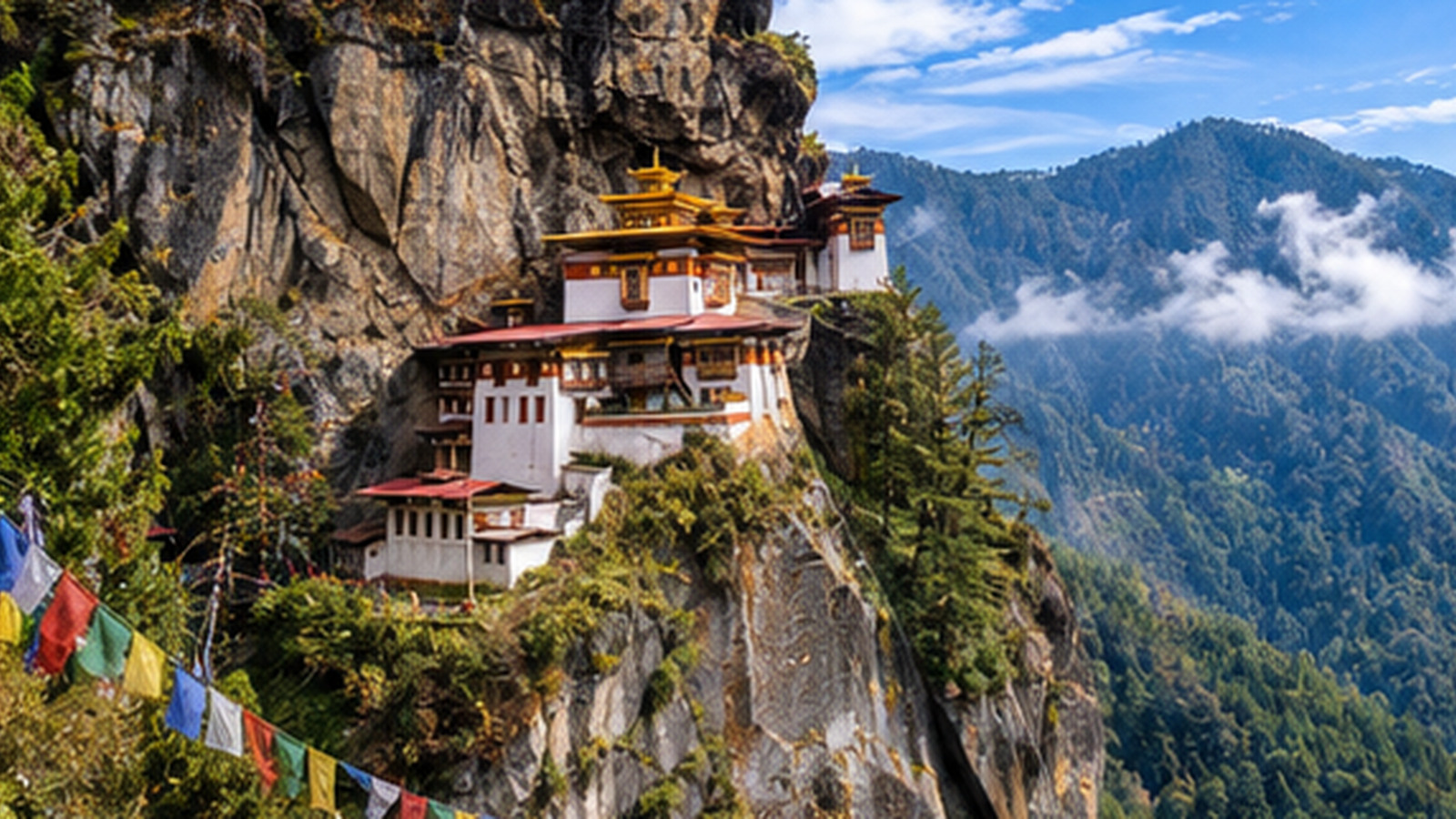
Bhutan’s iconic monastery clinging to a 900m cliff, reached by a scenic half-day hike.
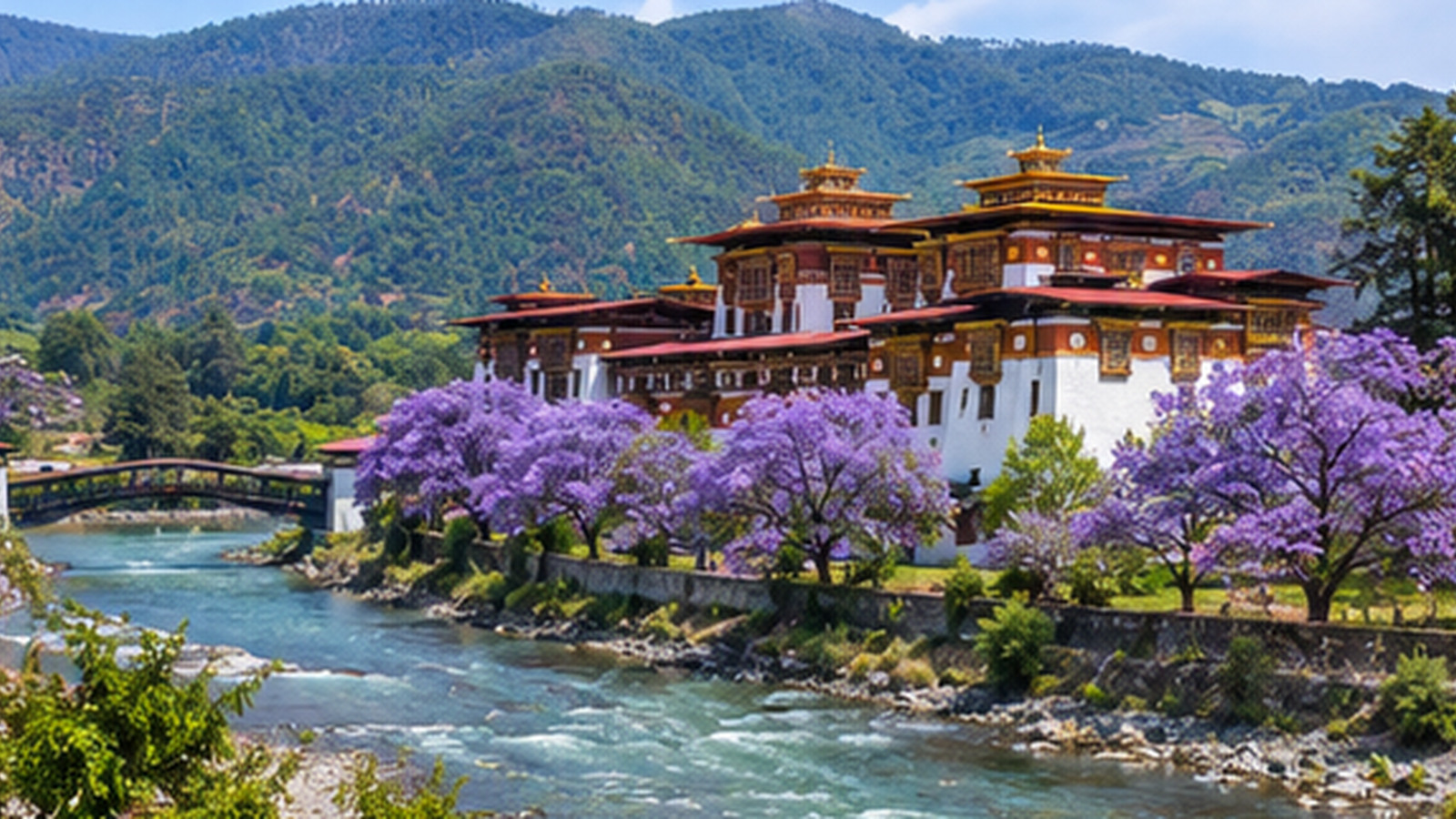
A majestic fortress-monastery between two rivers, especially lovely in spring jacaranda season.
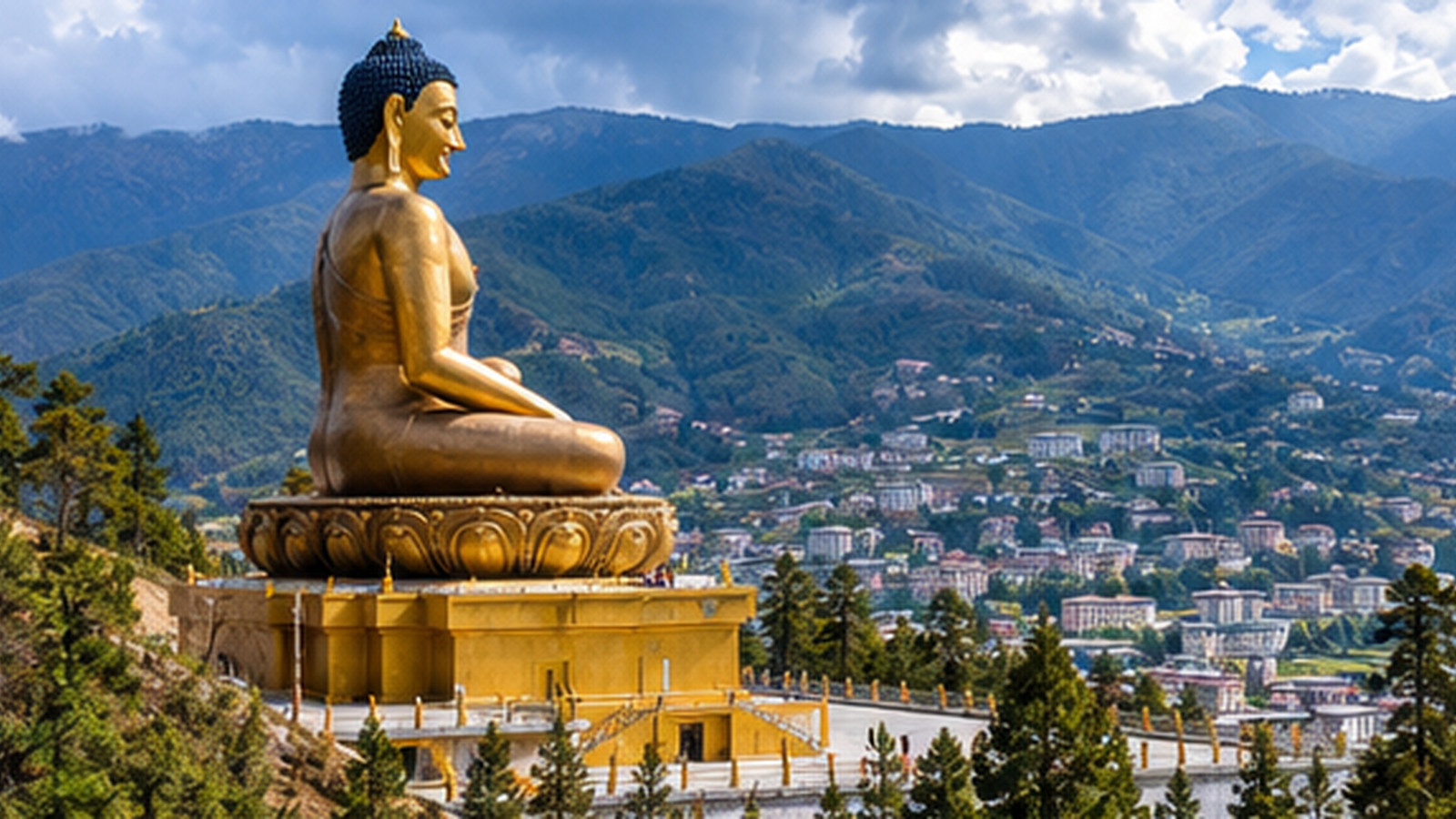
A giant 51m golden Buddha overlooking the capital, with city views.
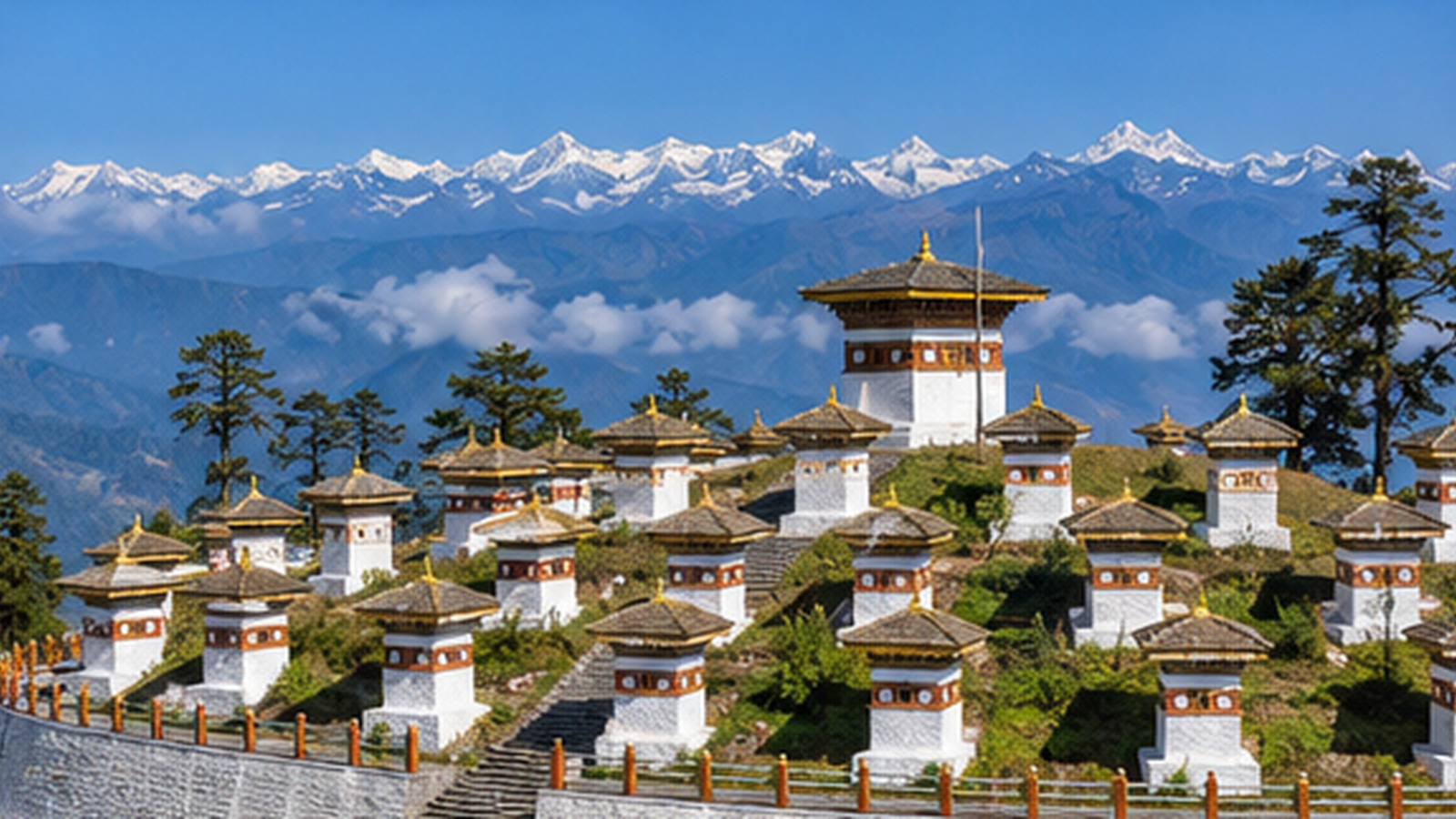
108 memorial chortens on a mountain pass with sweeping Himalayan panoramas on clear days.
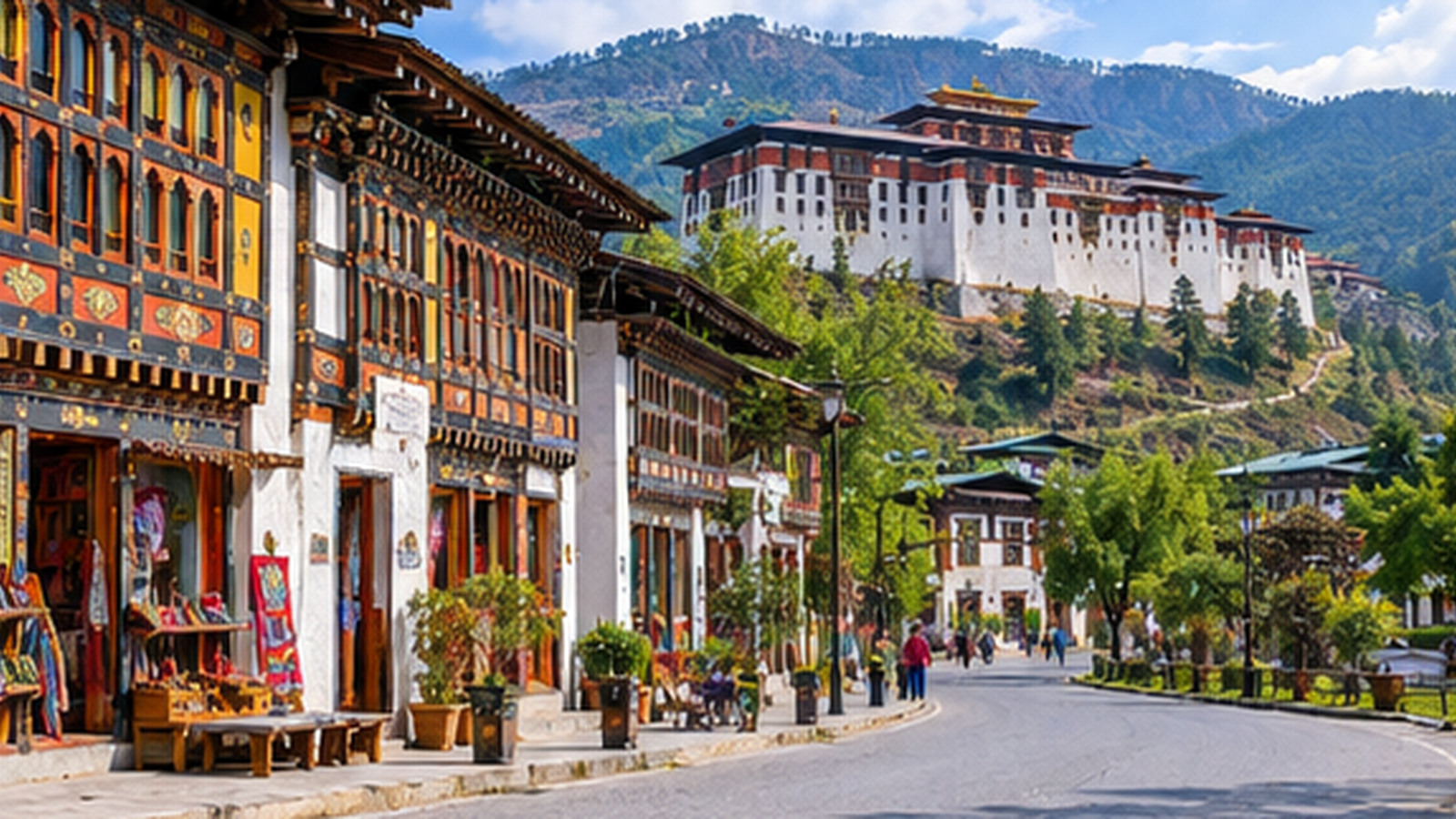
A classic whitewashed fortress-monastery and the gateway to the Tiger’s Nest.
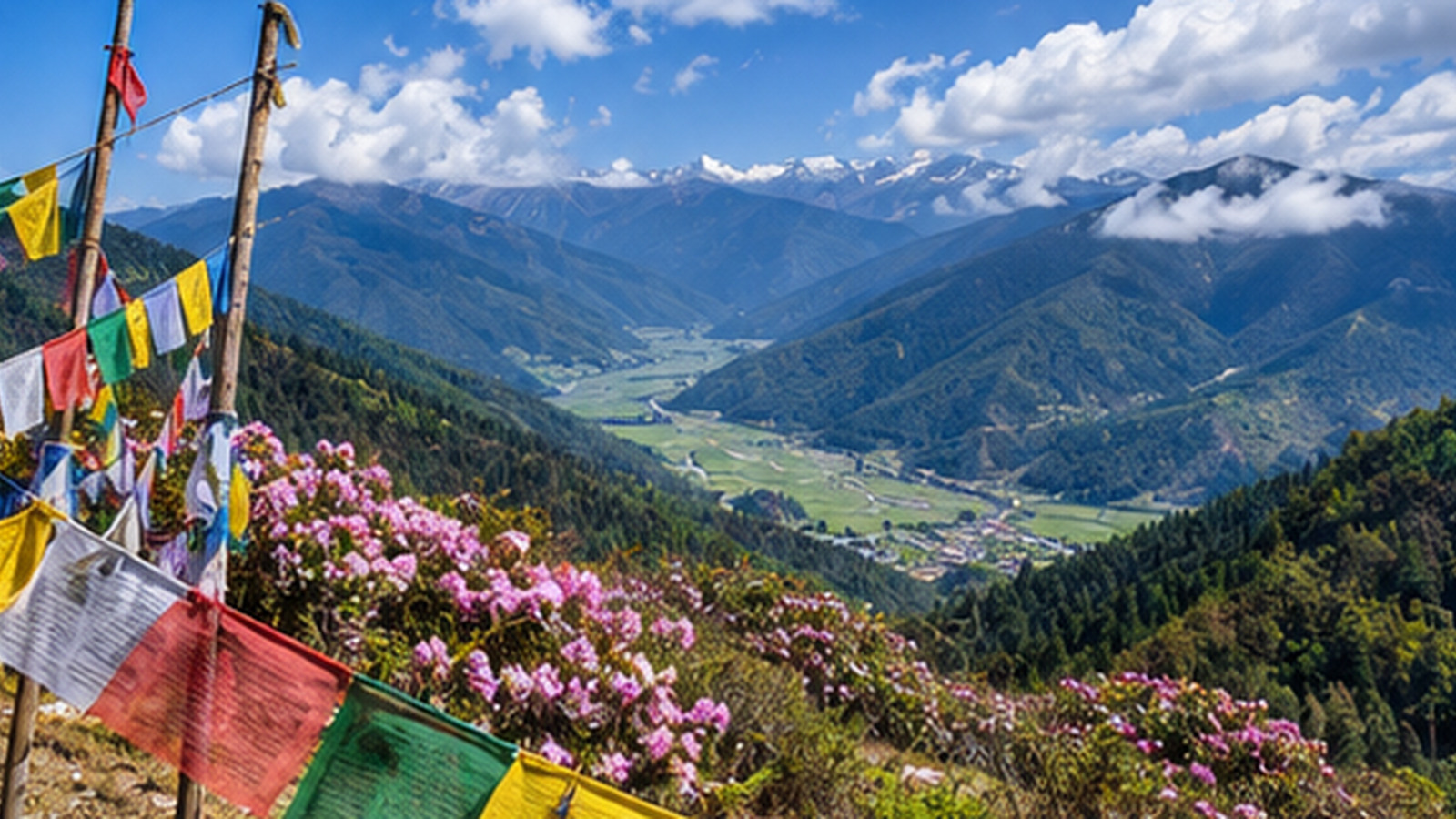
A lively market of produce, handicrafts and textiles — a window into local life.
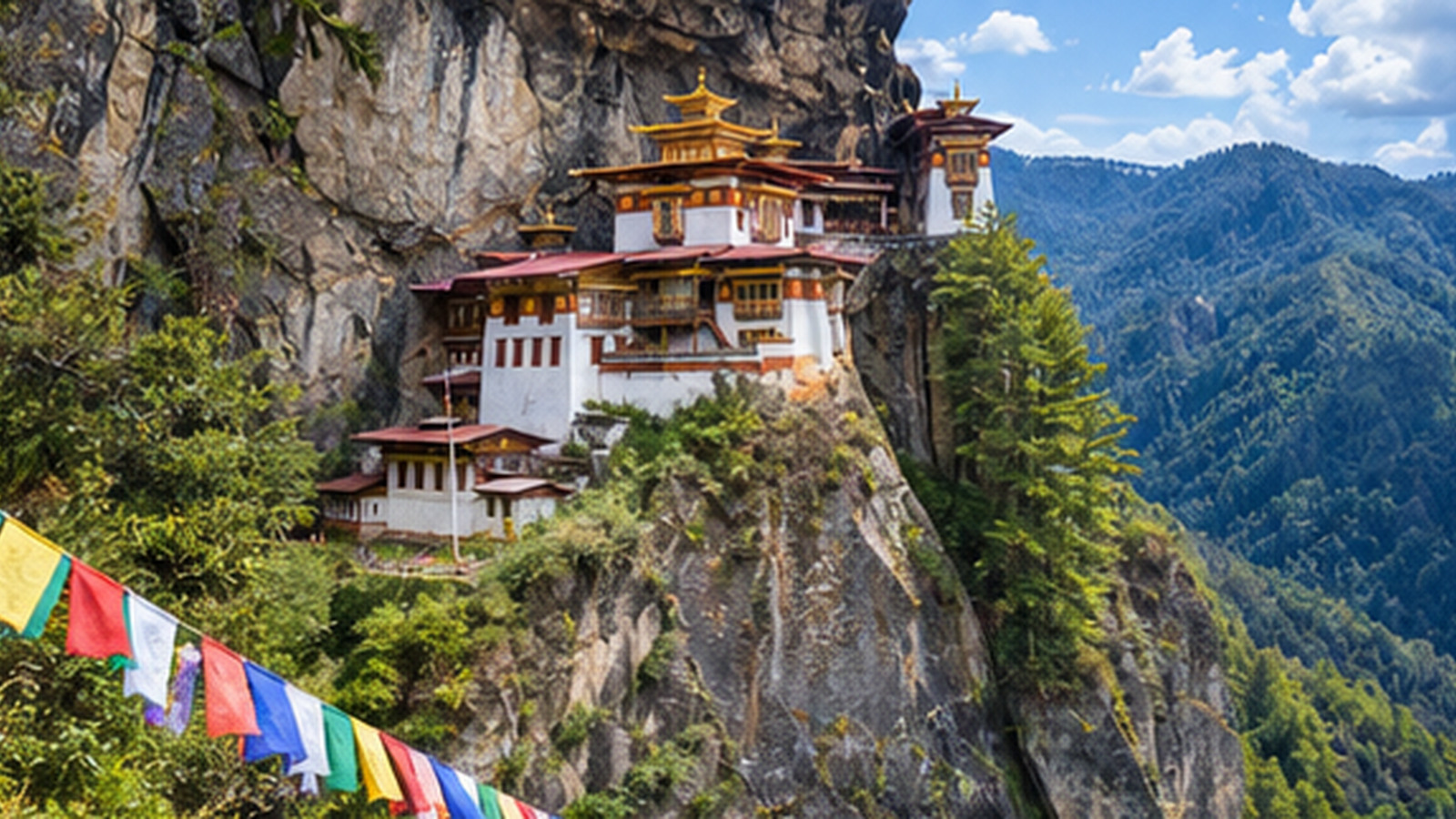
Bhutan’s must-do — a half-day hike to the cliffside monastery.
Paro, Thimphu and Punakha fortress-monasteries and temples.
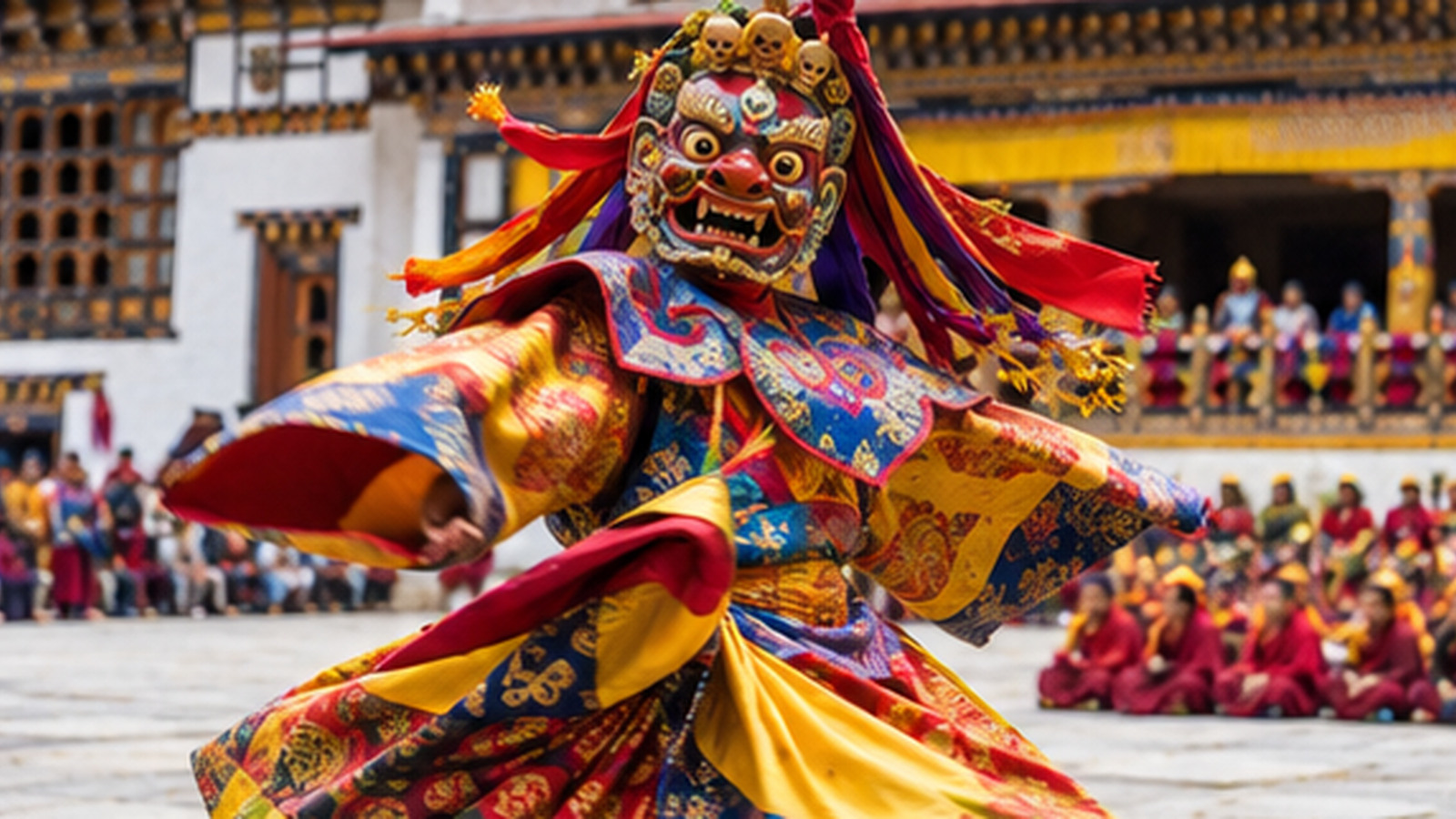
Colourful masked-dance festivals, best in spring and autumn.
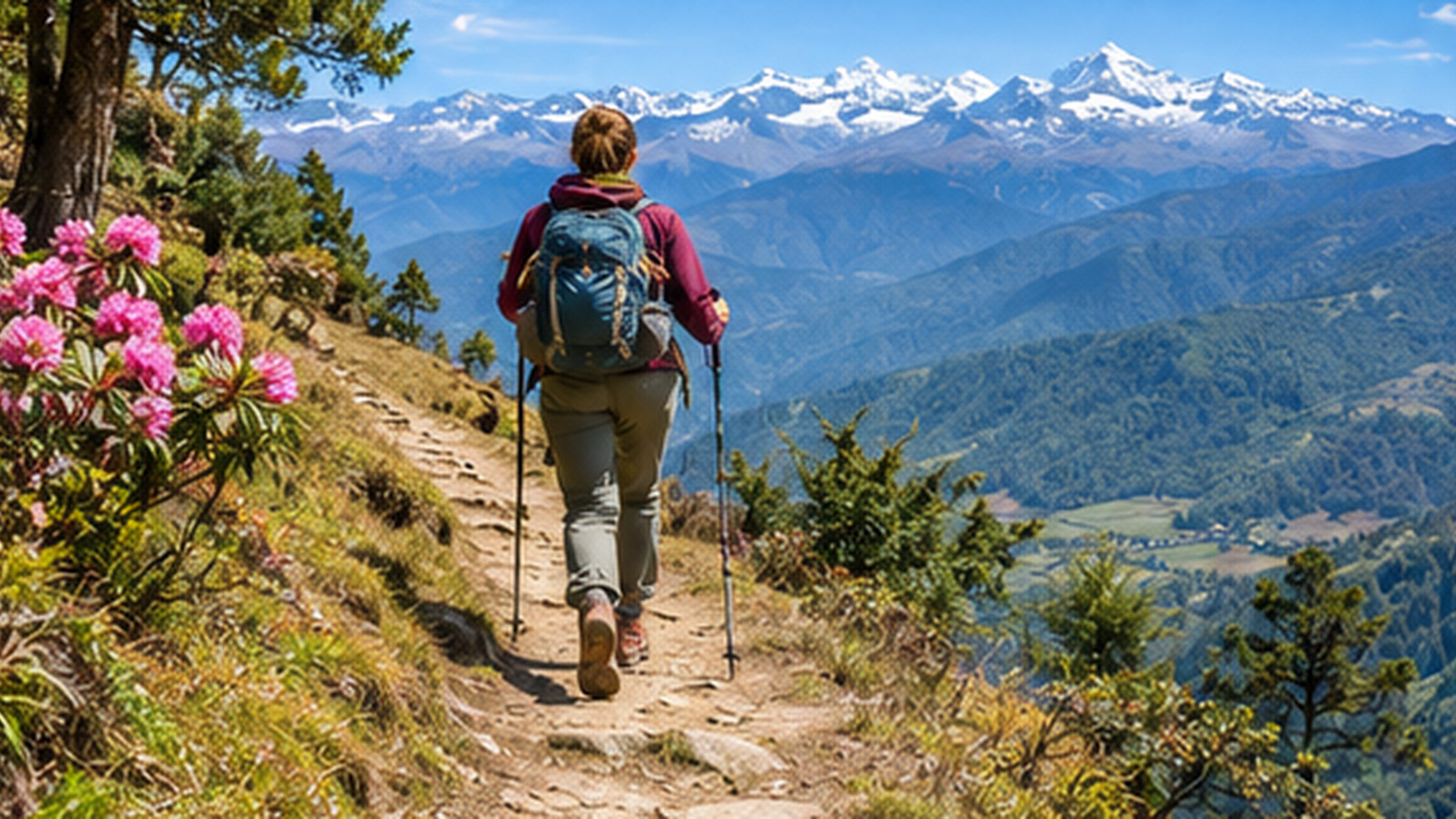
Dochula Pass, Phobjikha Valley cranes and gentle valley walks.
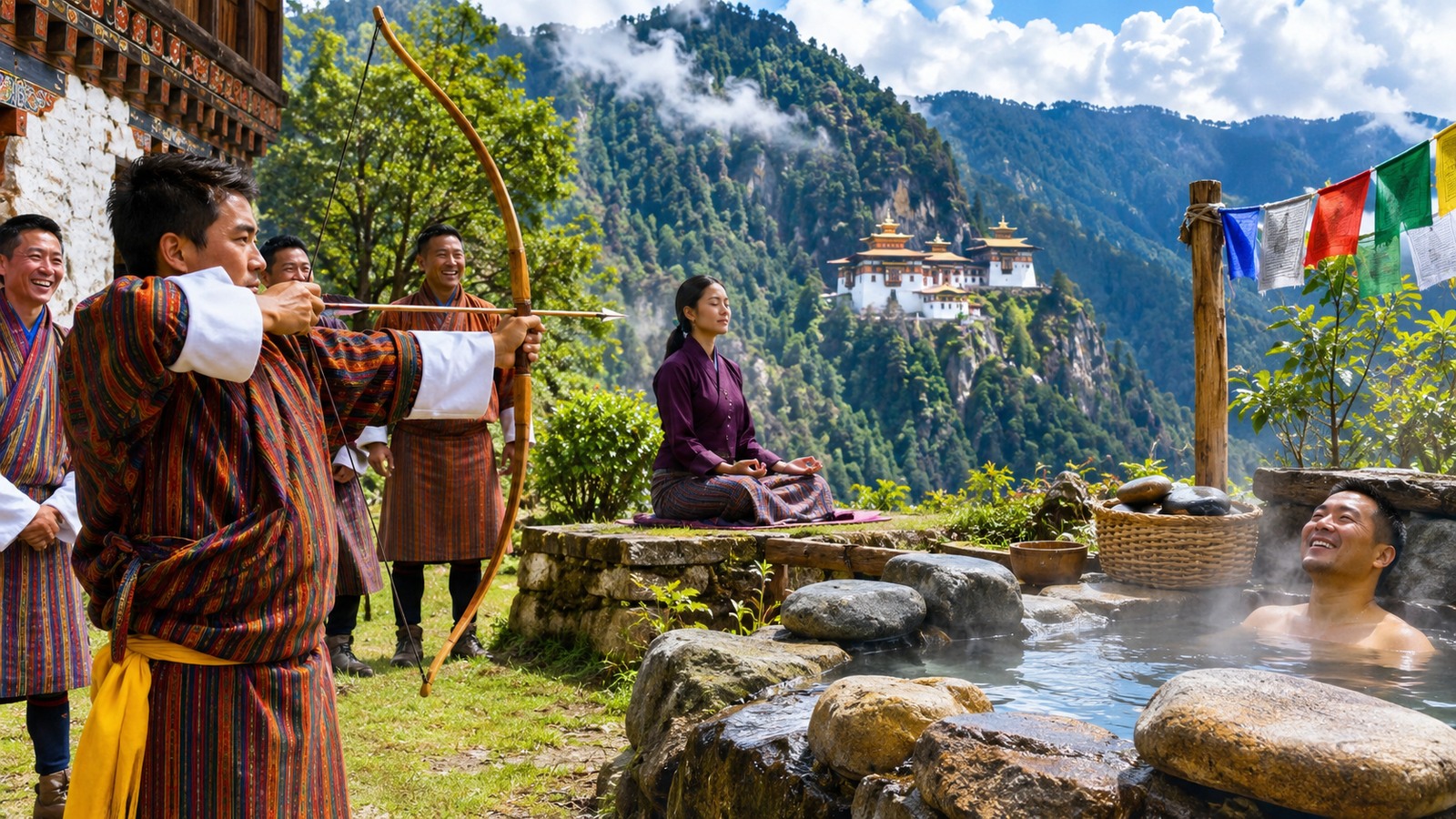
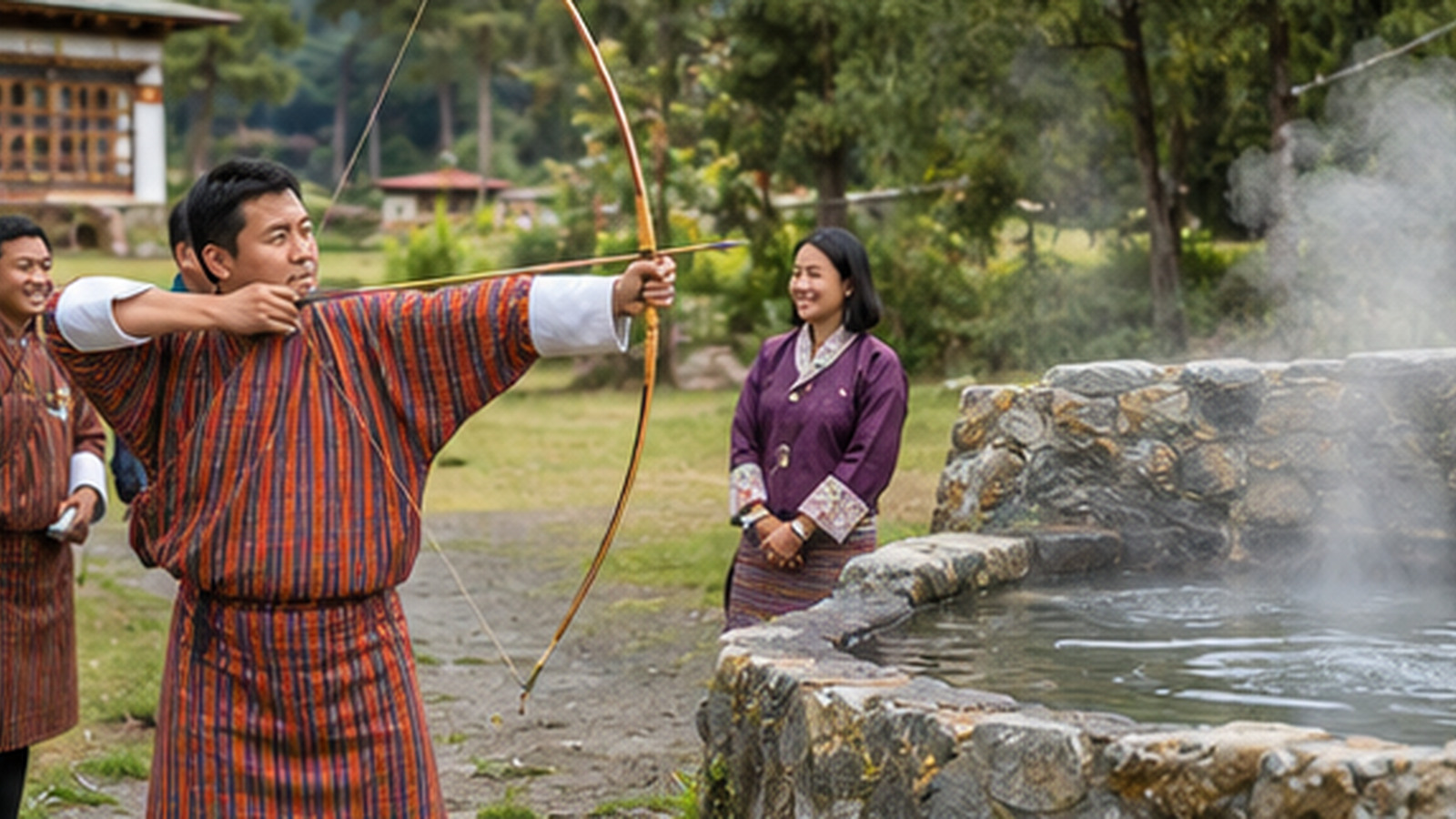
Archery, hot-stone baths, meditation and the happiness-first way of life.
Book tours & activities through our travel partners — see options. Bluebird Next may earn a commission from partner bookings at no extra cost to you (Affiliate Disclosure).
Bhutan is pricier than other neighbours because of the daily Sustainable Development Fee (SDF), charged at a concessional rate for Indians, but hotels and food are reasonable and the experience is uncrowded. Indicative per-person figures for a 5–6 day trip in 2026 (confirm the current SDF on the official site).
| Item | Typical cost (per person) |
|---|---|
| Return flights (ex-India) OR overland | ₹16,000 – ₹35,000 / cheaper overland |
| Entry permit | ₹0 (permit itself is free) |
| SDF (per night, Indians — concessional) | ~₹1,200 / BTN 1,200 (confirm on official portal) |
| Hotels (3★, per night, twin) | ₹3,000 – ₹7,000 |
| Guide + car (per day, often required) | ₹4,000 – ₹8,000 |
| Food & entries | ₹1,200 – ₹2,500 / day |
| From | Typical return airfare |
|---|---|
| Delhi | ₹22,000 – ₹35,000 (direct Paro, ~2.5 hrs) |
| Kolkata | ₹16,000 – ₹28,000 (direct Paro, ~1 hr) |
| Overland (via Phuentsholing) | Train/flight to Bagdogra + road — the budget route |
| Mumbai/Bengaluru | ₹26,000 – ₹40,000 (1-stop to Paro) |
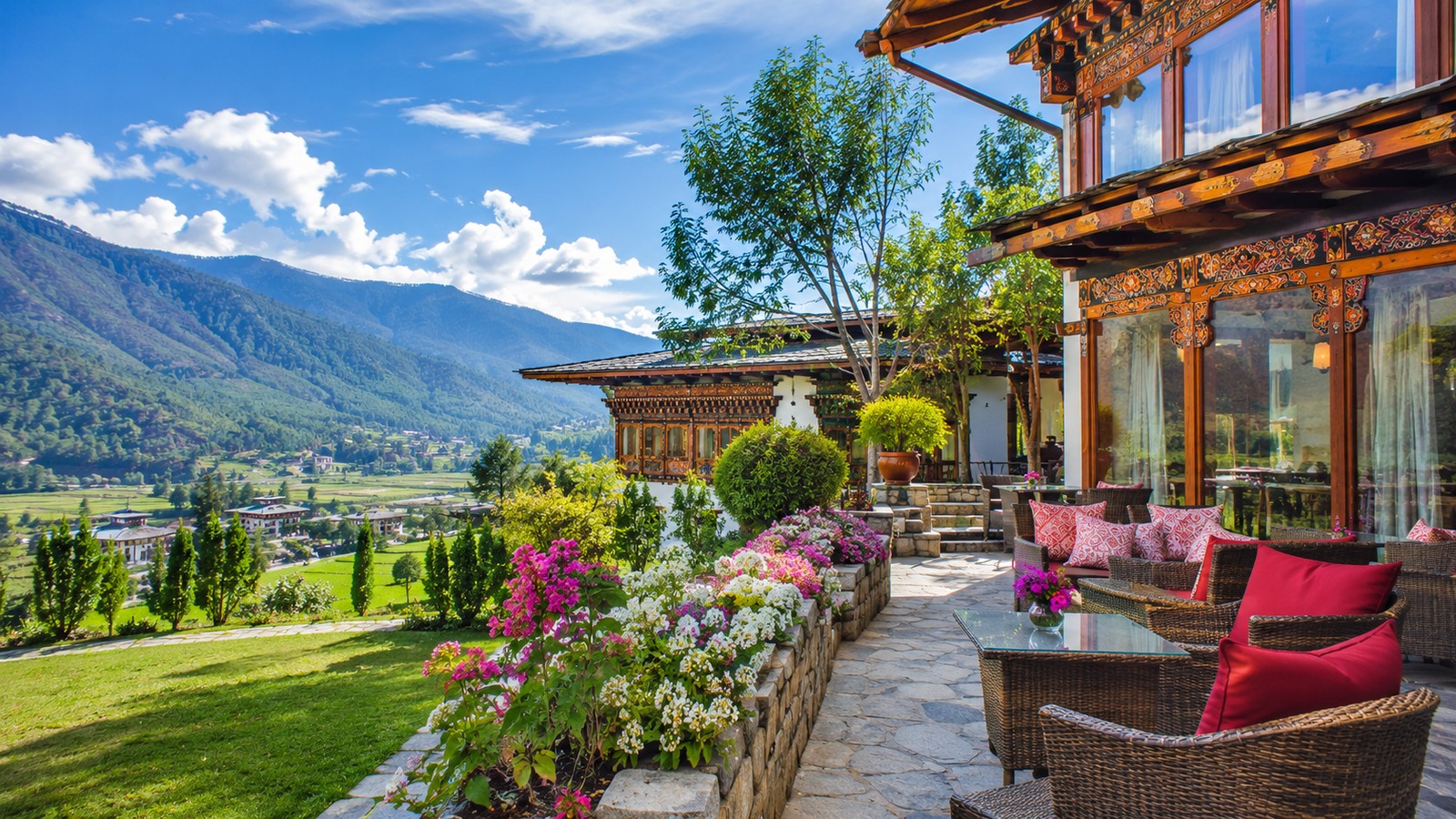
Best base for the Tiger’s Nest and arrival/departure; valley-view hotels.
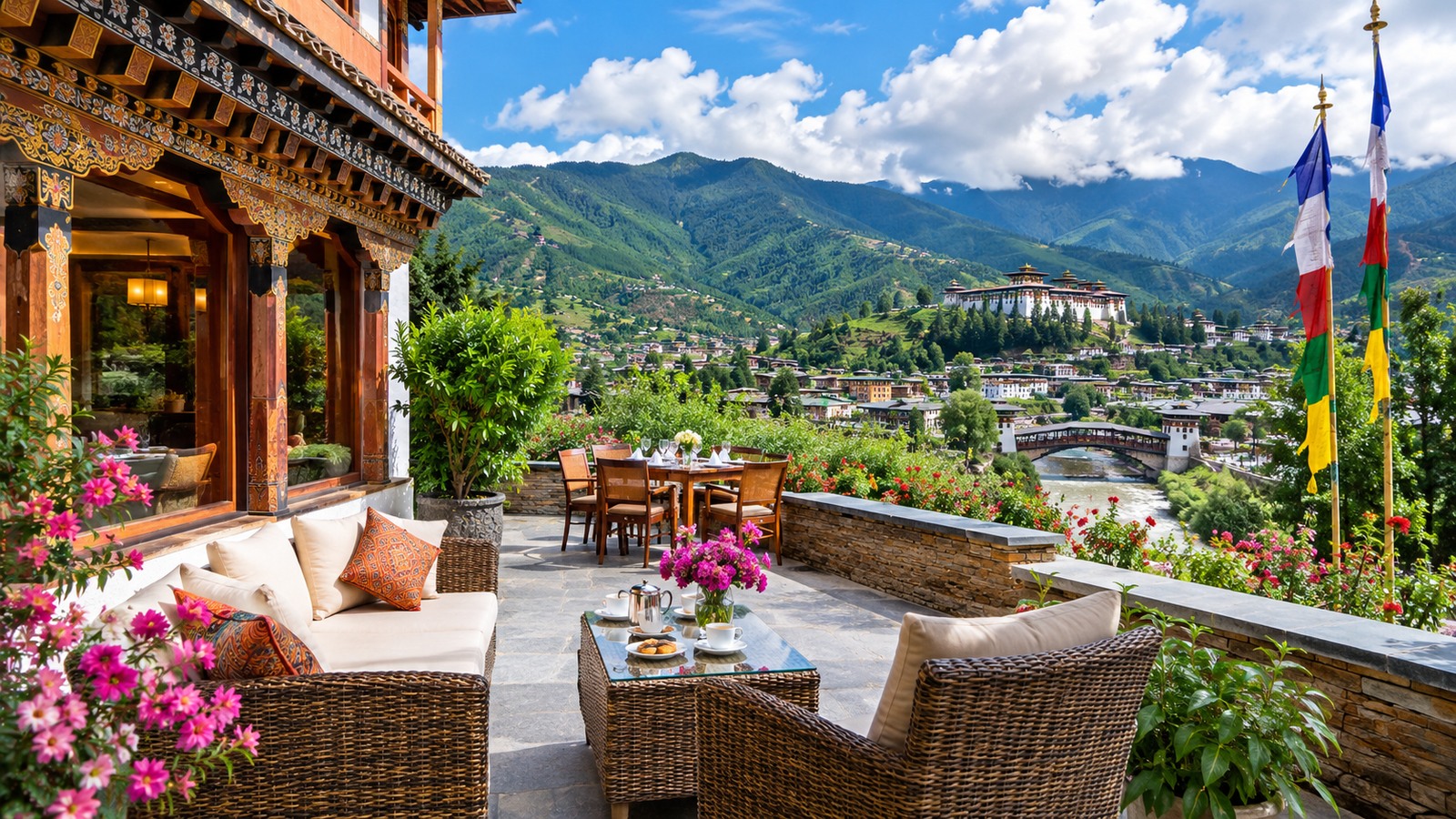
The capital — more dining, markets and comfort.
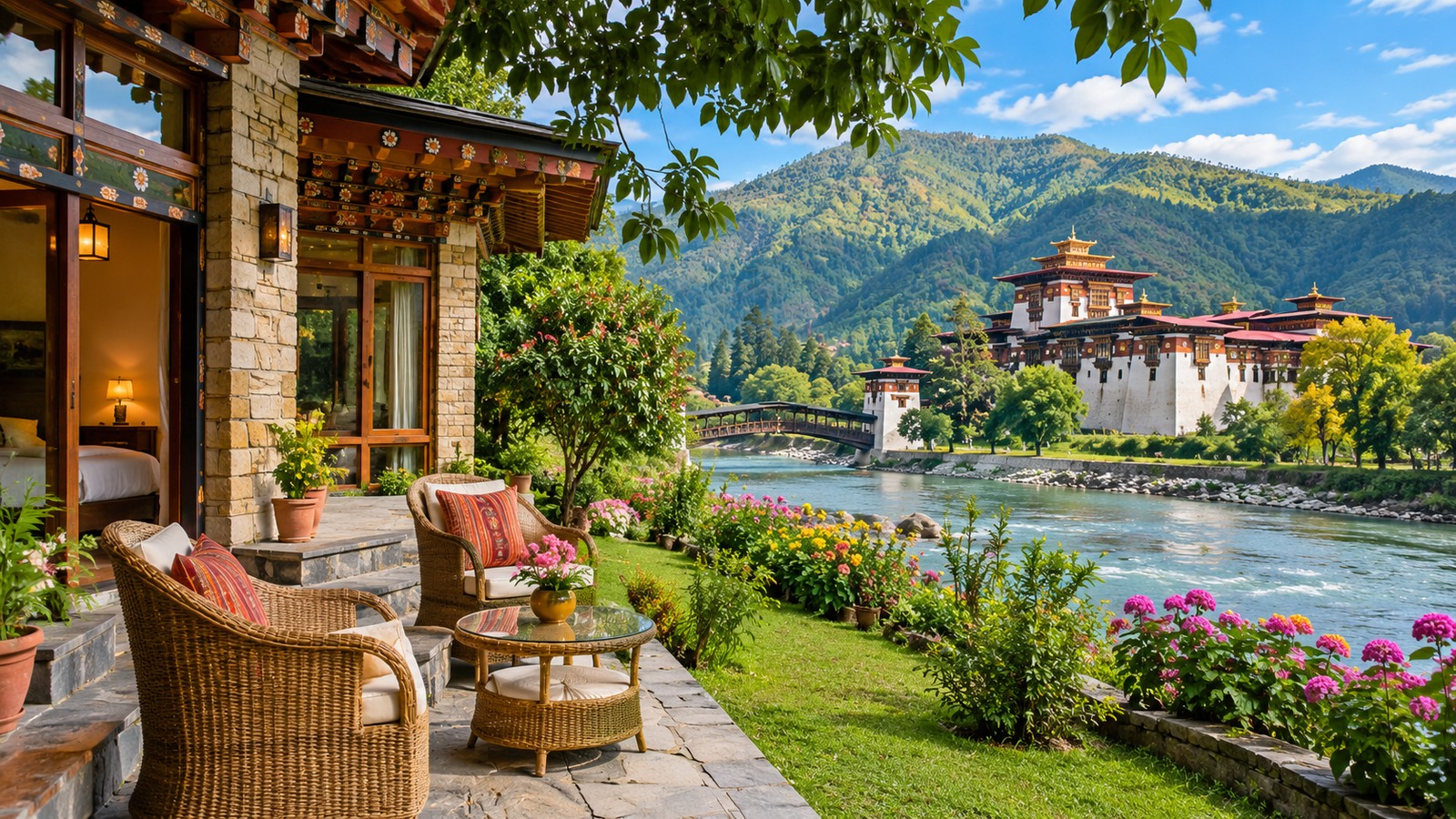
Lower, warmer riverside stays near the beautiful dzong.
Bhutanese food centres on red rice and ema datshi (chillies and cheese), with Indian, Tibetan and continental options in hotels. Dishes can be very spicy — ask for mild.
Vegetarians are well served — ema datshi, kewa datshi (potato-cheese), shamu datshi (mushroom), red rice and vegetable dishes, plus Indian food in most hotels; Jain travellers should ask for no onion/garlic and specify mild, as chillies are central.
Indian food (North-Indian thalis, dal, rice) is available in most tourist hotels and Thimphu restaurants given the close ties, so vegetarians rarely struggle.
No visa, but you need an entry permit (online or at the border) and must pay the daily Sustainable Development Fee at the concessional Indian rate. Confirm the current SDF on the official portal before booking; children pay reduced or no SDF by age. Carry a passport or Voter ID (not Aadhaar/licence).
The ngultrum is pegged 1:1 to the Indian rupee and INR is accepted (avoid ₹2000 notes). Cards are accepted in bigger hotels; carry cash for shops, entries and tips. ATMs are limited outside towns; UPI is not reliably accepted.
A guide and car are commonly arranged for the sightseeing circuit and make route permits (beyond Paro/Thimphu) easy. Roads are winding; distances take time. Book a reputable local operator or your hotel to handle permits.
Valleys sit around 2,200–3,100m, so take it easy on day one. The Tiger’s Nest hike is 4–6 hours round trip — carry water, go early, and consider a pony for the lower section.
Buy a B-Mobile or TashiCell SIM on arrival, or use an eSIM. Bhutan uses 230V with Type C/D/G sockets — Indian plugs mostly fit, but carry a universal adapter and a power bank.
Dramatic flights from Delhi, Kolkata and others; Paro is one of the world’s most scenic airports.
The budget route — rail/flight to Bagdogra/NJP, then road via Phuentsholing border.
A guide and private car are the norm; roads are winding and distances slow, so plan generous travel time.
Bhutan is one of Asia’s safest, calmest destinations, with very low crime and friendly, honest people. The main considerations are altitude, winding mountain roads and cold nights. Acclimatise before the Tiger’s Nest, use a reputable guide and driver, dress warmly, and carry travel insurance covering hiking and medical care.
❌ Myth: Indians need a visa for Bhutan.
✅ Fact: No visa is needed — just an entry permit plus a daily SDF at the concessional Indian rate. Carry a passport or Voter ID.
❌ Myth: The SDF makes Bhutan unaffordable.
✅ Fact: The Indian rate is concessional, and overland travel and modest stays keep costs reasonable; the fee keeps the country clean and uncrowded.
❌ Myth: You can travel anywhere on the basic permit.
✅ Fact: The permit covers Paro and Thimphu; other districts need a route permit, usually arranged by your hotel or guide.
❌ Myth: Vegetarians will struggle.
✅ Fact: Cheese-and-vegetable dishes (ema/kewa/shamu datshi), red rice and Indian food make Bhutan easy for vegetarians — just ask for mild.
❌ Myth: You must be very fit for the Tiger’s Nest.
✅ Fact: It is a moderate 4–6 hour hike at a steady pace; ponies help the lower stretch, and most reasonably active travellers manage it.
No — Indian citizens do not need a visa, but you must obtain an entry permit and pay a daily Sustainable Development Fee (SDF) at the concessional rate for Indians. Carry a valid passport or Voter ID card (Aadhaar and driving licences are not accepted).
The Sustainable Development Fee is a per-night charge that funds Bhutan’s low-impact tourism; Indian nationals pay a concessional rate, and children get reductions by age. Confirm the current amount on the official portal before booking, as it has changed over time.
A 5–6 day trip is roughly ₹55,000–₹1,10,000 per person including flights, SDF, hotels and a guide/car — less if you travel overland via Phuentsholing and stay modestly.
By air to Paro (direct from Delhi, Kolkata and others) or overland — rail/flight to Bagdogra/NJP, then road via the Phuentsholing border, which is the budget route.
Five to seven days covers the western valleys (Paro, Thimphu, Punakha) and the Tiger’s Nest comfortably; shorter trips keep total SDF nights down.
March–May for spring blooms and September–November for crisp, clear skies and festivals. Winter is cold but clear and quiet in the lower valleys.
It is a moderate 4–6 hour round-trip hike at altitude; go early, carry water and take it steady. Ponies can help the lower section, and most reasonably active travellers manage it.
Yes — cheese-and-vegetable dishes (ema/kewa/shamu datshi), red rice and Indian food are widely available. Jain travellers should ask for no onion/garlic and specify mild, as chillies are central.
Yes — the ngultrum is pegged 1:1 to the rupee and INR is accepted (avoid ₹2000 notes). Cards work in bigger hotels; carry cash for shops and entries, as ATMs are limited outside towns.
Very — it is one of Asia’s safest and calmest countries, with low crime and friendly people. The main considerations are altitude, winding roads and cold nights; carry travel insurance covering hiking.
Recommended — it covers medical care, the Tiger’s Nest and valley hikes, and trip delays on mountain roads and flights.
Sources: Department of Tourism, Bhutan (official) · Bhutan Immigration / permits (official portal)
A licensed team that has guided thousands of Indians to their visas and admissions.
 Jitender SinghFounder & Managing Director
 Vikram SinghHead – Quality & Operations
 SanjayHead – Tourist Visa Operations
 TejaswaniHead – Counselling Team
 MahimaHead – Visa Filing & Processing
 Pratigya DuttaHead – Student Visa Processing
Free, no-pressure guidance from a real counsellor who handles your case end to end — from documents to decision.