
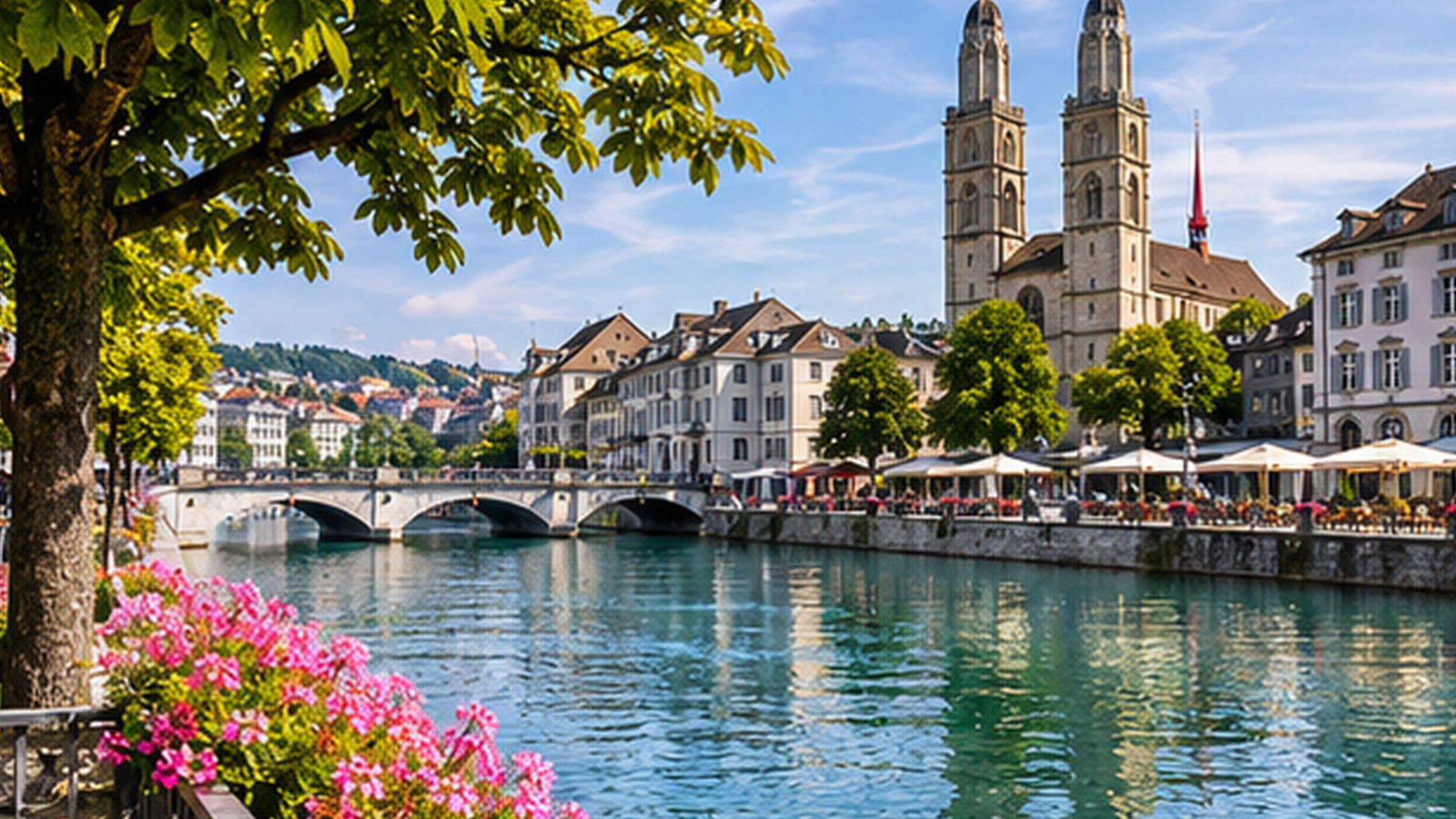
The main international gateway and largest city — a clean lakeside hub with a charming old town (Altstadt), good for a day before or after the mountains.
Snow-capped Alps, glass-clear lakes and the most scenic train rides on earth — Switzerland is the trip most Indian travellers dream of first.
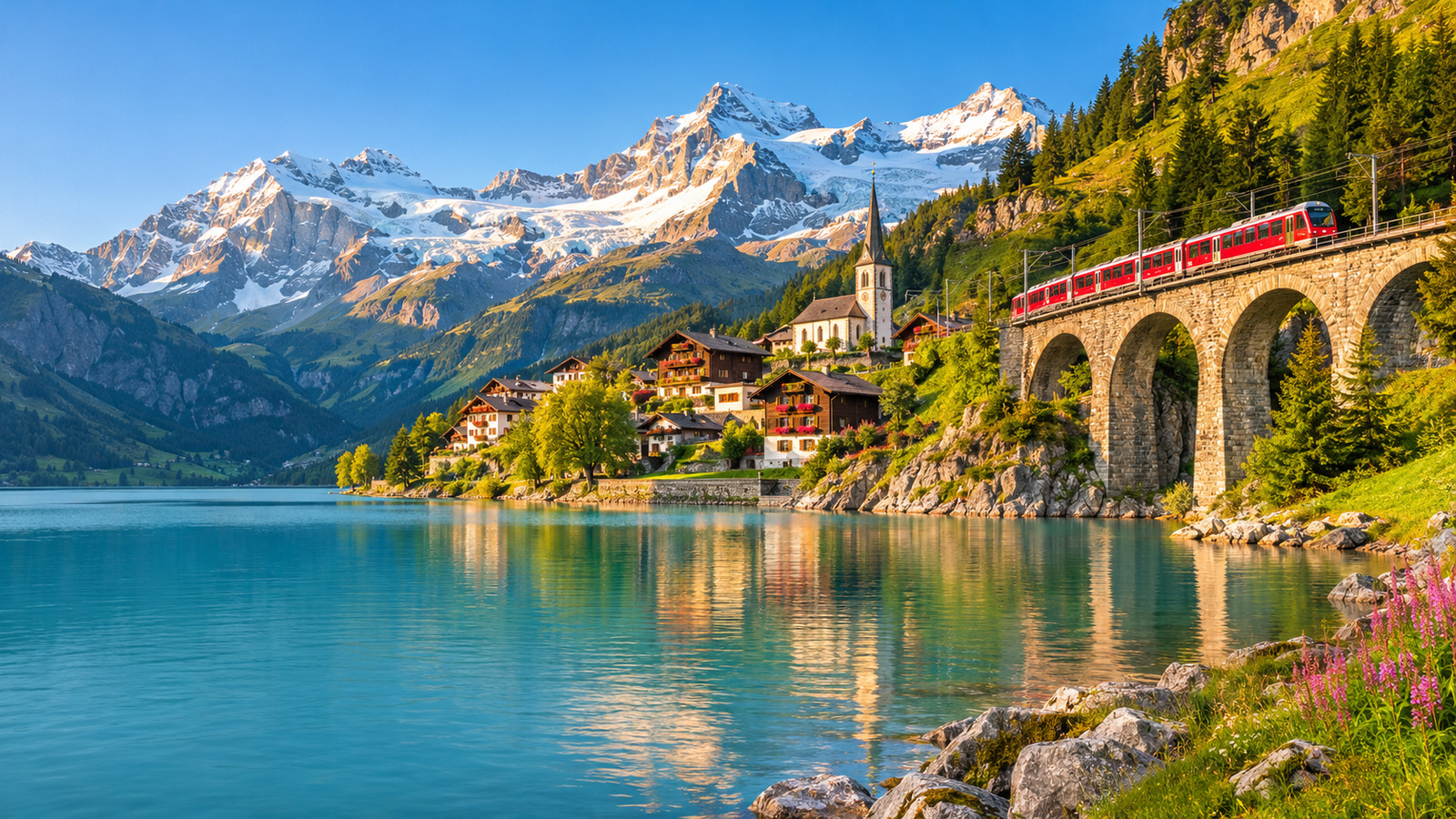
Switzerland sits at the top of almost every Indian traveller’s bucket list, and for good reason — few countries pack so much into so little space. In a week you can stand on a glacier at 3,454 m, cruise a turquoise lake, ride a cogwheel train up a cliff and still be back in a lakeside town for dinner. Thanks to decades of Bollywood shooting here (Yash Chopra practically made the Alps an Indian honeymoon icon), the landscapes feel familiar before you even land.
What makes Switzerland genuinely easy for Indians is its public transport: one of the densest, most punctual rail networks in the world, where a single Swiss Travel Pass can carry you from Zurich airport to a 2,000 m peak without ever renting a car. It is not a cheap destination, but with the right pass, half-board hotels and a tight route, a first Swiss trip is more affordable than most people fear.
This guide is written for Indian travellers: the real trip cost in rupees from your city, the exact Schengen visa process (and how we file it), where vegetarians and Jain travellers eat, how the Swiss Travel Pass saves money, and honest, dated advice you can plan around.
Indian travellers love Switzerland for the combination of safety, scenery and sheer ease — signage is clear, trains run to the minute, and vegetarian food is easy to find. It is a confidence-building first international trip: you never feel lost, distances are short, and the “wow” moments (Jungfraujoch, the Glacier Express, a paraglide over Interlaken) come thick and fast. Honeymooners, families with elderly parents and first-time flyers all do well here.
💡 From our visa desk: The biggest money mistakes we see are buying every mountain excursion and skipping the Swiss Travel Pass. Pick just one or two signature peaks (say Titlis from Lucerne and Jungfraujoch from Interlaken), let the pass cover your trains, boats and many cable cars, and self-cater some meals from Coop or Migros — it can cut a Swiss trip’s cost by a third. And always check the summit webcam before buying a peak ticket.
Schengen short-stay visa (Type C) for Indian citizens — apply before you fly (we file it).
Indian passport holders need a Schengen visa for Switzerland. It is the same visa that lets you visit the other 28 Schengen countries, so many travellers pair Switzerland with France or Italy on one visa. Apply through the Swiss embassy/VFS about 4–8 weeks before travel with return flights, hotels, travel insurance and proof of funds. Bluebird Next files it for you.
Full Switzerland tourist visa requirements & documents →Switzerland is a year-round destination, but what you see changes completely by season. For the classic green-meadows-and-snow-peaks look most Indians picture, aim for late spring to early autumn (May–September). See the month-by-month table below.
| Season | What it's like & who it suits |
|---|---|
| Spring (Apr–Jun) | Green valleys, wildflowers, waterfalls at full flow and snow still on the high peaks — the postcard combination, with fewer crowds than summer. |
| Summer (Jul–Aug) | Warmest, longest days, every cable car and trail open. Peak crowds and prices; book trains and hotels early. Overlaps Indian school holidays. |
| Autumn (Sep–Oct) | Golden larch forests, clear skies and better value as summer crowds thin. Excellent for photography and honeymoons. |
| Winter (Dec–Mar) | Snow everywhere, ski resorts in full swing and Christmas markets. Coldest, with some high passes closed, but magical if you want snow guaranteed. |
| Month | Weather & what’s on (incl. Indian holiday windows) |
|---|---|
| January | Deep winter — snow, skiing and clear Alpine air; many high passes closed but the mountain resorts shine. Cold and atmospheric. |
| February | Prime ski season with crisp, sunny days; Lucerne and the lowlands are cold but scenic. |
| March | Late winter easing to spring; skiing still good high up, valleys thawing. Quieter and better value. |
| April | Spring arrives in the valleys — green meadows below, snow on the peaks. A beautiful, less crowded month. |
| May | One of the best months — lush valleys, full waterfalls, open cable cars and smaller crowds. Overlaps Indian summer holidays. |
| June | Early summer — long days, wildflowers and all excursions open; ideal before the July rush. |
| July–August | Peak season — the warmest, busiest and priciest, with every trail and train running. Book months ahead; overlaps the Indian summer break. |
| September | Arguably the sweet spot — warm days, thinning crowds and the first autumn gold. Superb for honeymoons. |
| October | Golden larches and clear skies; cooler, cheaper and very photogenic before the high season closes. |
| November–December | Cold and quiet, then festive — Christmas markets sparkle in Lucerne, Zurich and Montreux as the ski season begins. |
The main international gateway and largest city — a clean lakeside hub with a charming old town (Altstadt), good for a day before or after the mountains.
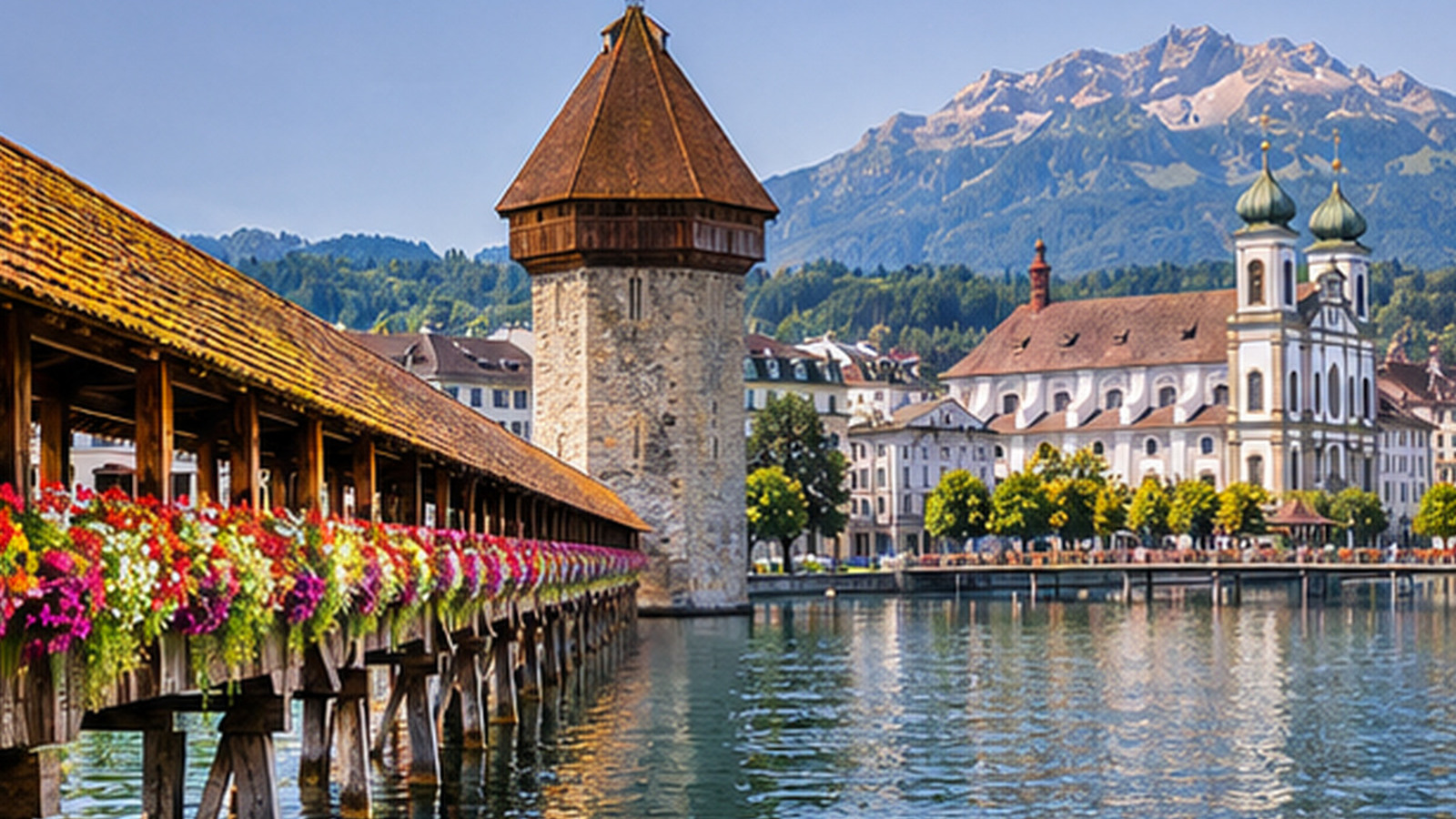
The most photogenic base: a medieval Chapel Bridge, a lake ringed by peaks, and the gateway to Mount Pilatus and Rigi. A favourite first stop for Indian groups.
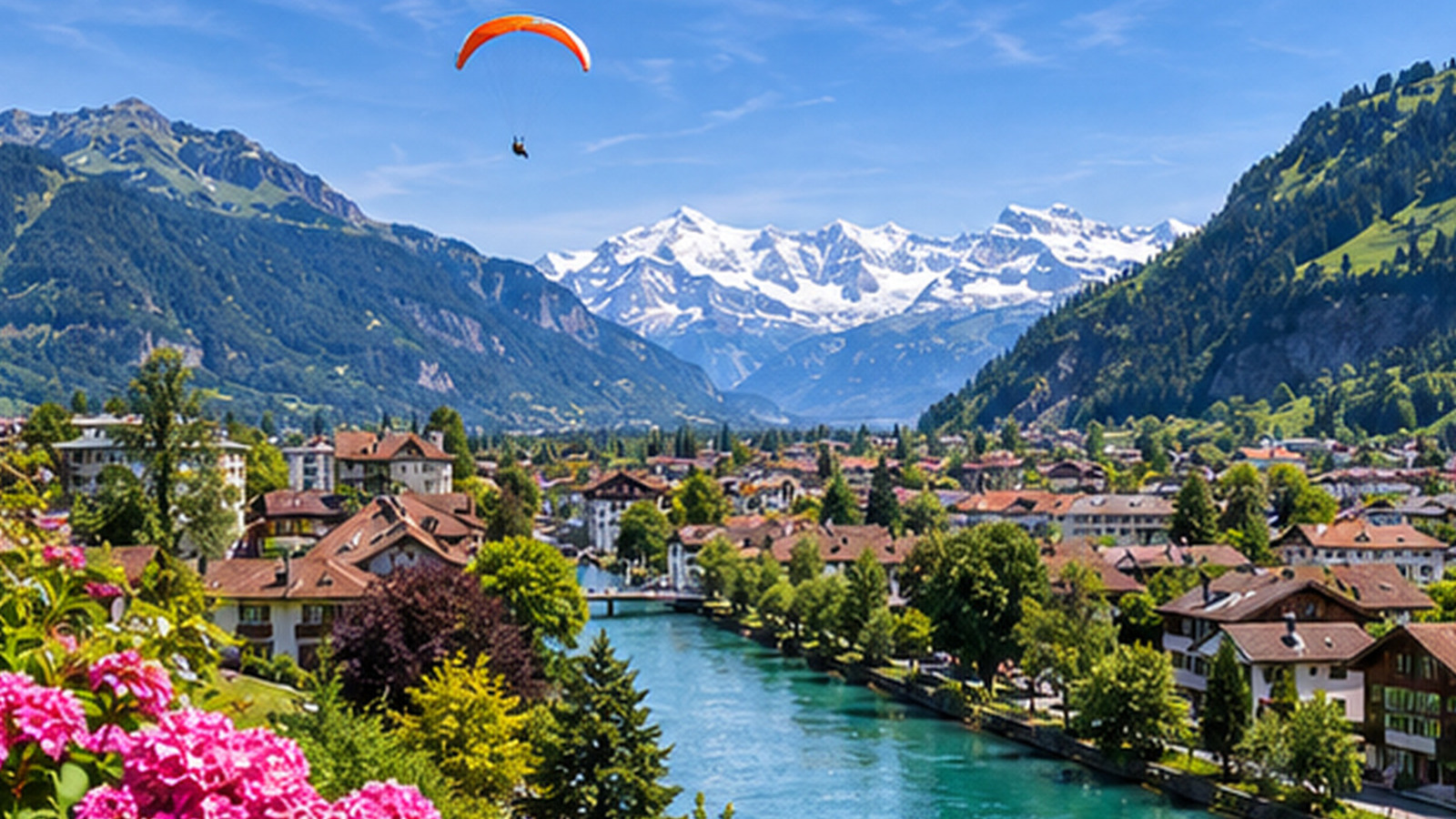
The adventure capital between two lakes and the springboard to Jungfraujoch. Paragliding, skydiving and the Harder Kulm viewpoint are all here.
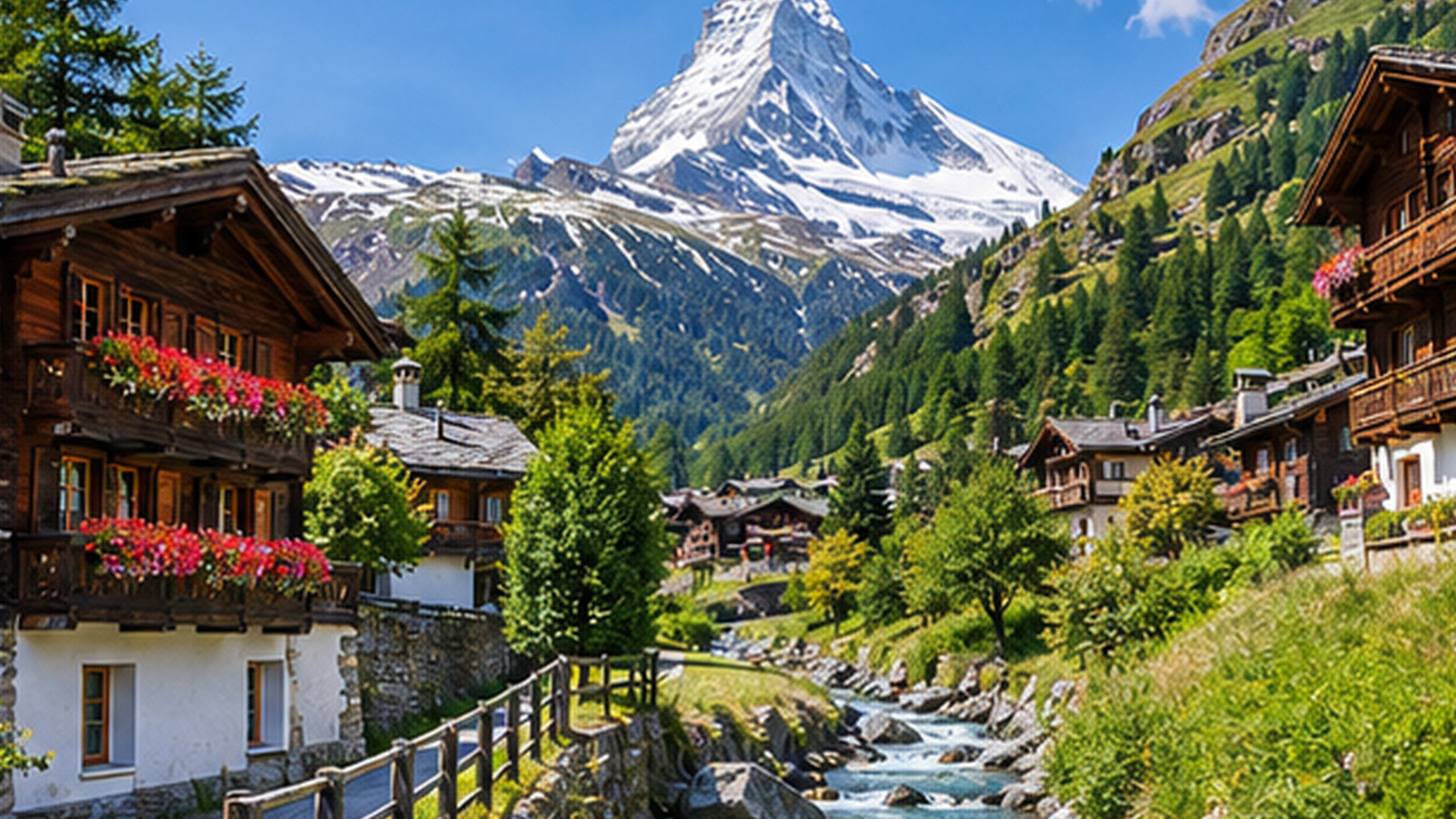
A car-free mountain village beneath the iconic Matterhorn. Pricier and further, but unbeatable for peak views and the Gornergrat railway.
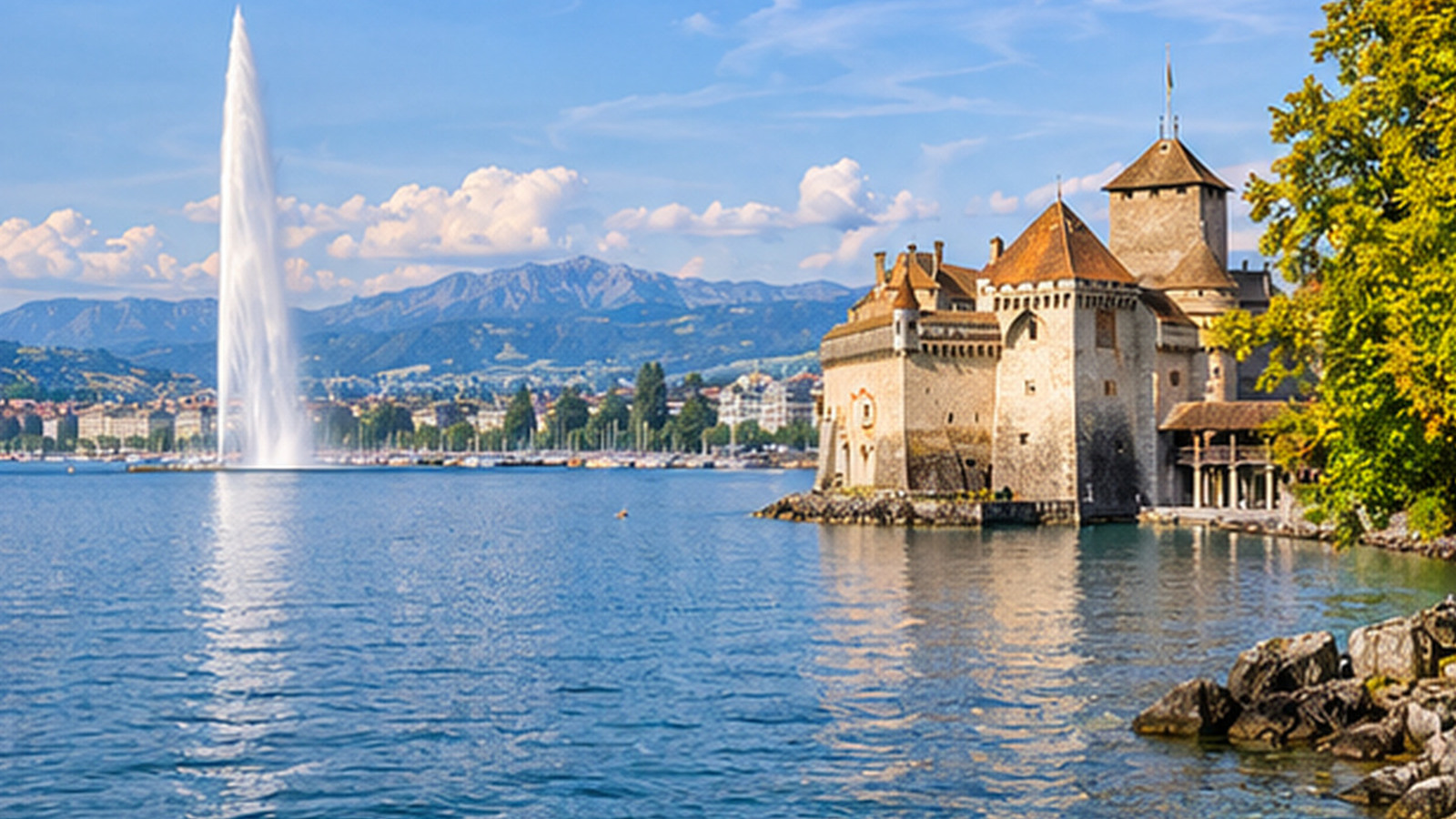
The French-speaking Lake Geneva region — the Jet d’Eau, Chillon Castle and the start of the Golden Pass and Glacier Express routes.
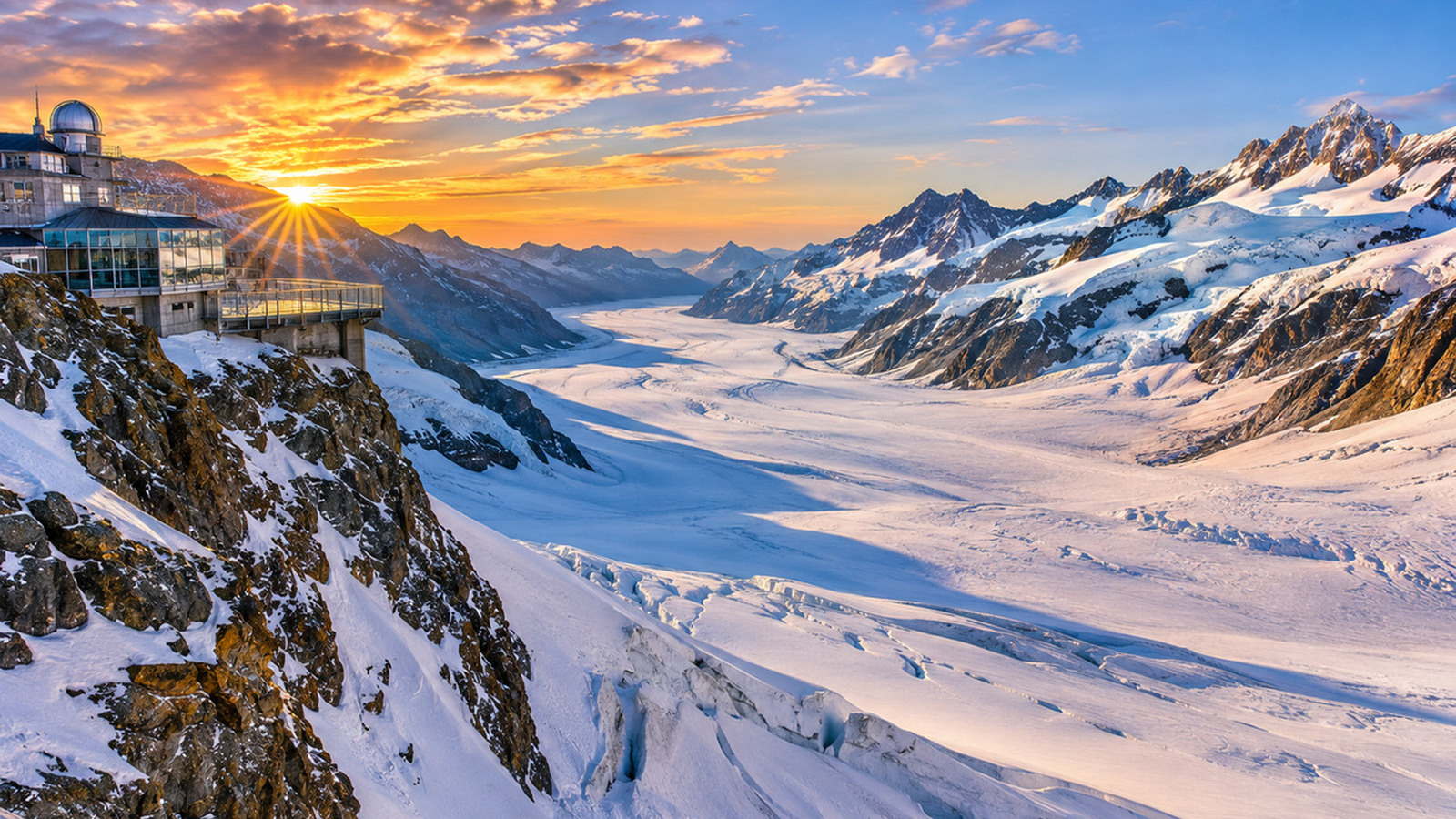
A cogwheel train climbs to 3,454 m to a year-round snow world with an ice palace and Aletsch Glacier views. The single most popular Swiss experience for Indians.
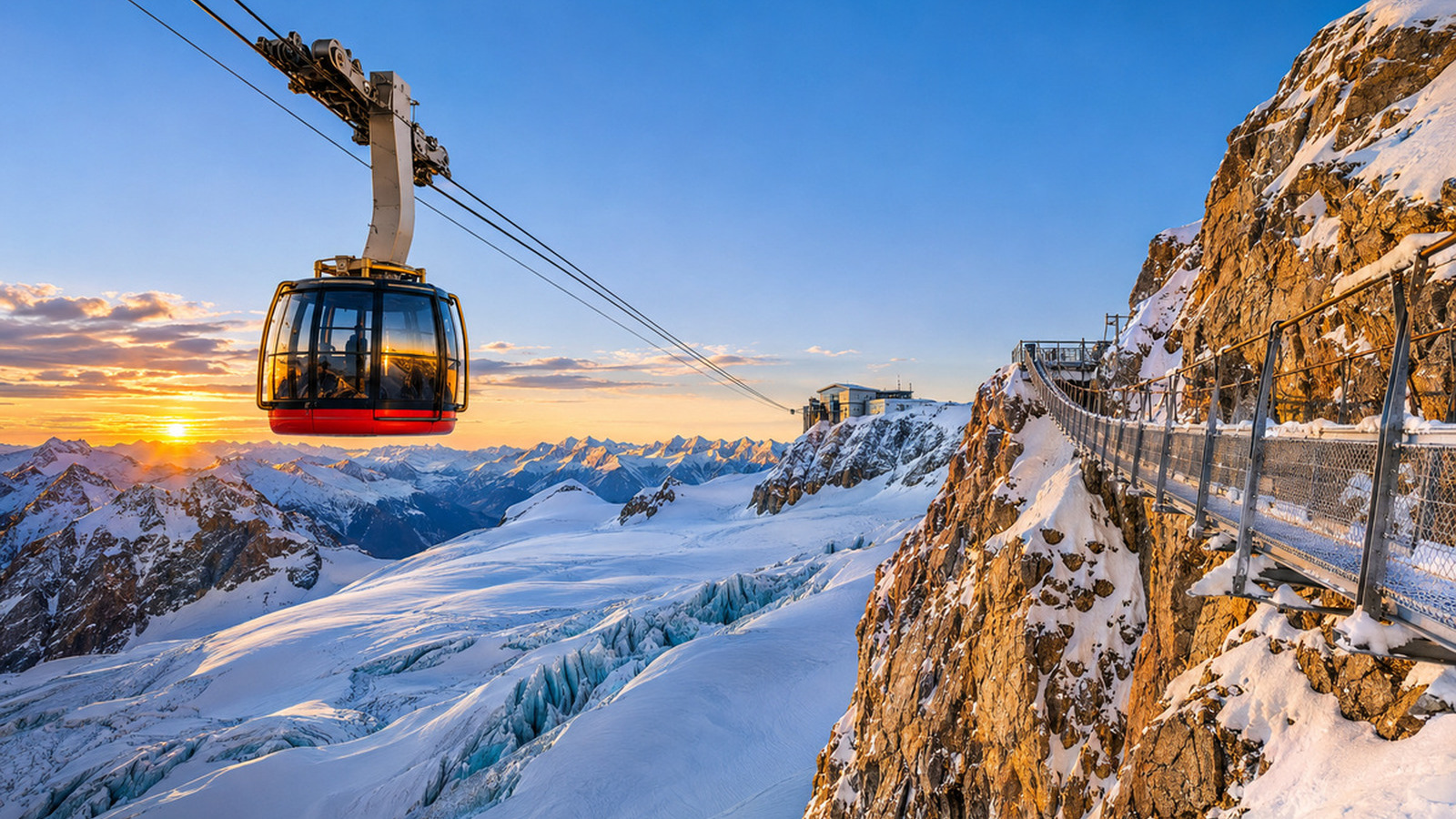
A rotating cable car to 3,020 m near Lucerne, with a cliff-walk suspension bridge and snow all year — the easiest big-snow day trip.
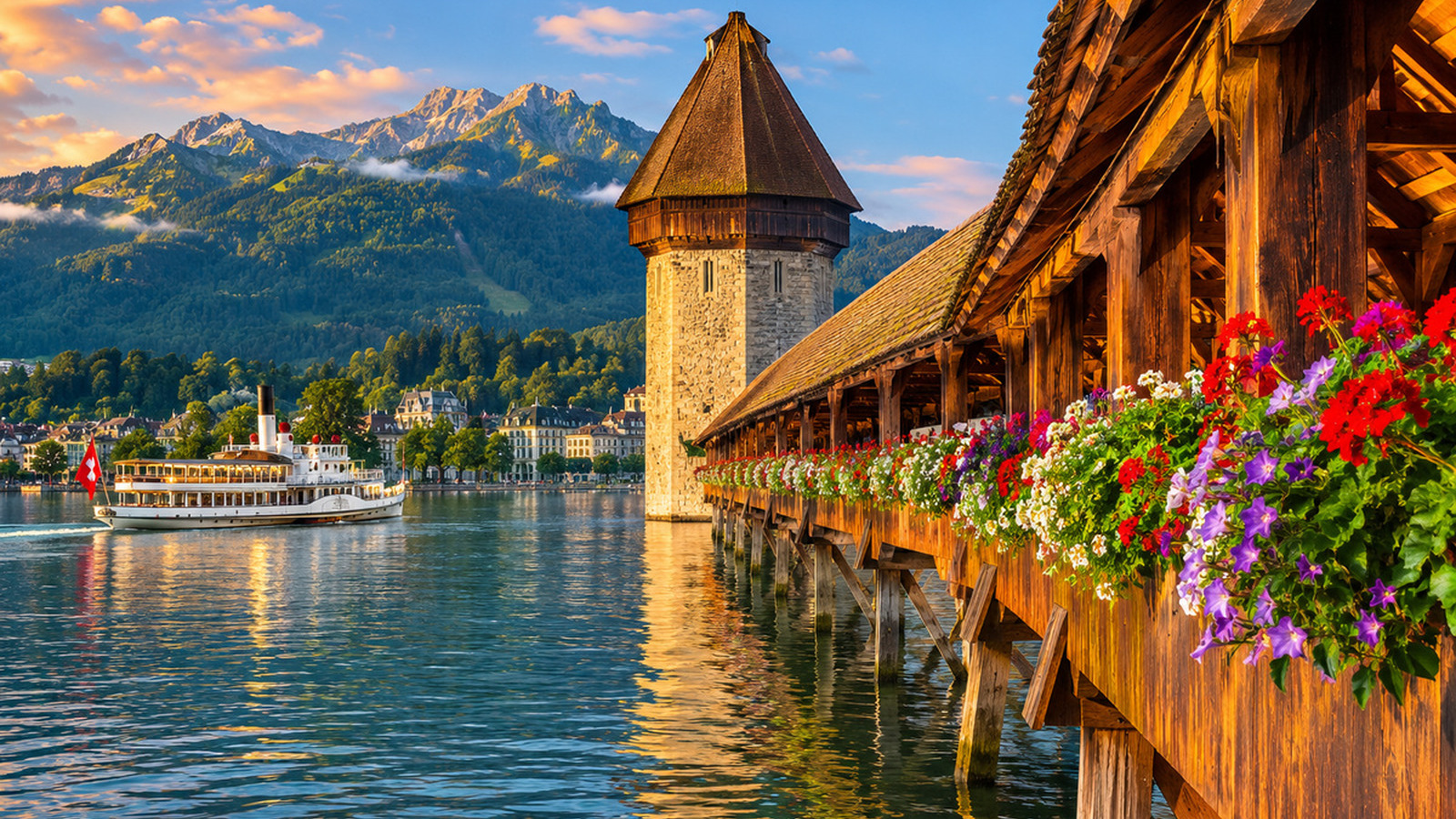
A steamer cruise past wooded peaks, plus Europe’s oldest covered wooden bridge in the old town.
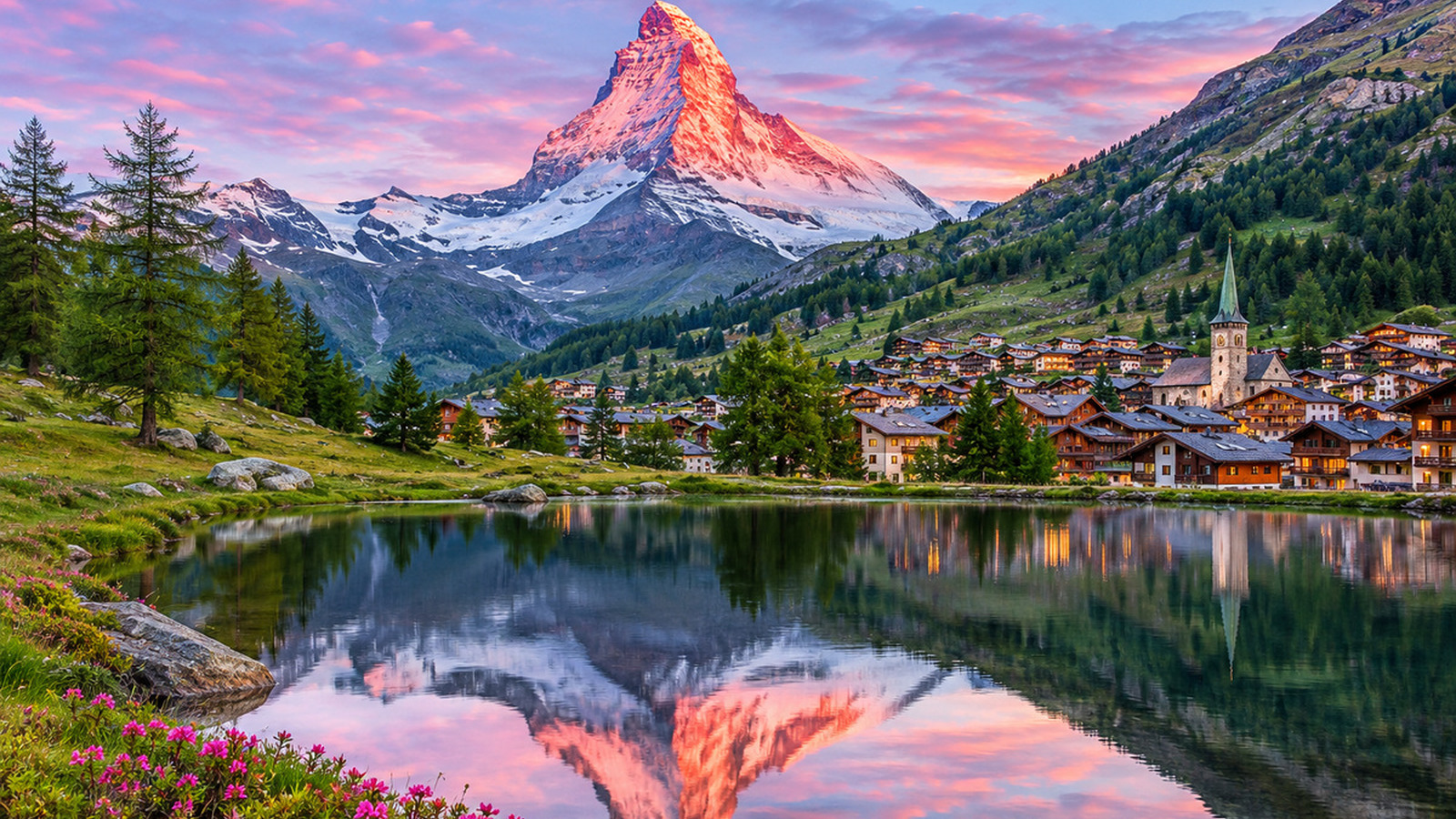
The pyramid peak from every Toblerone bar, best viewed from the Gornergrat cogwheel railway above Zermatt.
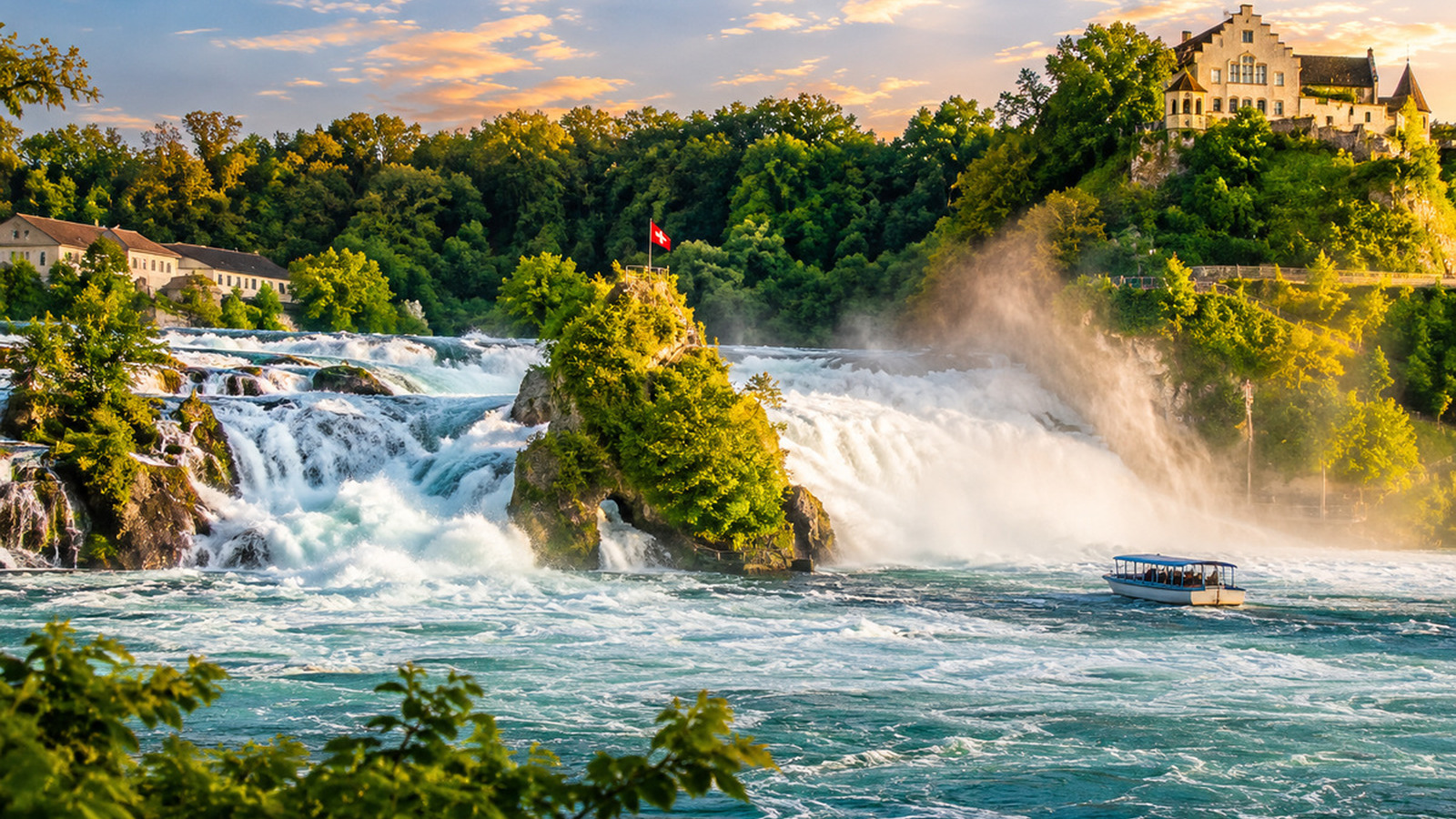
Europe’s most powerful waterfall near Schaffhausen — a cheap, easy half-day from Zurich.
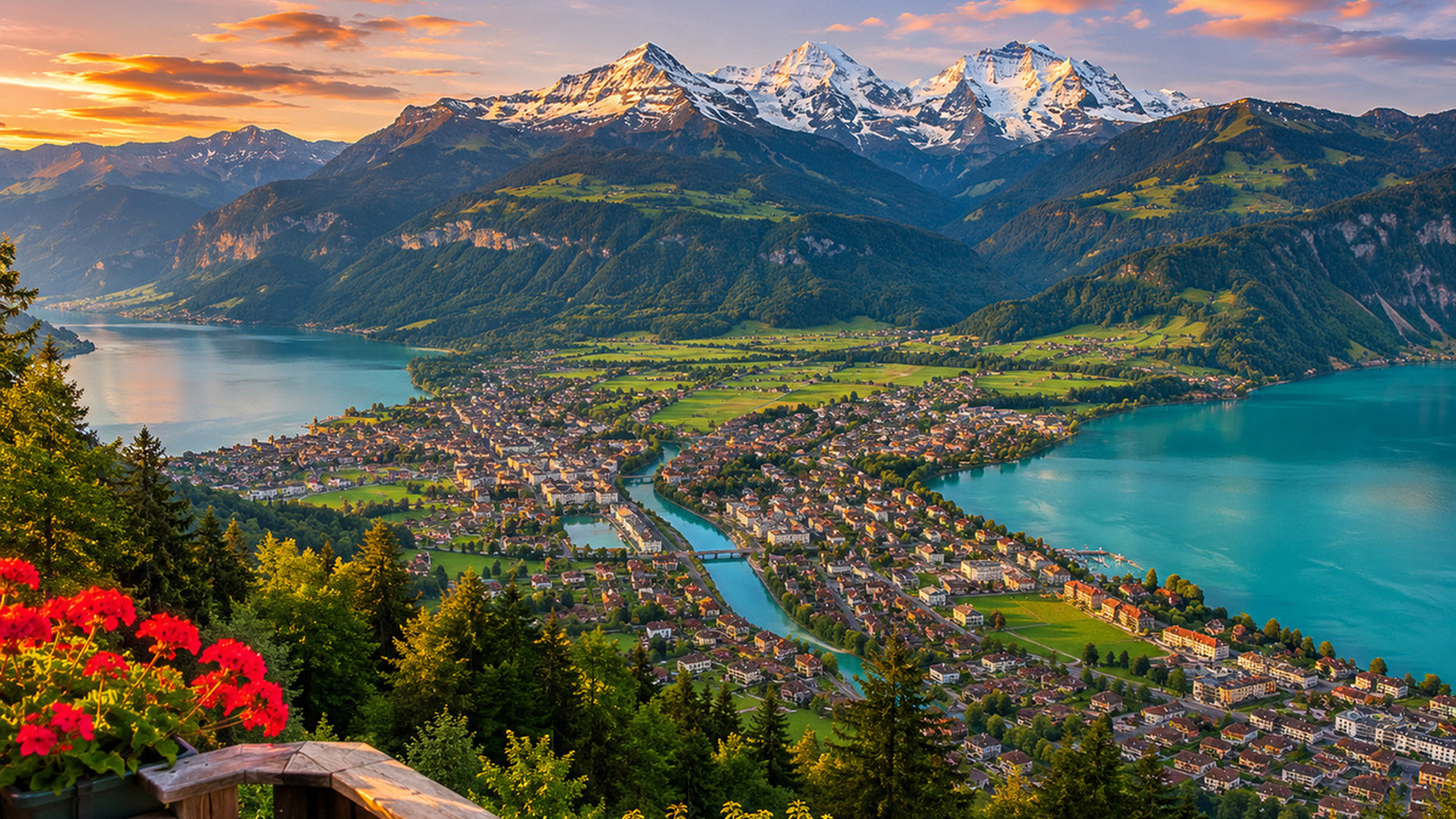
The twin-lake adventure town; the Harder Kulm funicular gives the classic view over Interlaken and the Eiger-Mönch-Jungfrau trio.
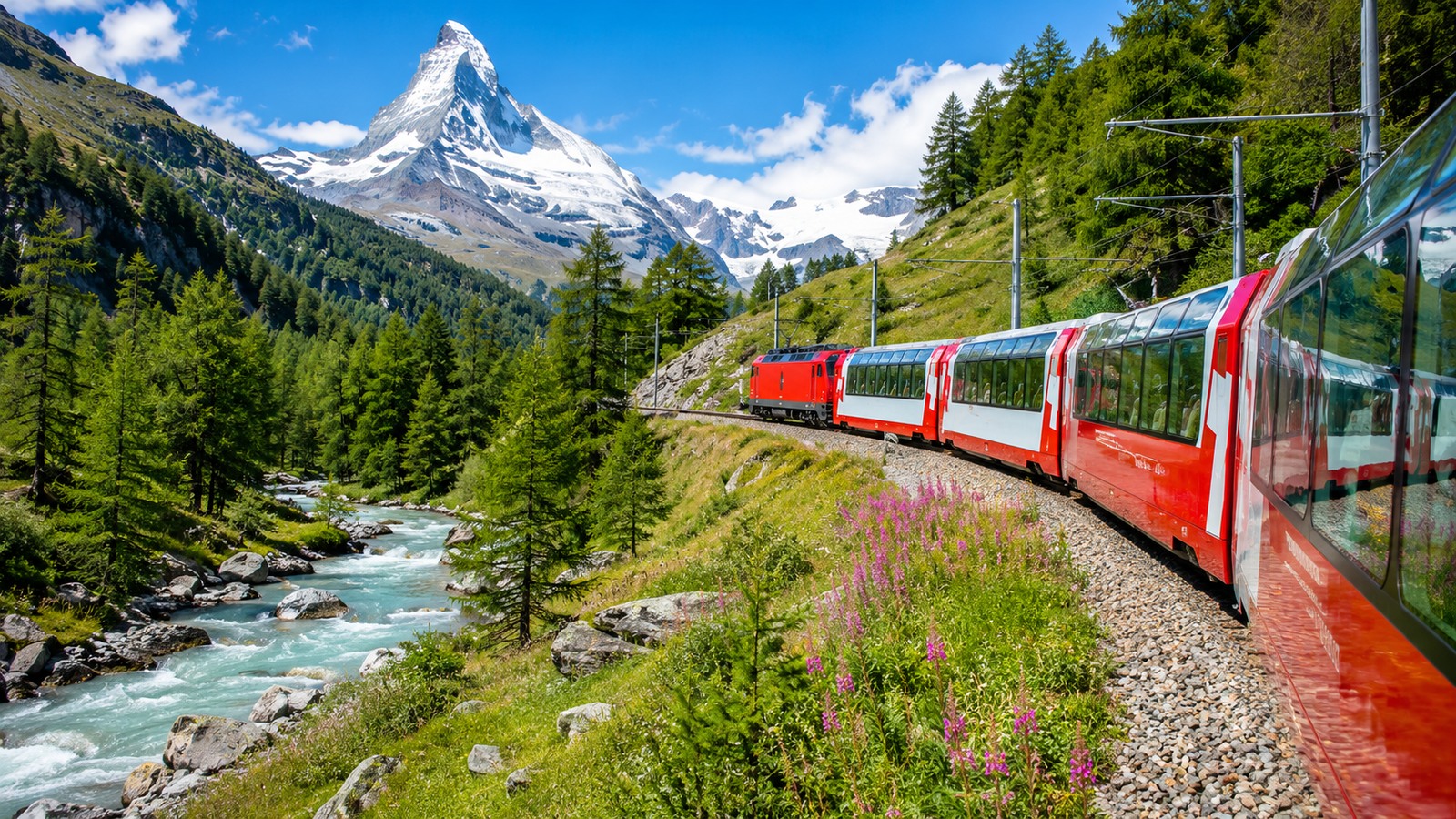
The world’s most scenic panoramic trains, winding between Zermatt, the Alps and Lake Geneva.
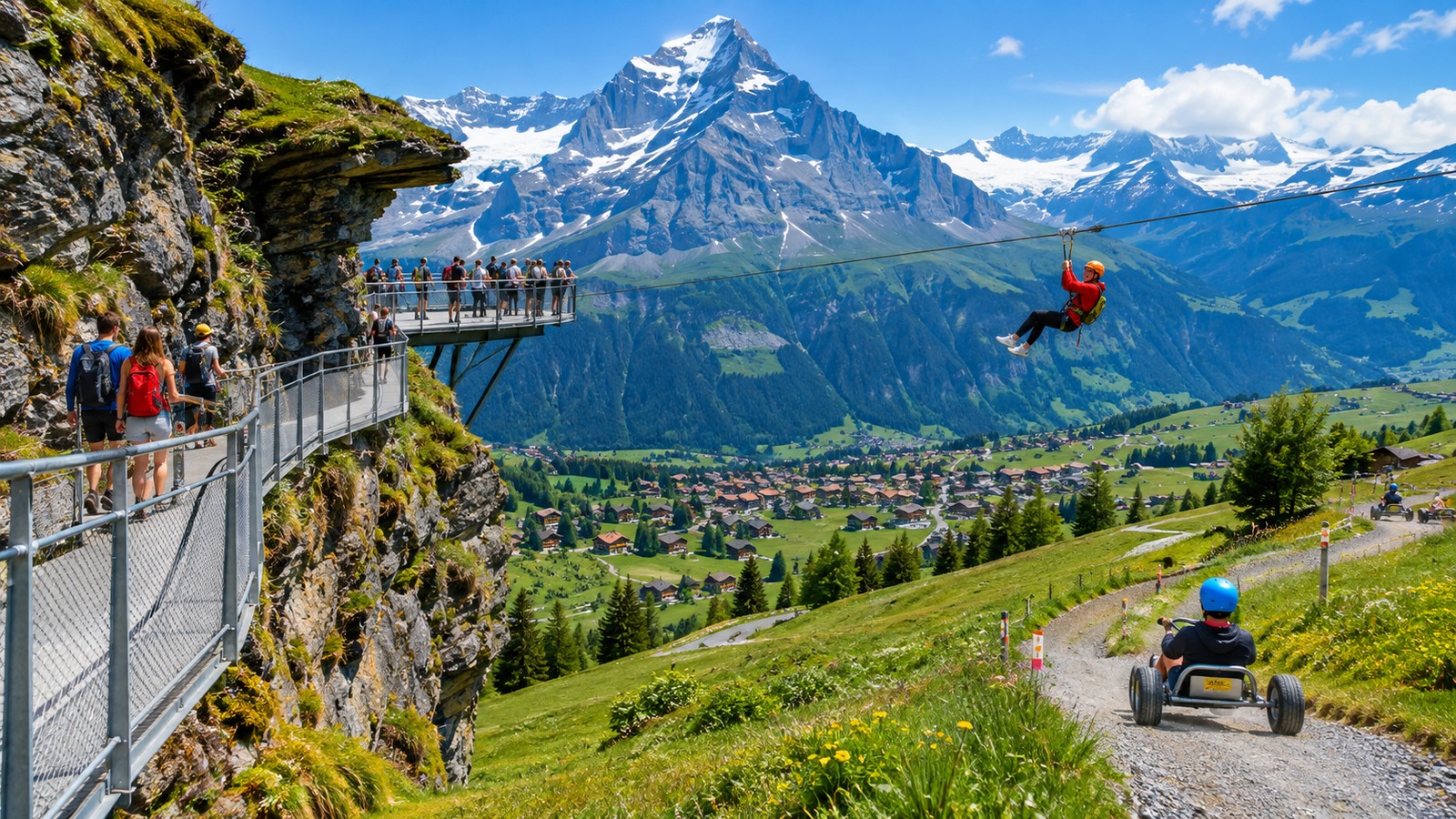
A storybook alpine village with the First mountain, a cliff walk, a mountain cart and zip-line.
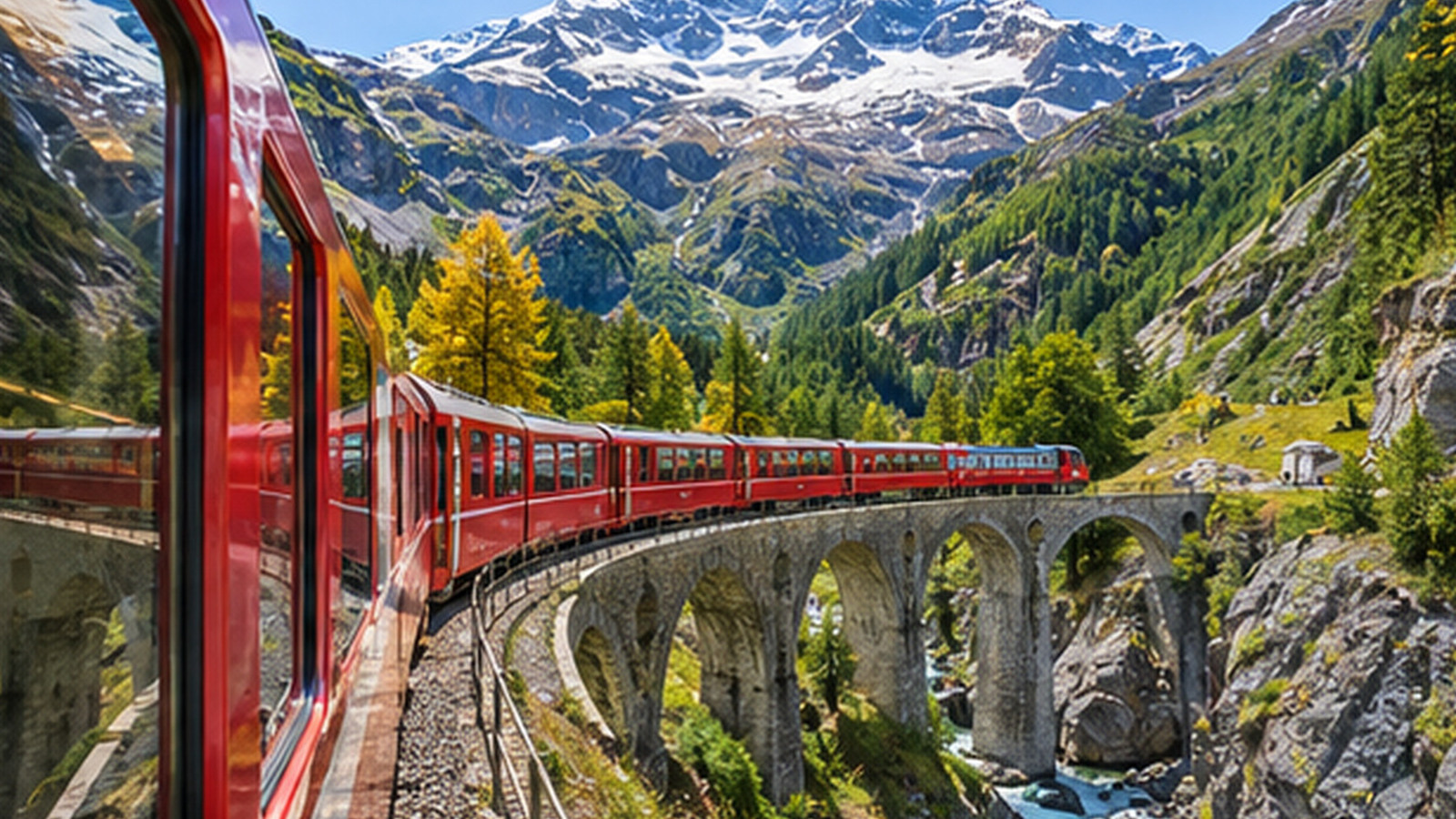
The famous 8-hour panoramic train from Zermatt to St. Moritz through 291 bridges and 91 tunnels — slow travel at its most scenic.
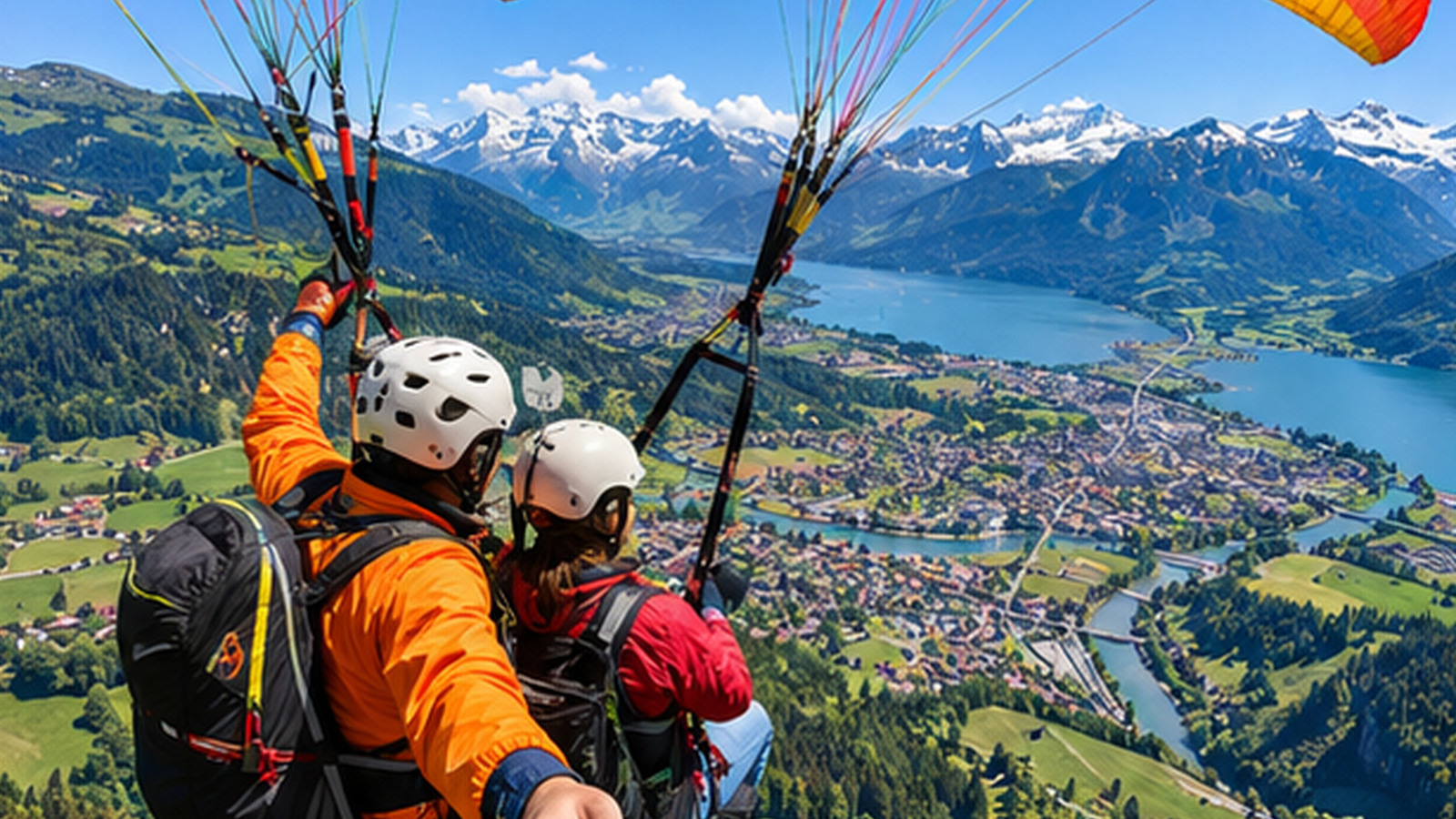
Tandem flights with an instructor over the lakes and valley — no experience needed, and a bucket-list memory.
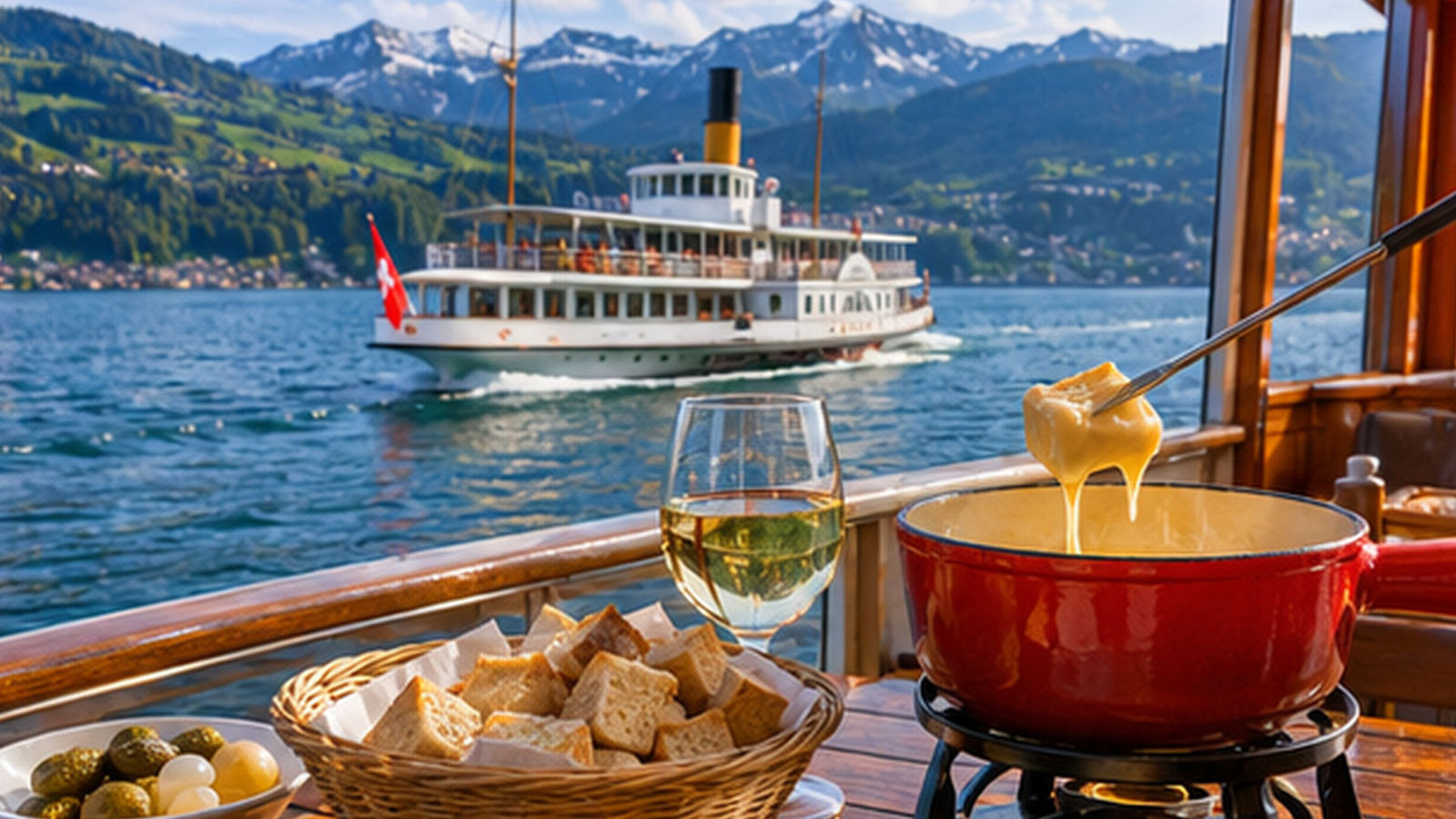
A steamer on Lake Lucerne or Lake Geneva, finished with a classic cheese fondue (ask for the vegetarian version).
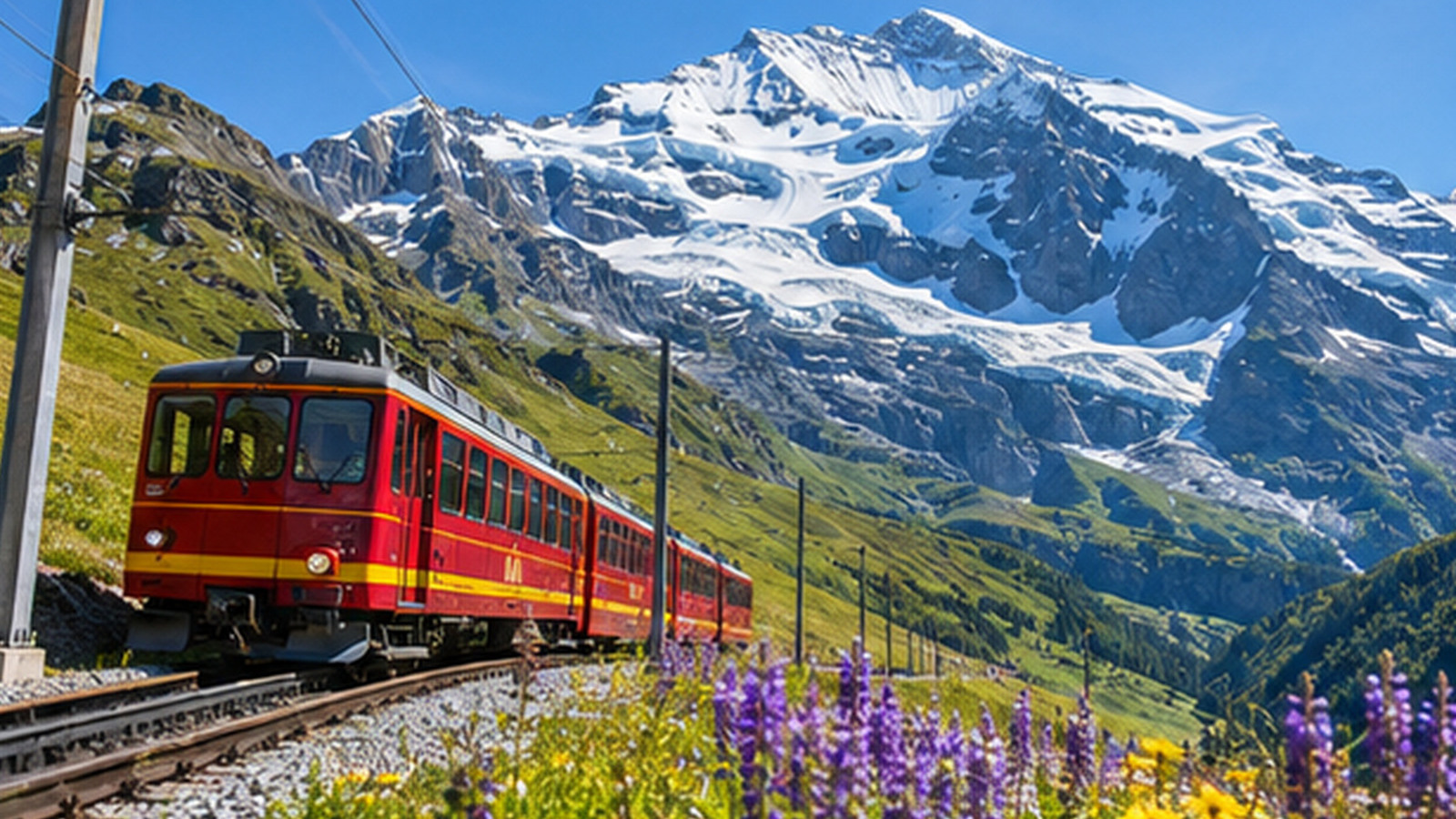
Titlis, Jungfraujoch, Schilthorn (James Bond’s Piz Gloria) and Rigi — pick one or two, not all, to keep costs sane.
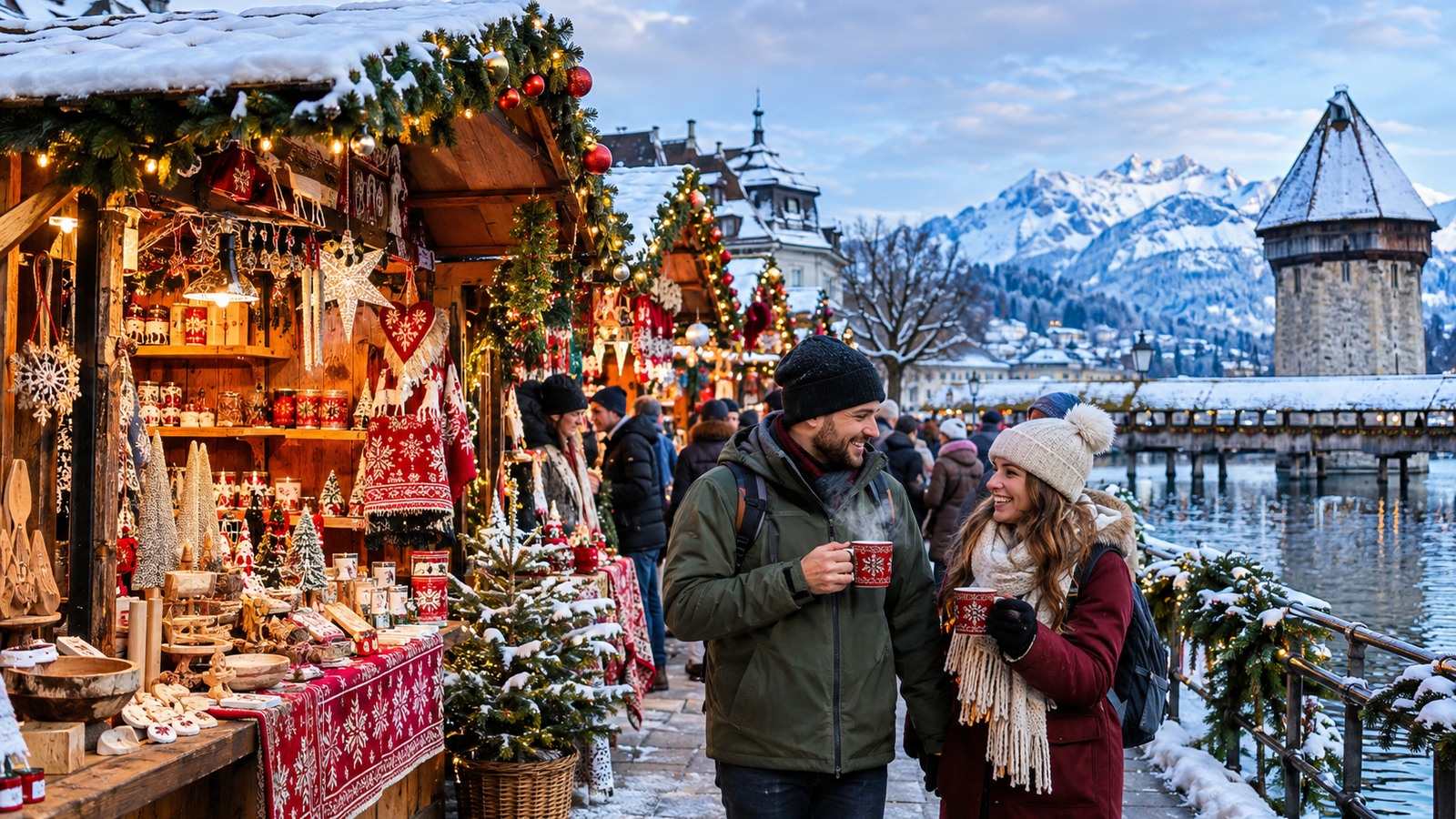
Festive markets in Lucerne, Zurich, Basel and Montreux, with mulled drinks and alpine crafts.
Book tours & activities through our travel partners — see options. Bluebird Next may earn a commission from partner bookings at no extra cost to you (Affiliate Disclosure).
Switzerland is one of Europe’s priciest countries, but transport passes and half-board hotels keep a first trip controlled. Indicative per-person figures for a 7-day trip in 2026 (prices checked Nov 2026); actual costs vary with season and how early you book.
| Item | Typical cost (per person) |
|---|---|
| Return flights (ex-India, 1 stop) | ₹55,000 – ₹90,000 |
| Swiss Travel Pass (6 days, 2nd class) | ~₹39,000 (trains, boats, many cable cars) |
| Hotels (3★, per night, twin) | ₹10,000 – ₹20,000 |
| Jungfraujoch / Titlis excursions | ₹8,000 – ₹18,000 each |
| Food (incl. some Indian/veg meals) | ₹2,500 – ₹5,000 / day |
| Schengen visa + travel insurance | ~₹9,000 – ₹12,000 |
| From | Typical return airfare |
|---|---|
| Delhi | ₹55,000 – ₹88,000 (1 stop) |
| Mumbai | ₹55,000 – ₹90,000 (1 stop) |
| Bengaluru | ₹58,000 – ₹95,000 (1 stop) |
| Kolkata/Chennai | ₹58,000 – ₹95,000 (1-2 stops) |
| Hyderabad | ₹58,000 – ₹92,000 (1 stop) |
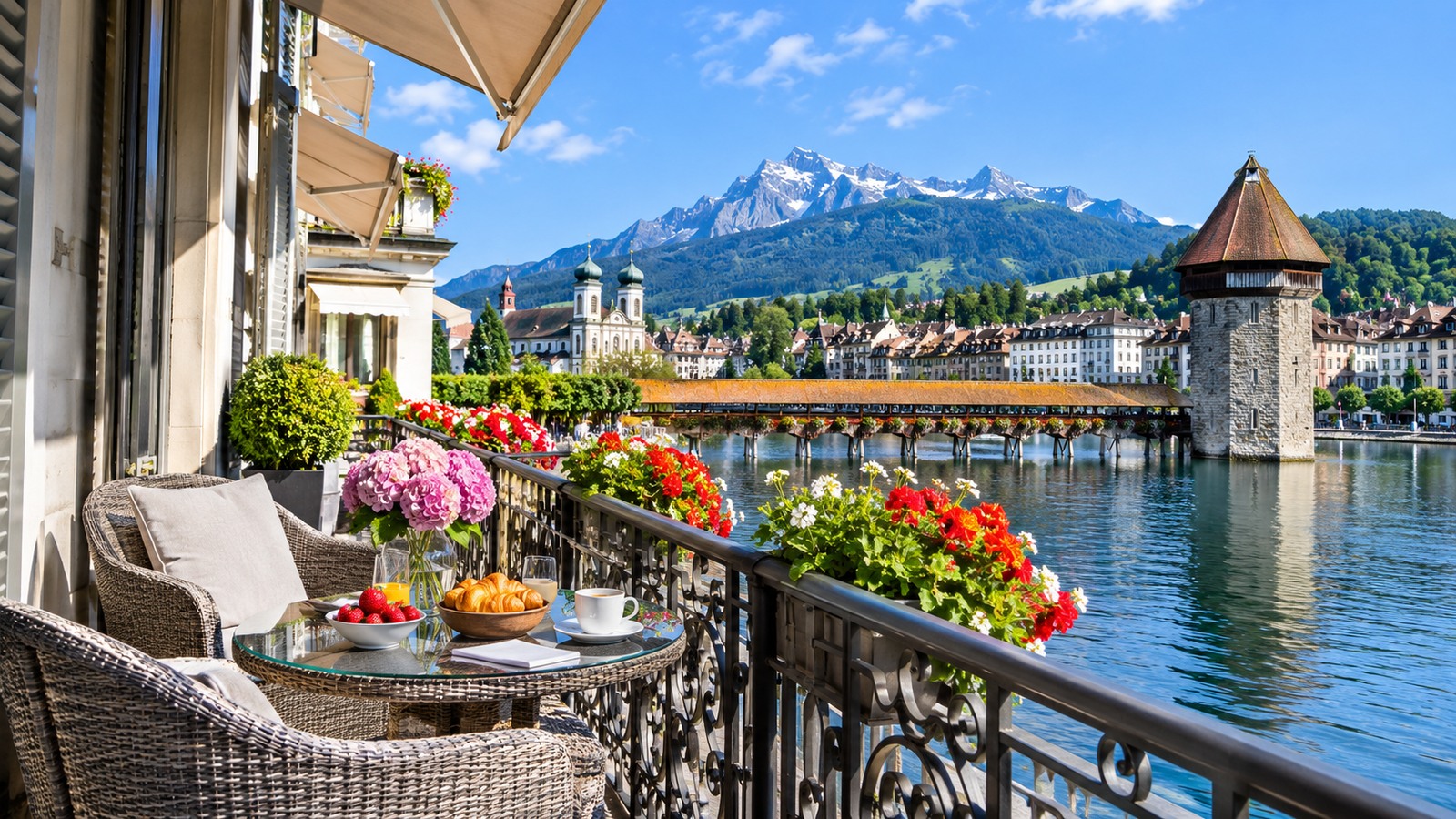
The best central base for first-timers — short hops to Titlis, Rigi and Pilatus, and easy trains everywhere.
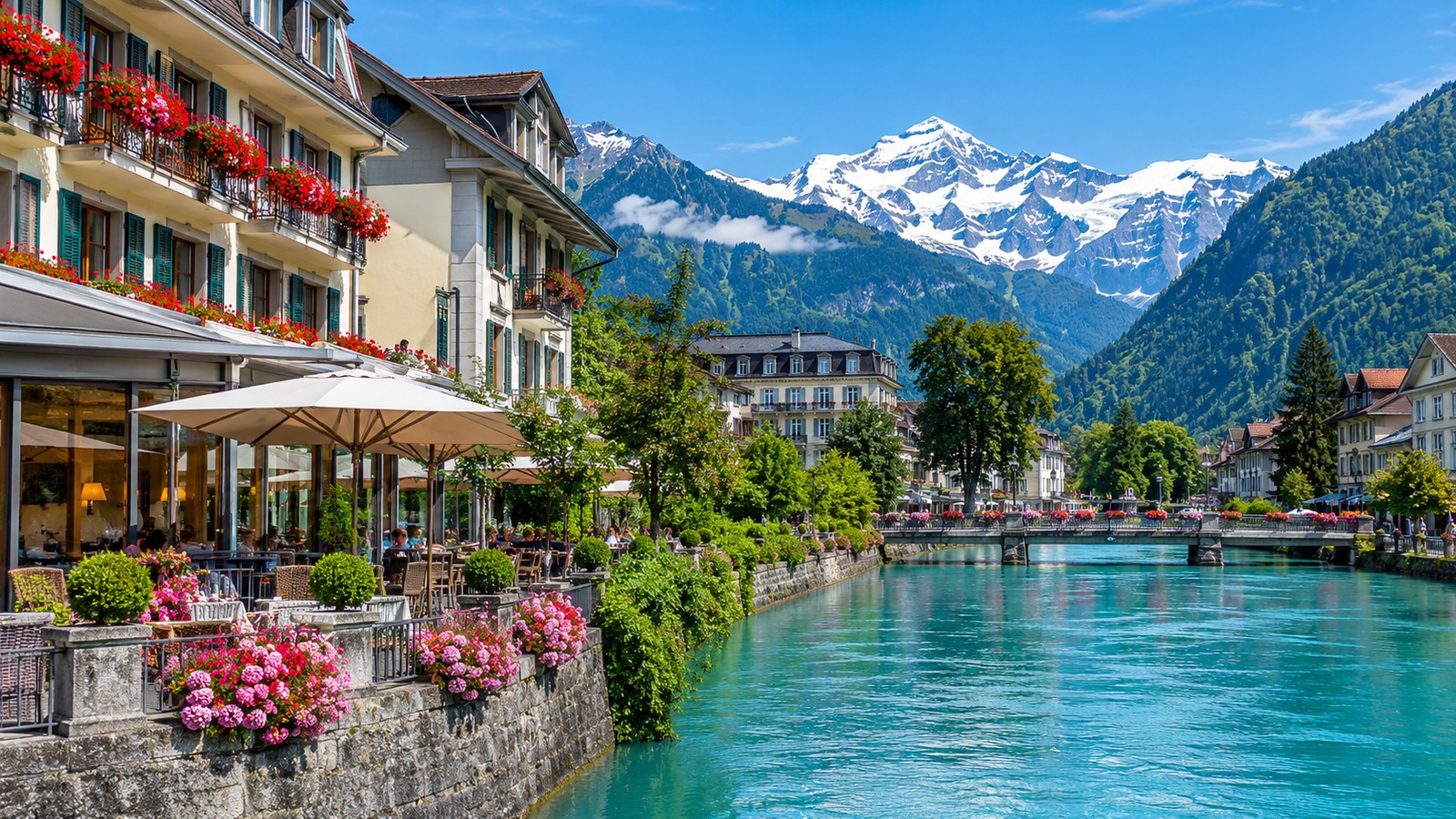
Ideal for the Jungfrau region and adventure activities; lots of mid-range hotels.
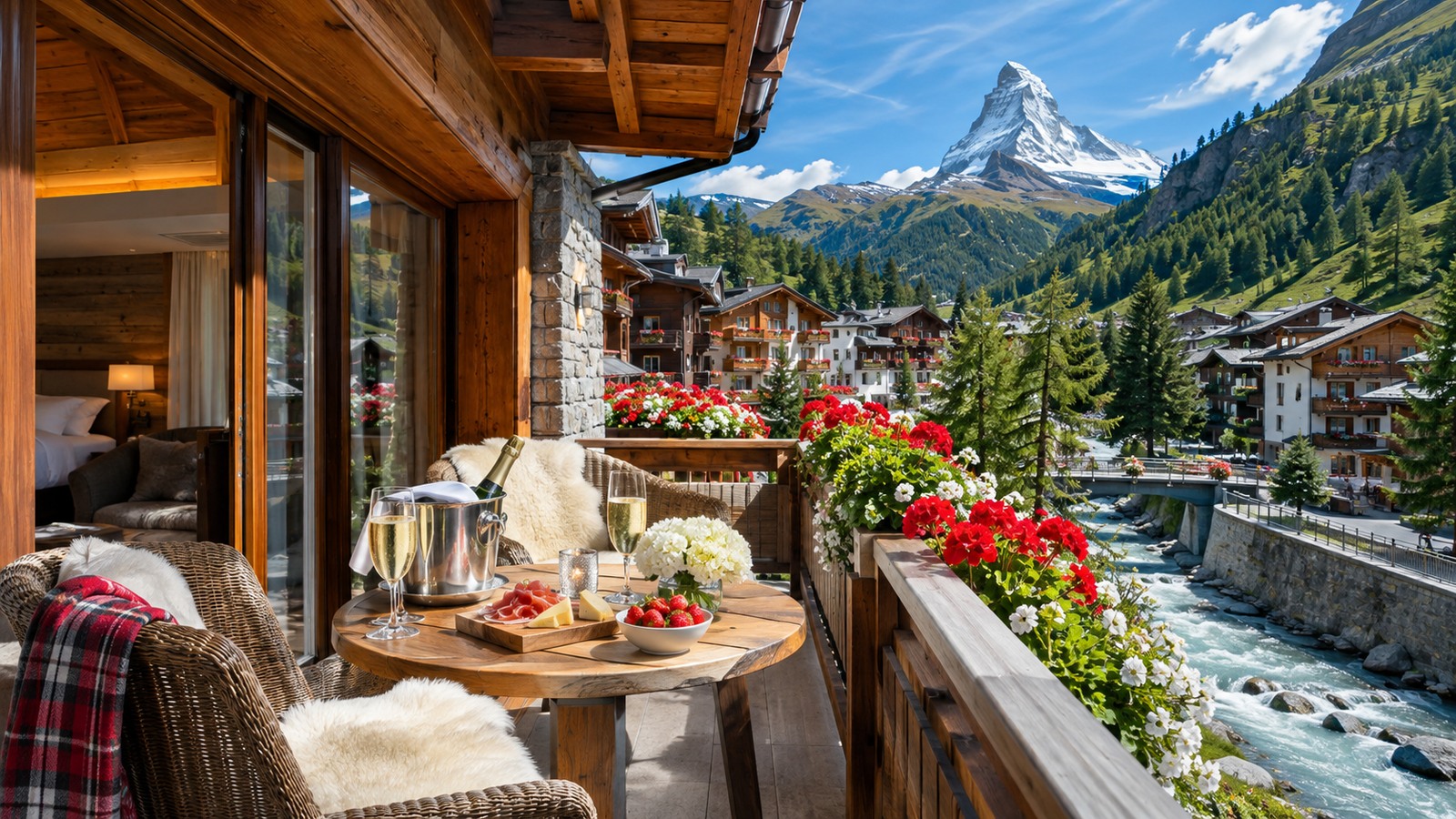
A splurge for Matterhorn views; car-free and romantic, best for a 1–2 night add-on.
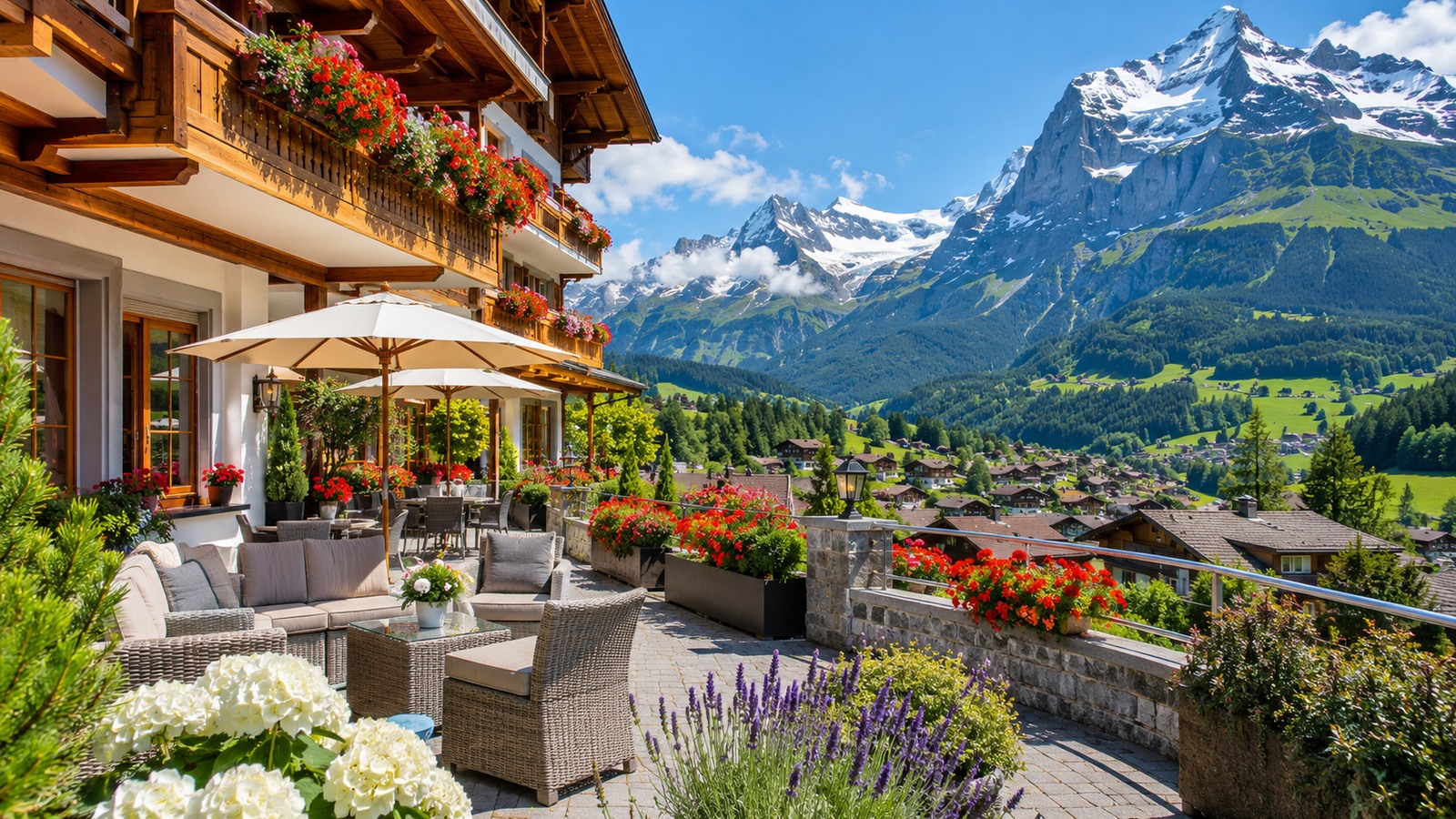
A picture-perfect alpine village near Jungfrau — a scenic alternative to Interlaken.
Swiss staples are cheese- and potato-based — fondue, raclette and rösti — plus excellent bakeries and chocolate. Eating out is expensive, so many Indian travellers mix one restaurant meal a day with supermarket picnics (Coop and Migros are everywhere).
Vegetarian is straightforward: cheese fondue, rösti, salads, pizza and pasta are all easy to find veg — ask for “vegetarisch”. Pure-veg and Jain travellers should carry some ready-to-eat packs for peak days and lean on Indian restaurants in the cities.
Indian restaurants are plentiful in Zurich, Lucerne, Interlaken and Geneva (Bollywood, Taj, Spice of India and many more). Expect around ₹2,000–3,500 for a thali-style meal.
Switzerland uses the Swiss franc (not the euro), with CHF 1 about ₹92 — it is expensive, so budget accordingly. Cards and contactless are accepted almost everywhere, including trains and cable cars; carry a little cash for small kiosks and mountain huts. UPI is not accepted. Supermarkets (Coop, Migros) are the big money-saver for meals.
This single pass gives unlimited travel on trains, buses and lake boats, free entry to 500+ museums, and free or discounted rides on many mountain cable cars. For most Indian itineraries it works out cheaper than point-to-point tickets — buy it before you go or at the airport.
Use a Swiss eSIM (Salt, Yallo) or an Indian international pack; most hotels and many trains have free Wi-Fi. Download SBB Mobile (live train times and tickets), Google Maps and a weather/webcam app for the peaks.
Switzerland uses 230V with the Type J socket (Type C two-pin plugs also fit), so carry a universal adapter. Weather swings fast with altitude — pack layers, a warm jacket, gloves and sunglasses even in summer, as a glacier can be near freezing while the valley is 25°C.
Tipping is not expected (service is included; round up if you wish). Swiss tap and fountain water is clean and free — carry a refillable bottle. Trains leave to the second, so arrive on the platform a few minutes early.
It gives unlimited travel on trains, buses and lake boats, free entry to 500+ museums, and discounts or free rides on many cable cars. For most Indian itineraries it beats buying point-to-point tickets.
Trains reach almost everywhere and run to the minute. Download the SBB Mobile app for live times; reserve seats on panoramic trains (Glacier Express, Golden Pass) in advance.
Zurich and Geneva airports have train stations inside the terminal — you can be on a train to the mountains within 20 minutes of landing.
Switzerland is one of the safest countries in the world, with very low crime, clean water and excellent healthcare — solo, family and women travellers are very comfortable. The main risks are weather and altitude on high peaks, so go slowly above 3,000 m and keep warm, and carry good travel insurance (also a Schengen visa requirement).
❌ Myth: Switzerland is unaffordable for Indians.
✅ Fact: It is pricey, but a Swiss Travel Pass, shoulder-season travel, Lucerne/Interlaken bases, one or two paid peaks and Coop/Migros picnics bring a 7-day trip closer to ₹1,40,000 per person.
❌ Myth: You need to rent a car.
✅ Fact: The opposite — Switzerland has the world’s best trains, reaching almost every village and peak to the minute. A car is slower, costlier and unnecessary.
❌ Myth: You must do every famous peak.
✅ Fact: They are similar snow experiences and each is pricey. Pick one or two (Titlis plus Jungfraujoch is plenty) and spend the rest on lakes, villages and scenic trains.
❌ Myth: Vegetarians go hungry.
✅ Fact: Fondue, rösti, salads, pizza and pasta are easy veg options, and every city has Indian restaurants. Carry a few ready-to-eat packs for high-mountain days.
❌ Myth: It is only worth it in summer.
✅ Fact: May and September are gorgeous and cheaper; winter brings guaranteed snow, skiing and Christmas markets. Each season is a different, beautiful Switzerland.
Yes — a Schengen short-stay visa (Type C), which also covers the other 28 Schengen countries, so you can pair Switzerland with France or Italy. Apply 4–8 weeks ahead with flights, hotels, €30,000 travel insurance and funds proof; decisions take around 15 working days. Bluebird Next files it for you.
A 7-day trip is roughly ₹1,60,000–₹2,40,000 per person including flights, rail pass and hotels, and about ₹3,20,000–₹4,80,000 for a couple. Shoulder-season travel, a Swiss Travel Pass and self-catering bring it down.
Six to eight days is ideal for a first trip — enough for Lucerne, Interlaken/Jungfrau and Zermatt without rushing. Five days works for a focused honeymoon.
Travel in May or September, use a Swiss Travel Pass, base in Lucerne/Interlaken rather than Zermatt, limit yourself to one or two paid peaks, and self-cater some meals from Coop/Migros.
Titlis is closer to Lucerne and cheaper — good if you have one mountain day. Jungfraujoch is higher and more iconic but a longer, pricier trip. Many do Titlis from Lucerne and Jungfraujoch from Interlaken.
Cards and contactless work almost everywhere, including trains and cable cars. UPI is not accepted, so carry a card and a little Swiss-franc cash for small kiosks and mountain huts.
Excellent — trains and cable cars mean minimal walking to reach big views, distances are short, and it is extremely safe. Choose Lucerne as a low-stress base.
Yes — fondue, rösti, salads, pizza and pasta are easy veg options, the cities have many Indian restaurants, and supermarkets help. Jain travellers should carry a few ready-to-eat packs for peak days.
May to September for the classic green-and-snow look (July–August is peak); May and September are the sweet spots with fewer crowds; winter (Dec–March) for snow, skiing and Christmas markets.
Yes — the single Schengen visa covers all of them, and fast trains link Geneva to Paris and the Swiss south to Italy’s lakes, making an easy two-country trip.
Yes — travel medical insurance covering at least €30,000 is mandatory for the Schengen visa, and it also protects against trip delays and cancellations.
Sources: Swiss State Secretariat for Migration — SEM (official) · Switzerland Tourism (MySwitzerland.com) · Swiss Travel System — passes & fares · Jungfrau Railways
A licensed team that has guided thousands of Indians to their visas and admissions.
 Jitender SinghFounder & Managing Director
 Vikram SinghHead – Quality & Operations
 SanjayHead – Tourist Visa Operations
 TejaswaniHead – Counselling Team
 MahimaHead – Visa Filing & Processing
 Pratigya DuttaHead – Student Visa Processing
Free, no-pressure guidance from a real counsellor who handles your case end to end — from documents to decision.