
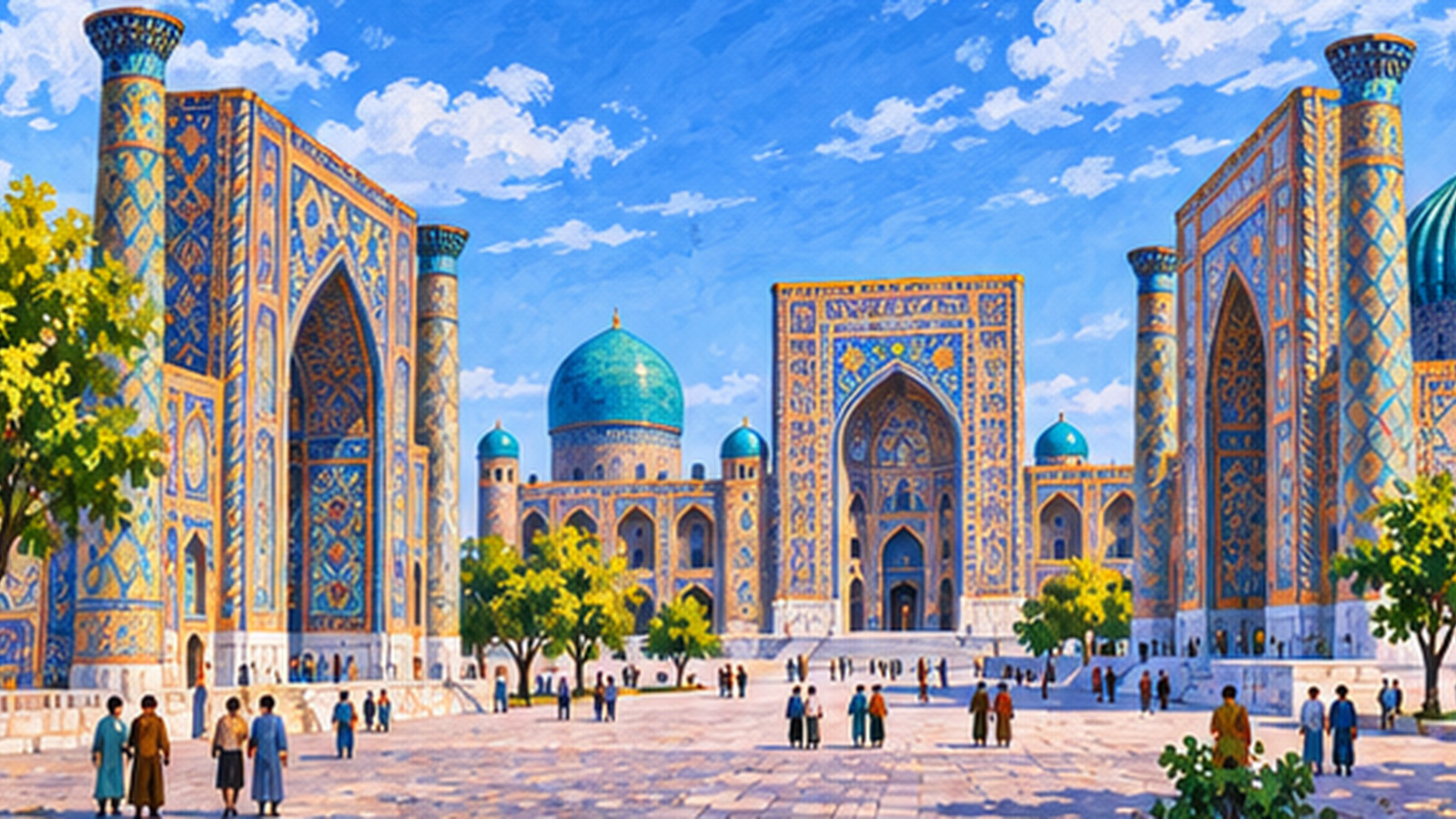
The Silk Road’s jewel — the Registan, Gur-e-Amir (Timur’s tomb), Bibi-Khanym and Shah-i-Zinda.
The heart of the Silk Road — the dazzling blue-tiled madrasas of Samarkand’s Registan, ancient Bukhara and Khiva, warm hospitality and a short flight from India with an easy e-visa.
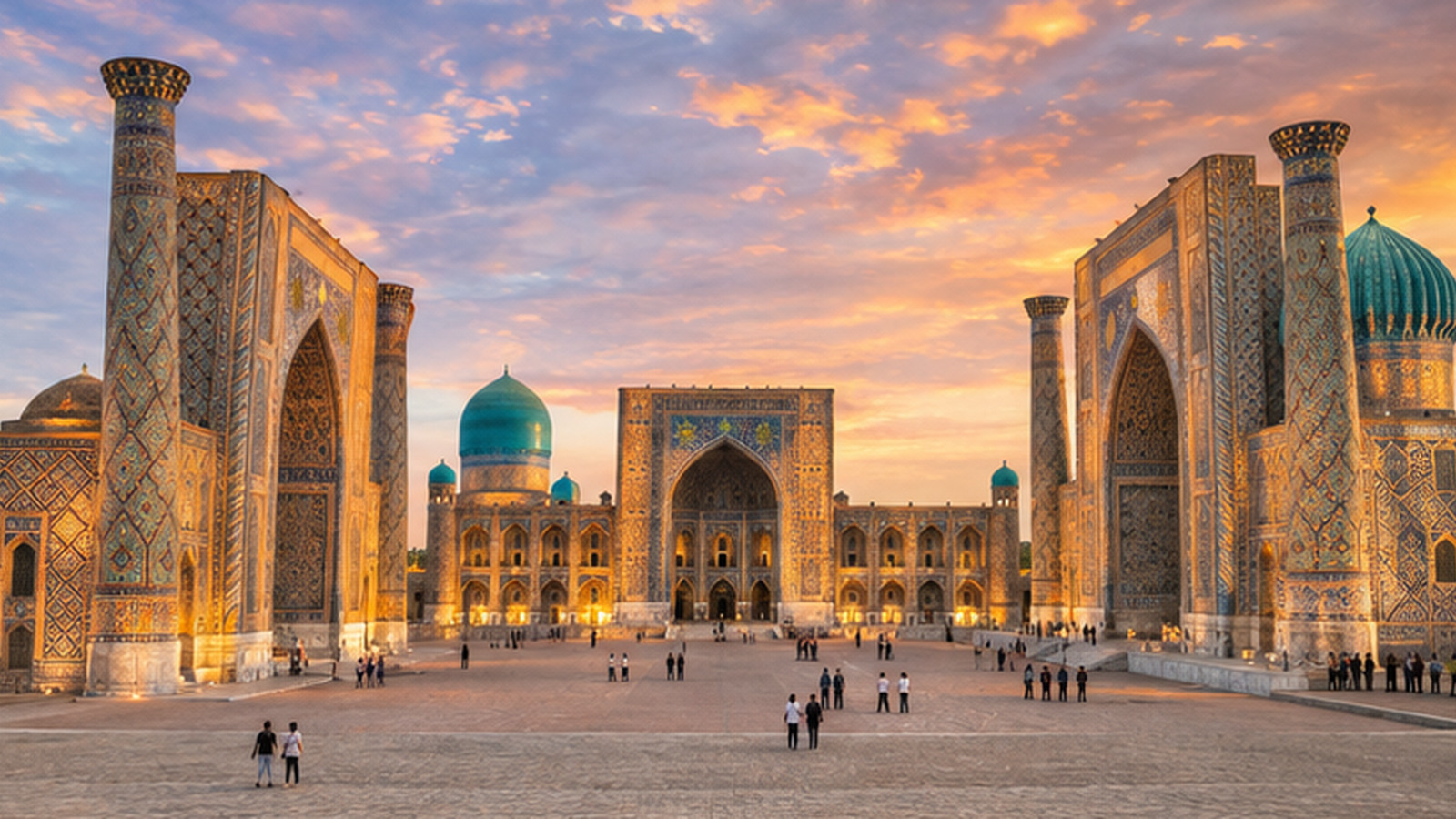
Uzbekistan is the beating heart of the ancient Silk Road — a land of dazzling turquoise-tiled madrasas, soaring minarets, bustling bazaars and mud-brick desert cities, where the romance of Samarkand, Bukhara and Khiva feels straight out of a storybook. For Indian travellers it is a surprisingly easy and affordable adventure, with a short direct flight and a simple online e-visa.
Stand in Samarkand’s Registan Square, ringed by three magnificent blue-domed madrasas, wander Bukhara’s ancient trading domes and the Ark fortress, and step back centuries in the walled old town of Khiva. Add warm, generous hospitality, hearty plov and bread, a shared Indo-Persian cultural heritage and prices that stretch an Indian budget far, and you have one of Asia’s most rewarding and underrated trips.
This guide is written for Indian travellers: the real cost in rupees, exactly how the e-visa works, where vegetarians and Jain travellers eat, how to link the Silk Road cities by the fast train, and a route through the highlights.
Uzbekistan suits Indians who want history, architecture and culture off the usual trail — an easy e-visa, a short direct flight, very low costs, stunning Silk Road cities, warm hospitality and a shared Indo-Persian heritage (Babur’s homeland). It is ideal for culture lovers, couples, families and value-seekers.
💡 From our visa desk: Link the three Silk Road cities by the fast Afrosiyob train — it makes Tashkent–Samarkand–Bukhara quick and comfortable. Give Samarkand and Bukhara two days each; Khiva is further west (fly or overnight train). Spring and autumn are ideal; summer is hot and winter cold. The som runs to large numbers, so carry a card plus cash.
E-visa required for Indians — applied for online before travel (quick and inexpensive).
Indian passport holders need a visa for Uzbekistan, most easily obtained as an e-visa on the official government portal before travel (commonly a 30-day single or multiple-entry tourist visa). A broader visa-free facility is not yet guaranteed for all Indians, so apply for the e-visa. Carry a passport valid six months, a return ticket and hotel bookings.
Check your Uzbekistan entry requirement →April–June and September–October are best — mild, clear days ideal for the Silk Road cities. Summer is very hot; winter is cold and atmospheric. See the month table.
| Season | What it's like & who it suits |
|---|---|
| Apr–Jun | Spring — warm, green and blossoming; the best weather for sightseeing and photography. |
| Sep–Oct | Autumn — warm days, cool nights and the harvest season; peak comfort and colour. |
| Dec–Feb | Cold and quiet, sometimes snowy, with the blue tiles stunning against winter skies; bargain prices. |
| Month | Weather & what’s on (incl. Indian holiday windows) |
|---|---|
| March–April | Spring begins — thawing, greening and blossoming, with mild, pleasant days for the monuments; Navruz (spring festival, 21 March) brings celebrations. |
| May–June | Warm, clear and ideal — the best all-round window before the summer heat, with long days for sightseeing. |
| July–August | Very hot (often 40°C in the desert cities); start early, rest midday and favour shaded courtyards. Quieter and cheaper. |
| September–October | Warm days, cool nights and golden light — superb for Samarkand, Bukhara and Khiva, plus the harvest. |
| November–February | Cold, sometimes snowy and atmospheric, with far fewer tourists and low prices; pack warm layers for the stone monuments. |
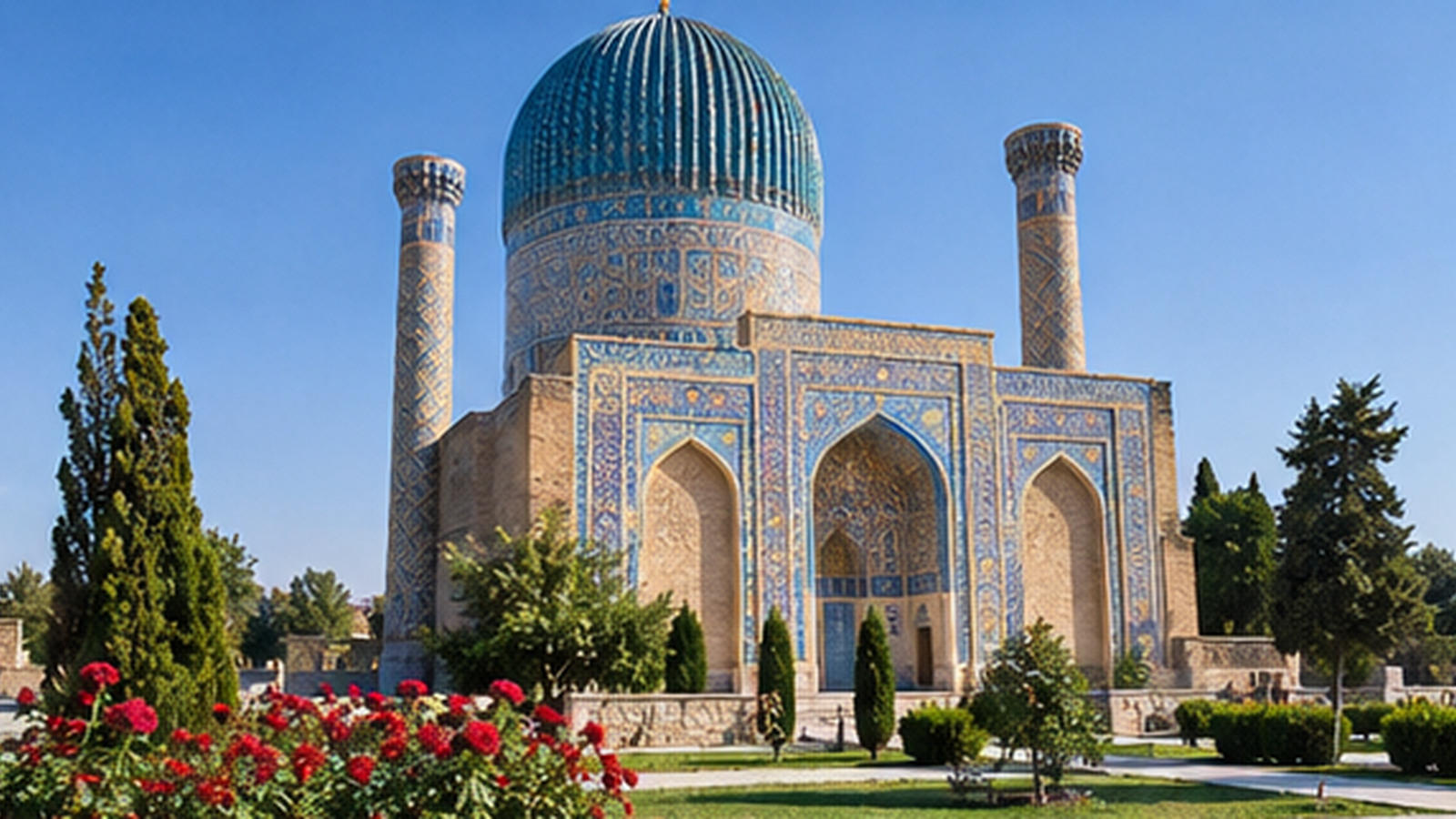
The Silk Road’s jewel — the Registan, Gur-e-Amir (Timur’s tomb), Bibi-Khanym and Shah-i-Zinda.
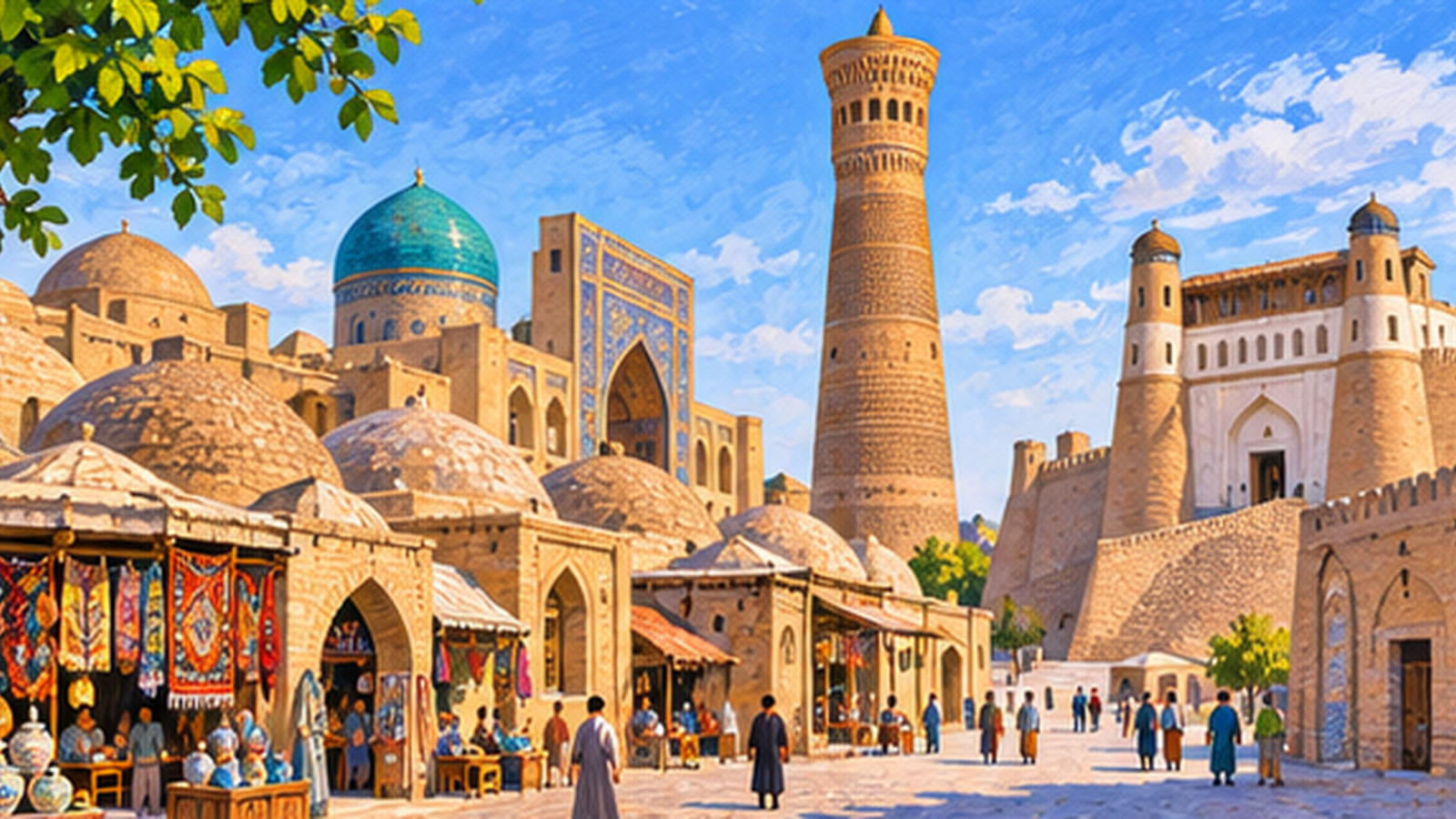
A living medieval city — trading domes, the Ark fortress, the Kalyan minaret and old madrasas.
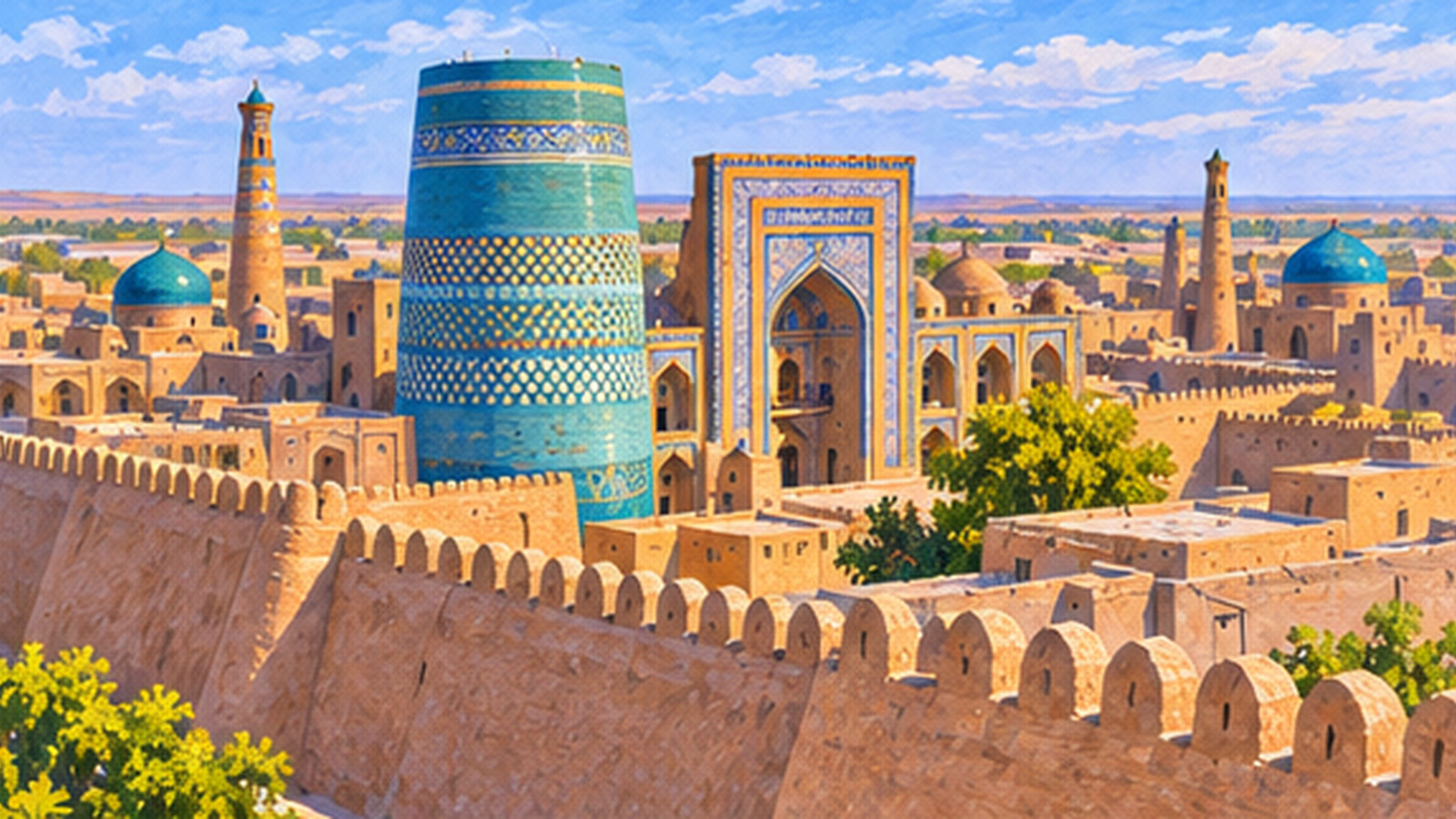
A perfectly preserved walled desert city (Itchan Kala) of minarets and madrasas.
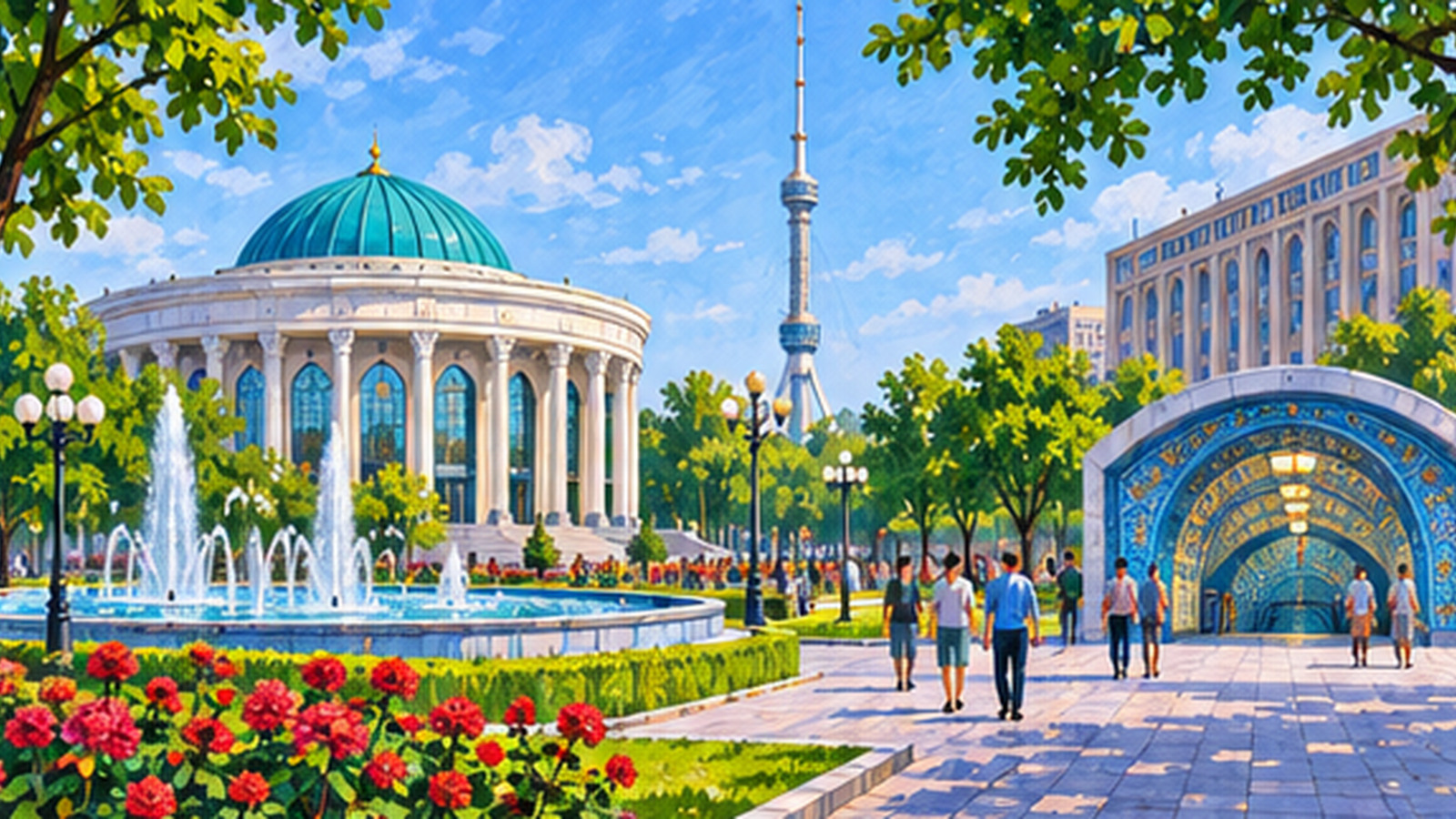
The modern capital and gateway — metro, bazaars, museums and Soviet-era grandeur.
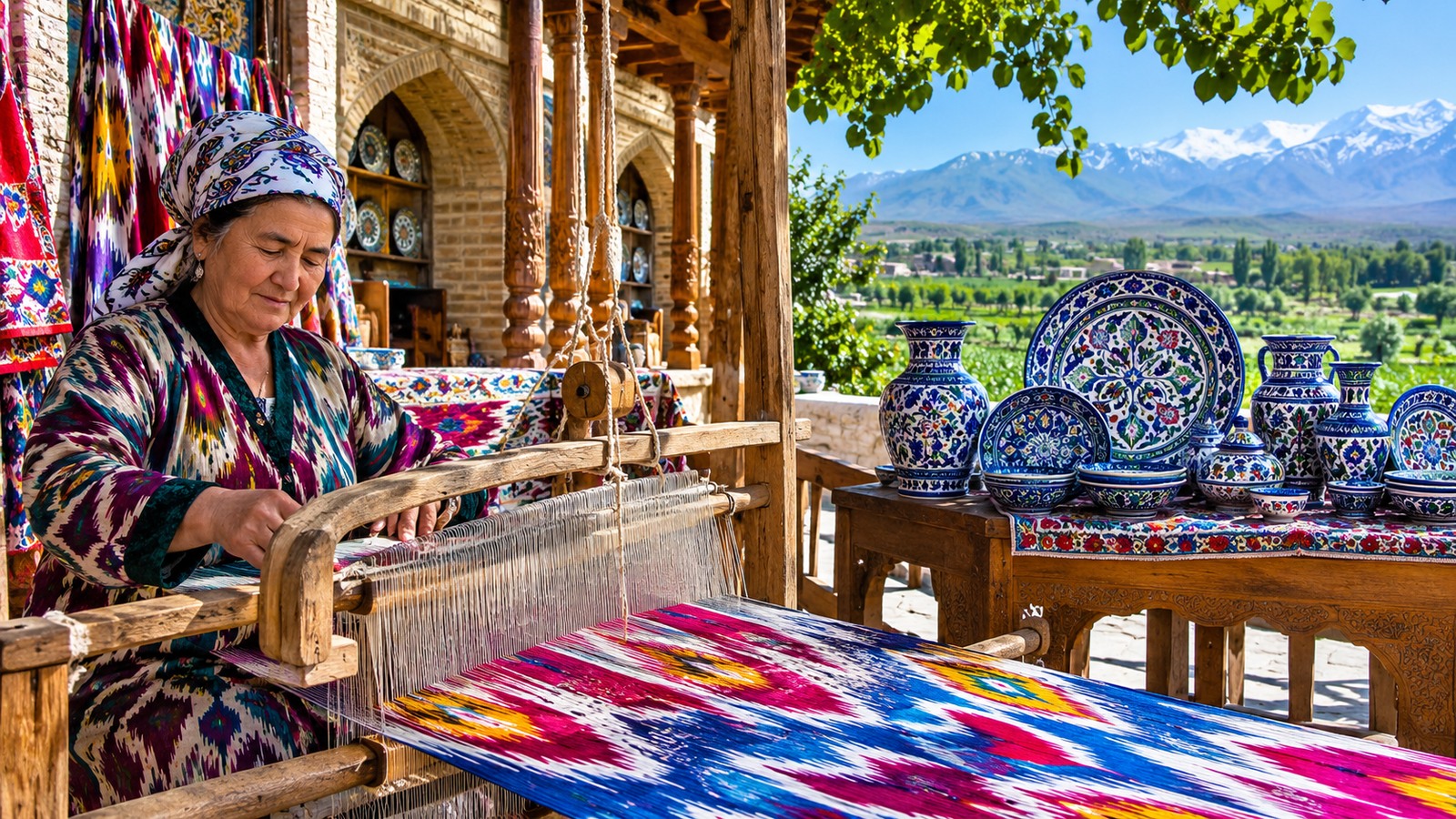
A fertile region known for silk, ceramics and traditional crafts.
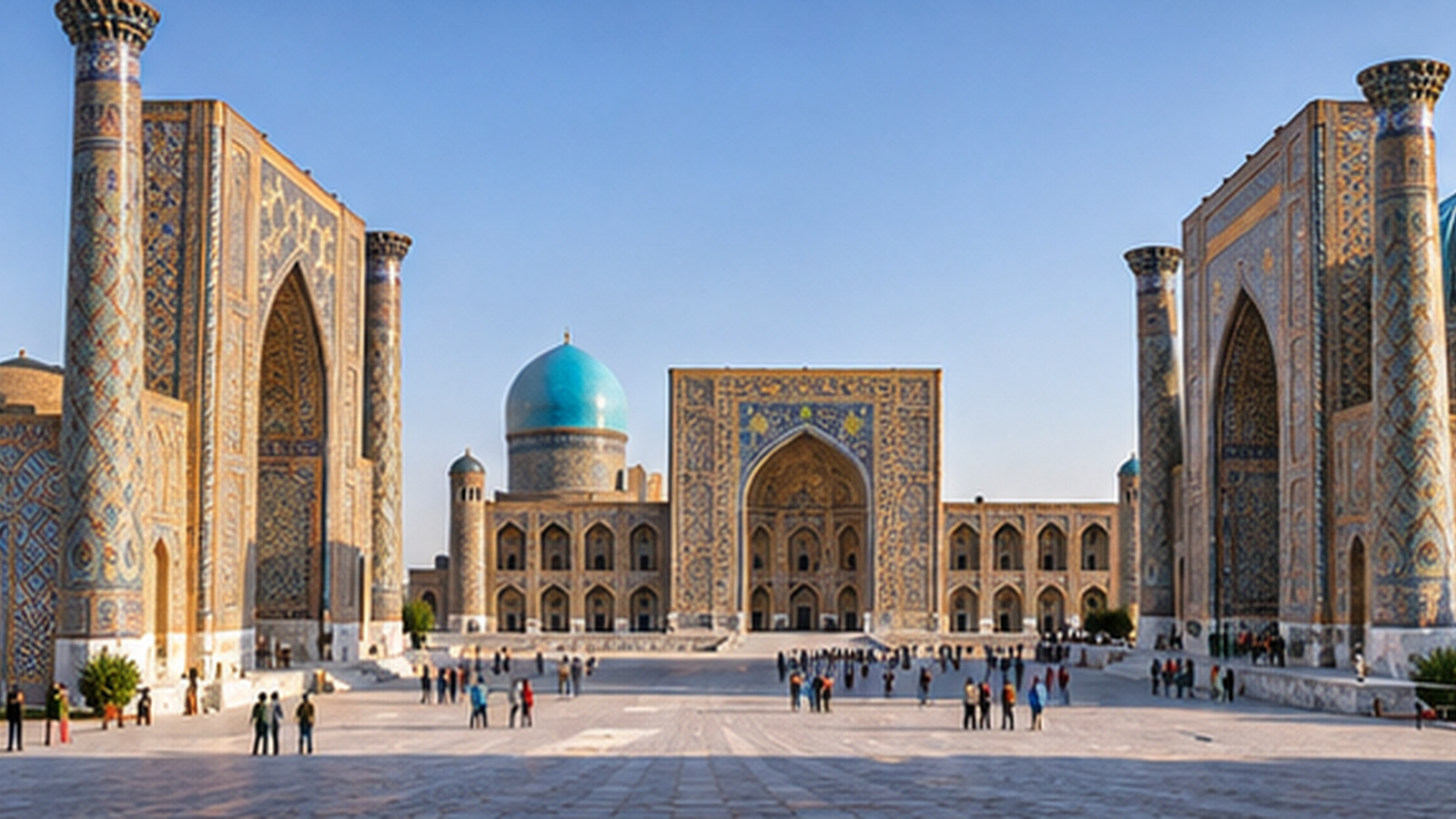
Three colossal blue-tiled madrasas around a grand square — one of the world’s most spectacular sights.
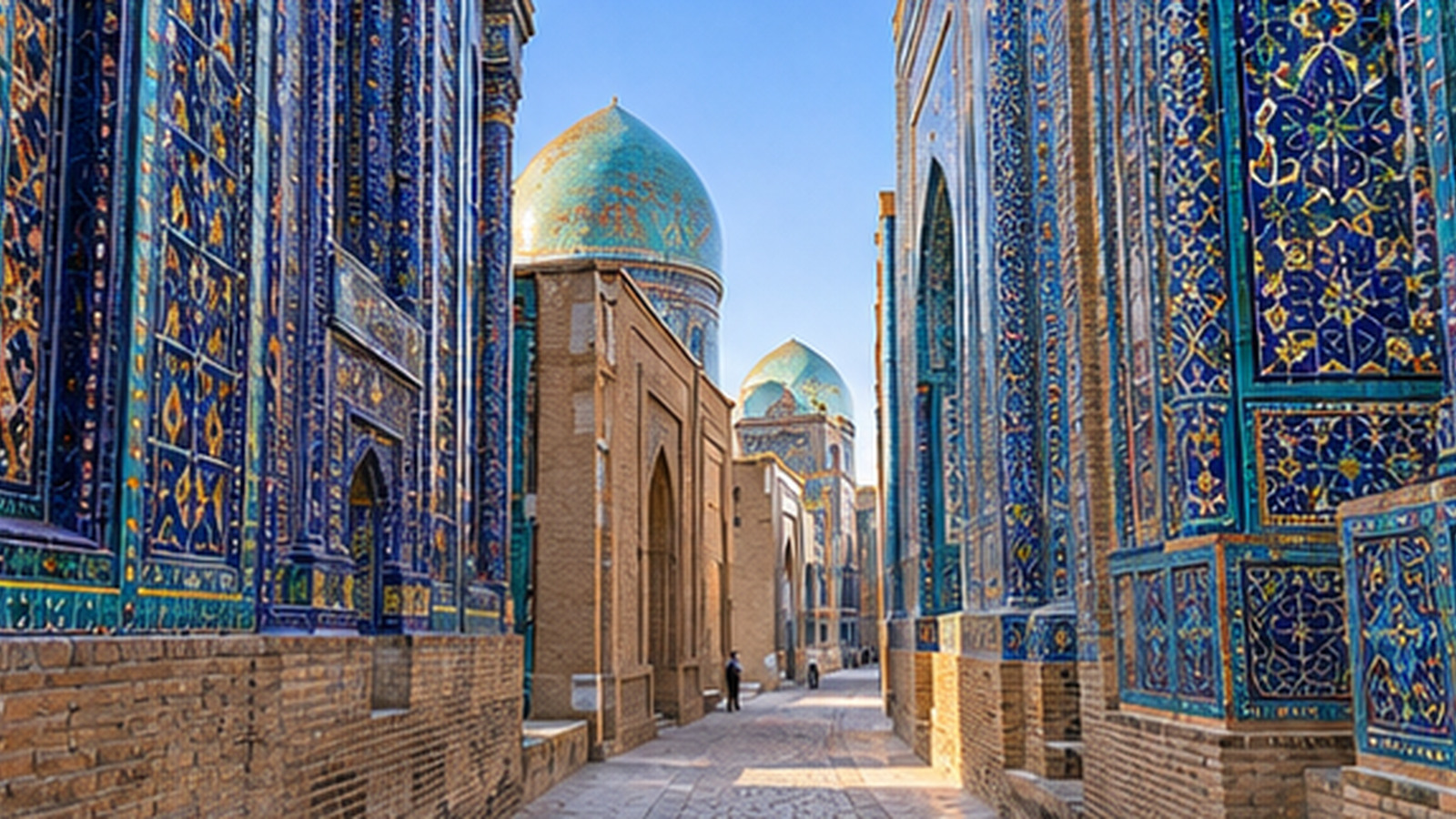
A dazzling avenue of tiled mausoleums in exquisite blue and turquoise.
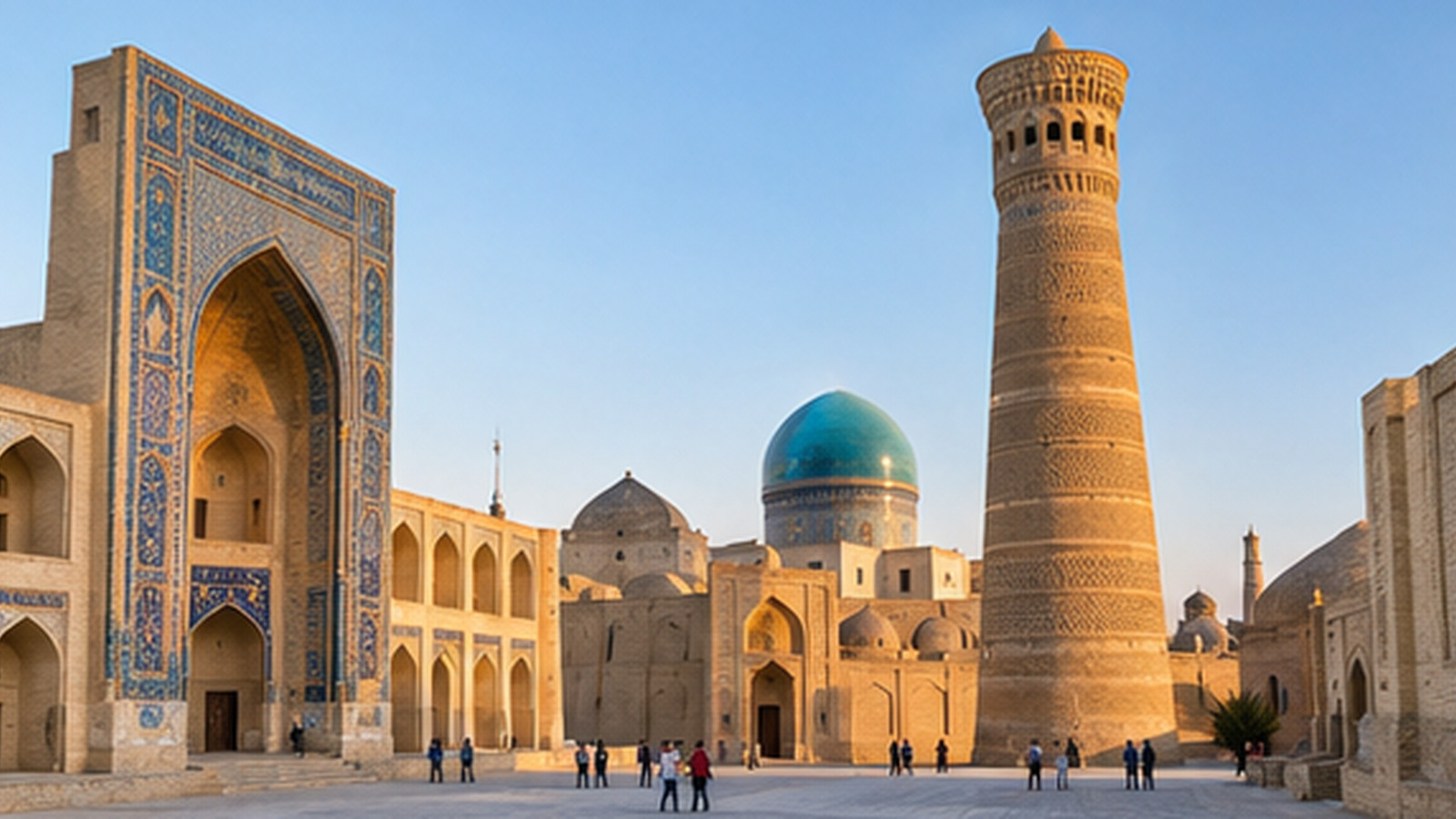
The elegant tomb of Timur (Tamerlane), with a magnificent fluted dome.
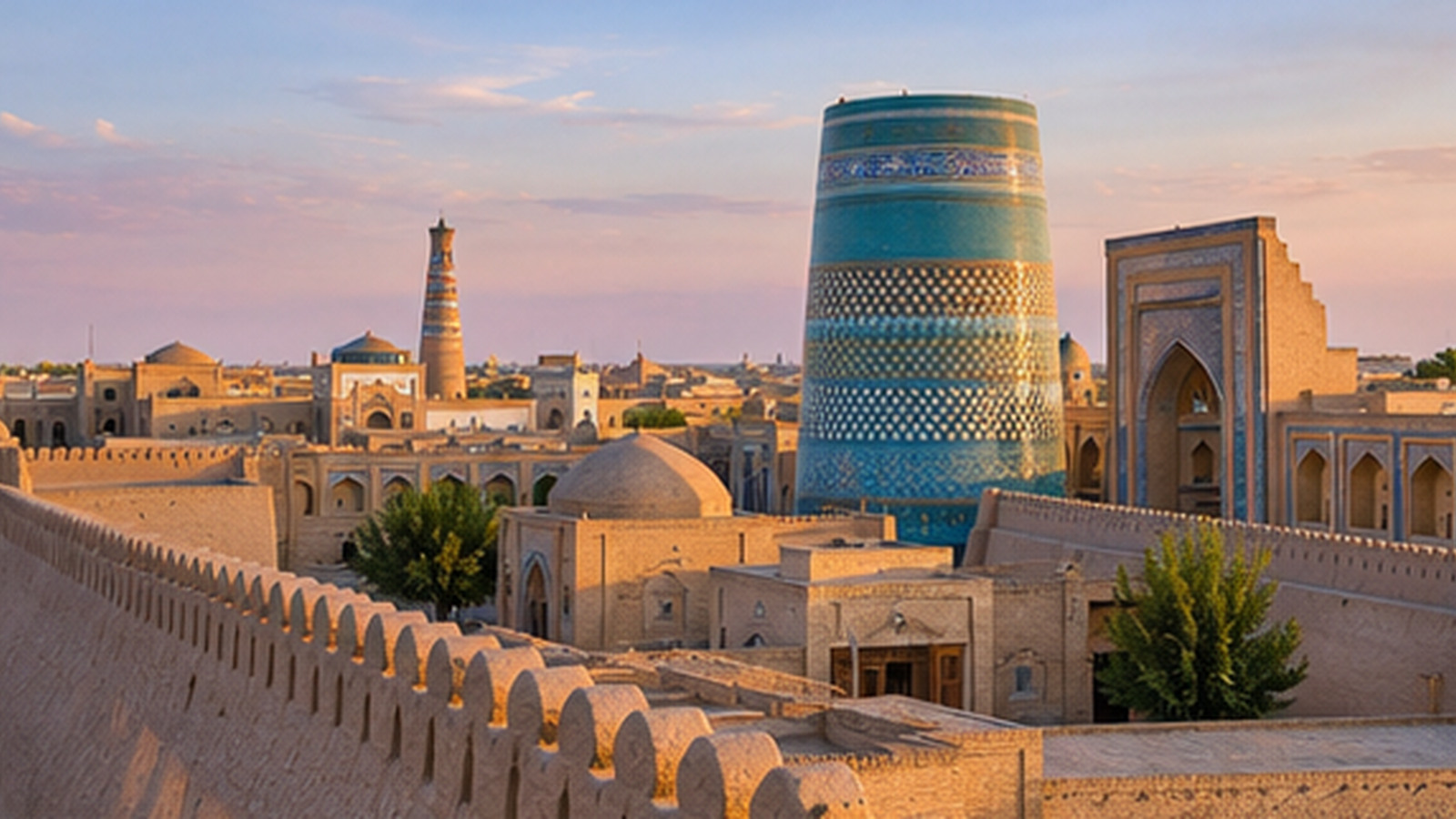
The towering Kalyan minaret and mosque, and the ancient royal fortress of the emirs.
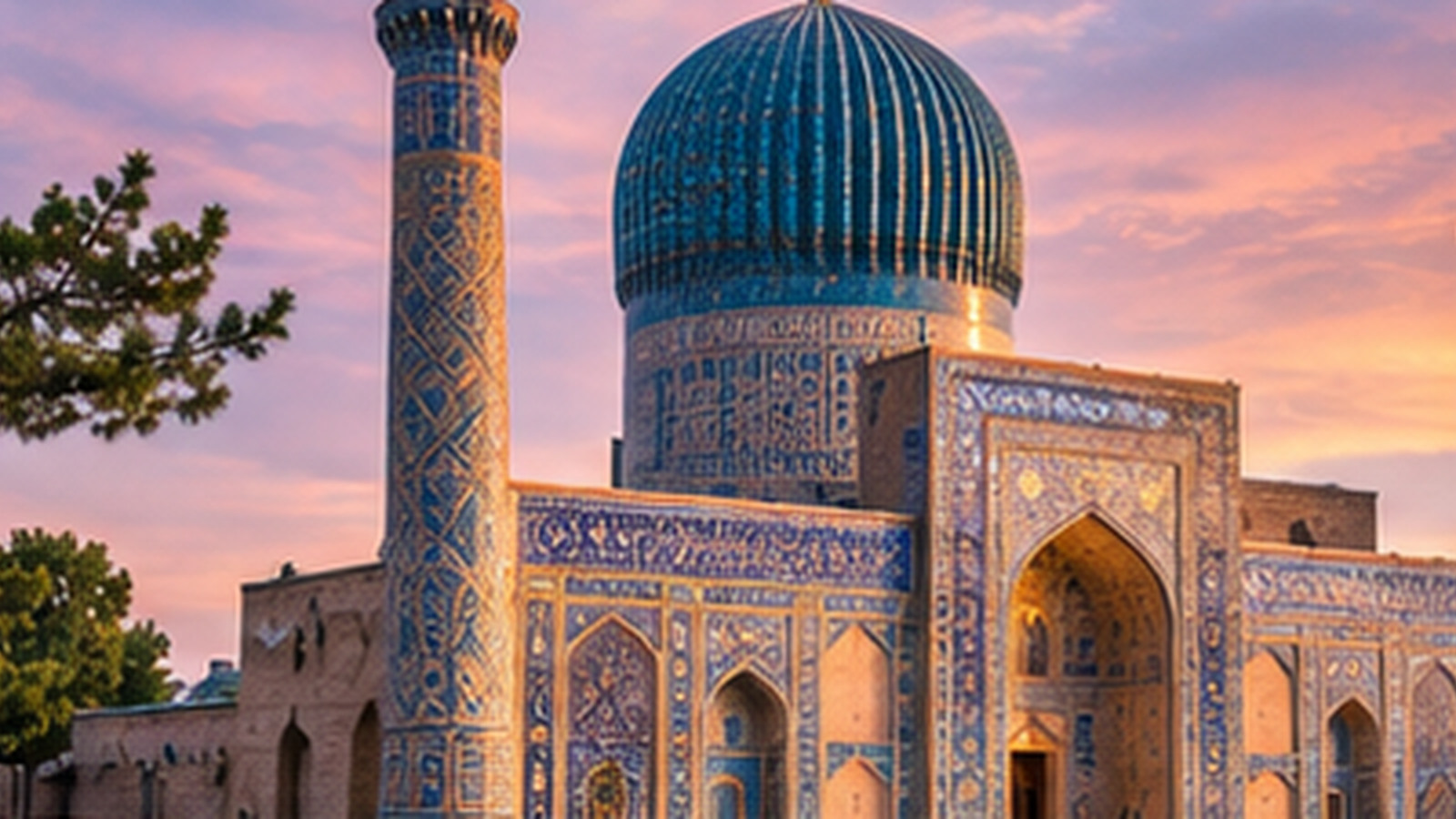
The walled inner old town, a UNESCO open-air museum of minarets, madrasas and palaces.
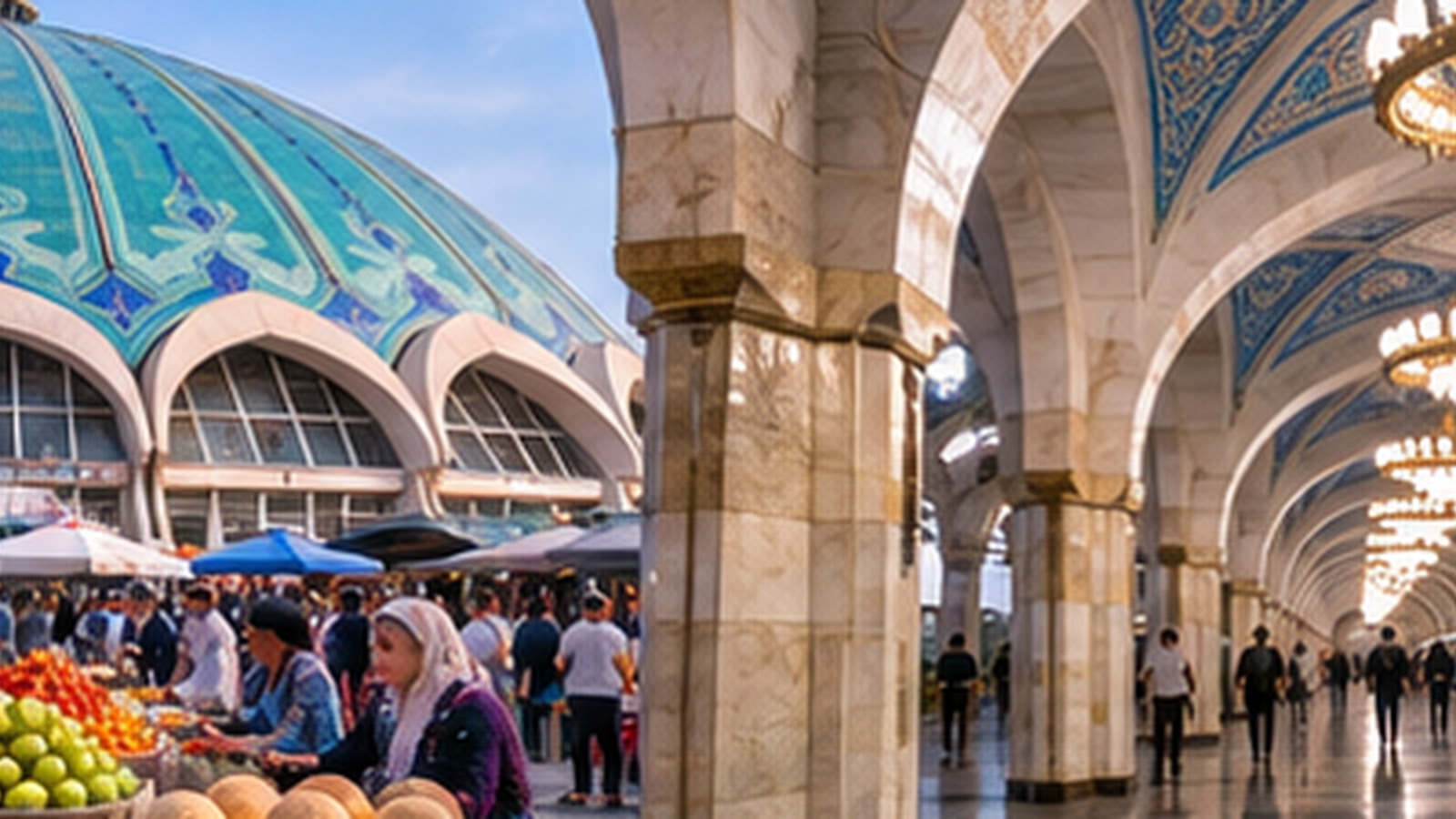
A vast domed market of spices, bread, fruit and crafts — a feast for the senses.
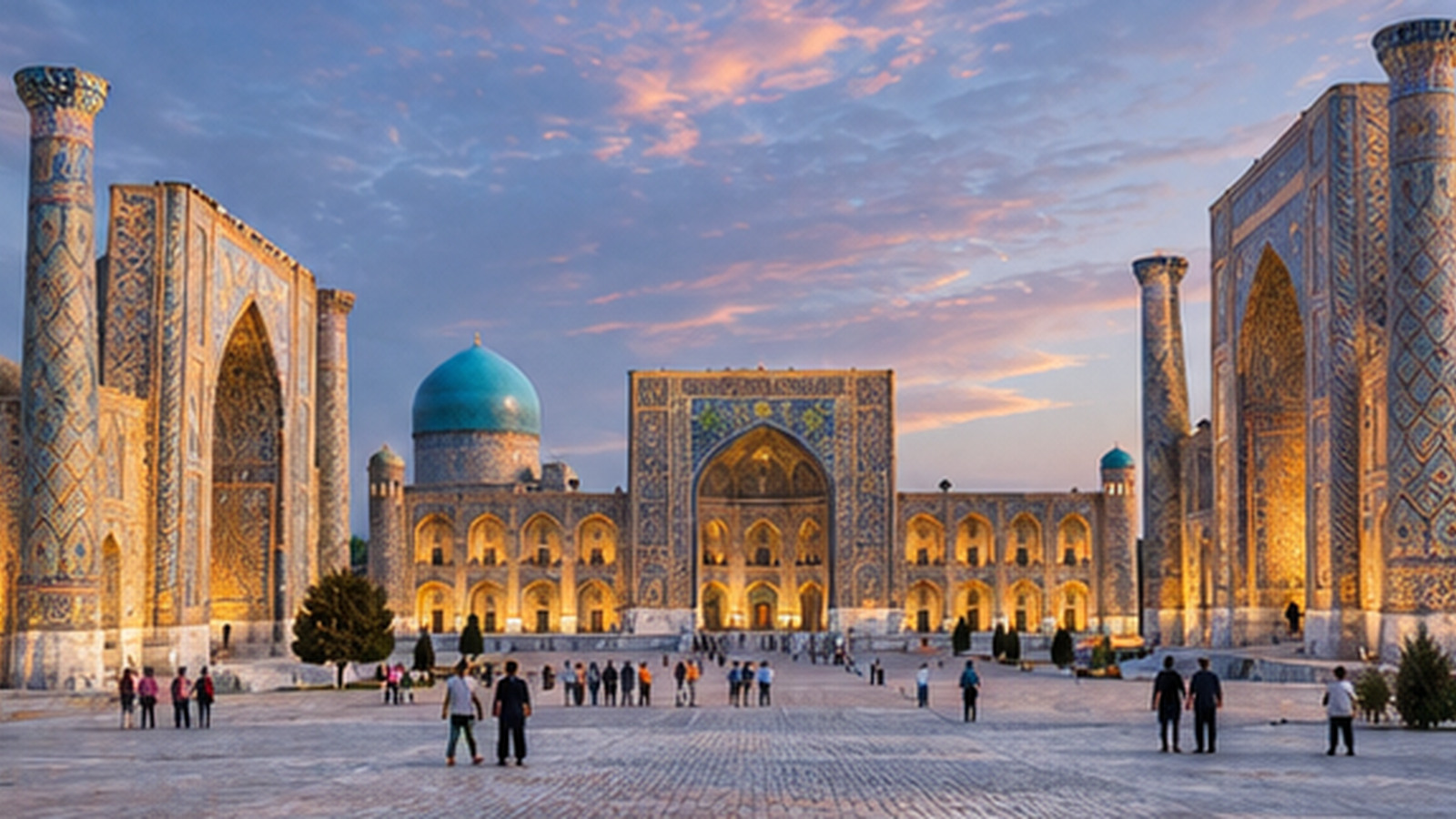
Samarkand, Bukhara and Khiva’s monuments.
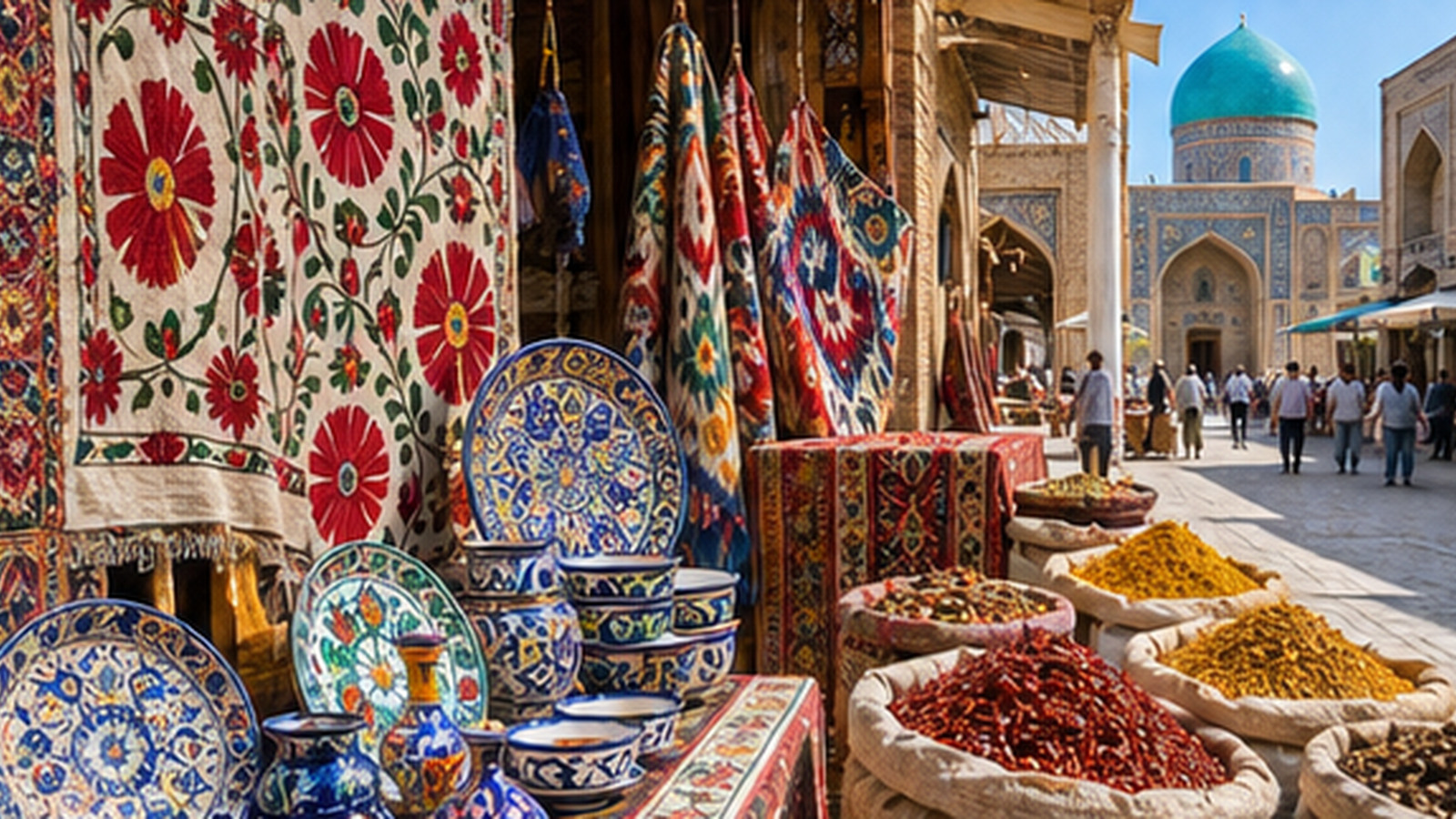
Silk, ceramics, carpets and spice markets.
Blue-domed madrasas, minarets and mausoleums.
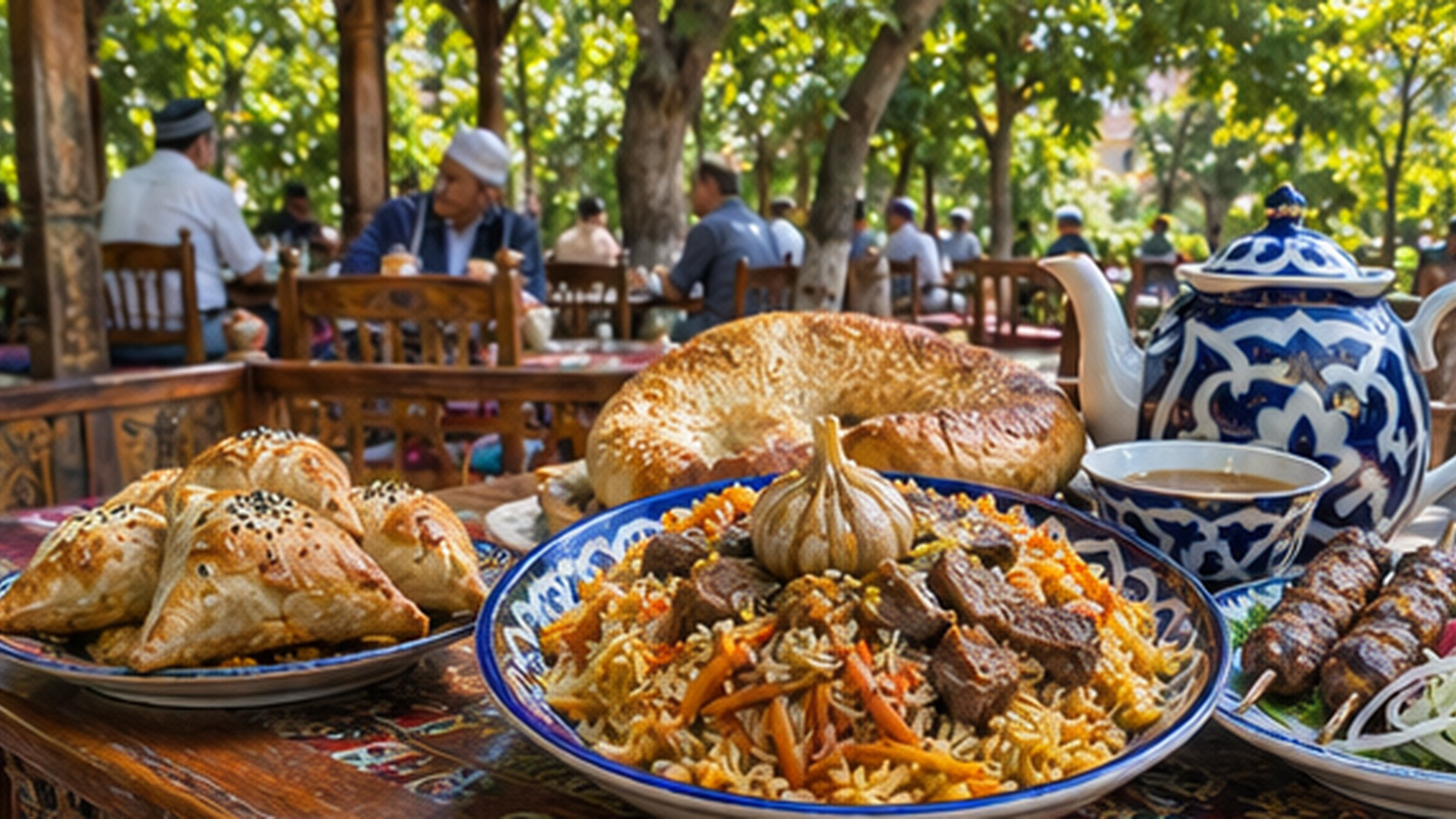
Plov, kebabs, bread and tea houses.
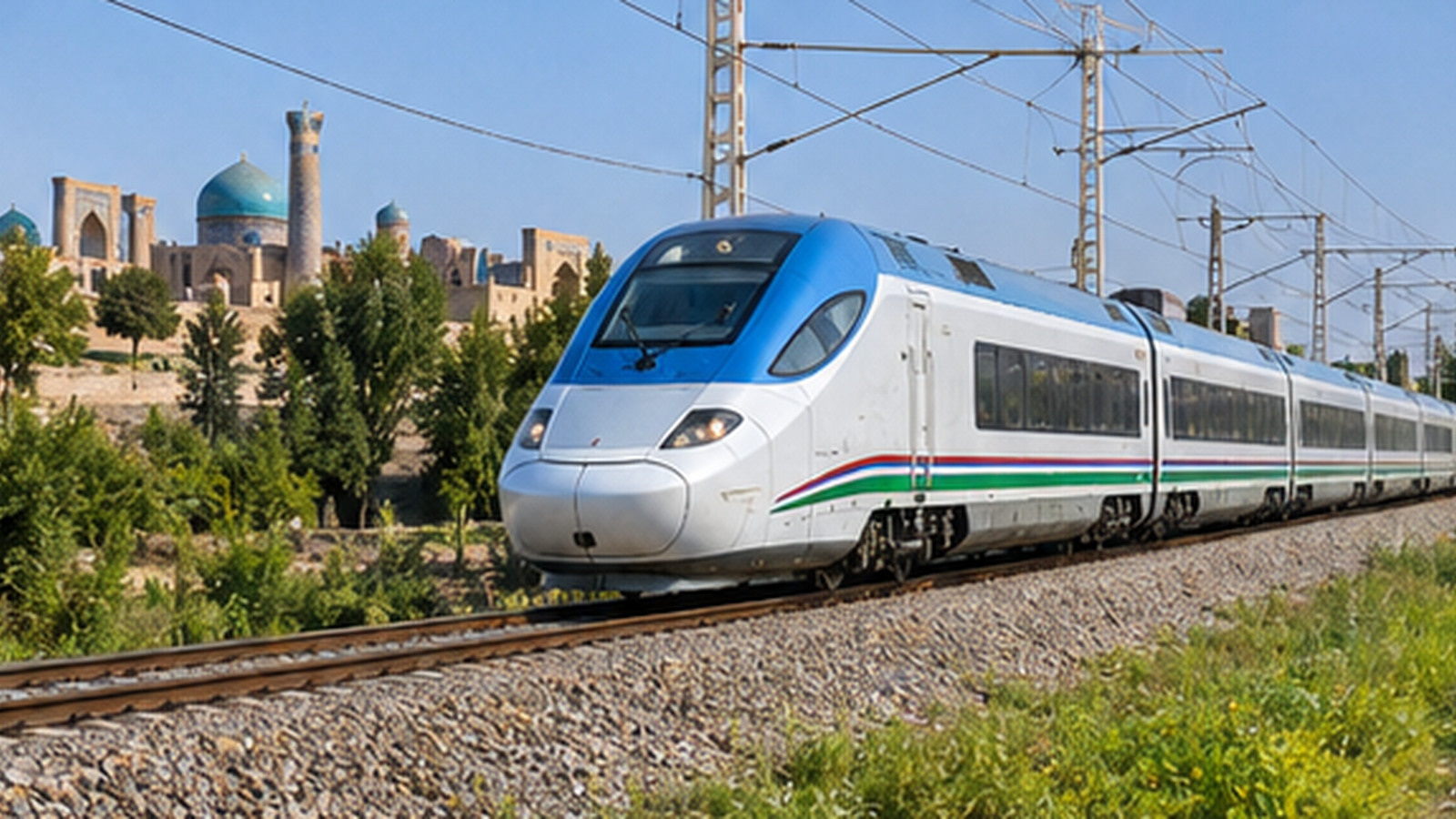
The Afrosiyob high-speed train between the cities.
Book tours & activities through our travel partners — see options. Bluebird Next may earn a commission from partner bookings at no extra cost to you (Affiliate Disclosure).
Uzbekistan is very affordable — cheap food, atmospheric guesthouses and a cheap fast train — with flights the main cost. Indicative per-person figures for a 6-day trip in 2026 (prices checked Nov 2026).
| Item | Typical cost (per person) |
|---|---|
| Return flights (ex-India, direct) | ₹22,000 – ₹42,000 |
| E-visa | ₹1,500 – ₹3,000 |
| Hotels/guesthouses (per night, twin) | ₹2,500 – ₹6,000 |
| Fast train (Afrosiyob, per leg) | ₹800 – ₹2,500 |
| Guides & entries | ₹1,000 – ₹3,000 / day |
| Food & local transport | ₹900 – ₹1,800 / day |
| From | Typical return airfare |
|---|---|
| Delhi | ₹22,000 – ₹40,000 (direct, ~2.5–3 hrs) |
| Mumbai | ₹26,000 – ₹44,000 (direct/1-stop) |
| Amritsar/Lucknow | ₹24,000 – ₹40,000 (direct seasonal) |
| Bengaluru | ₹28,000 – ₹46,000 (1-stop) |
| Kolkata | ₹26,000 – ₹44,000 (1-stop) |
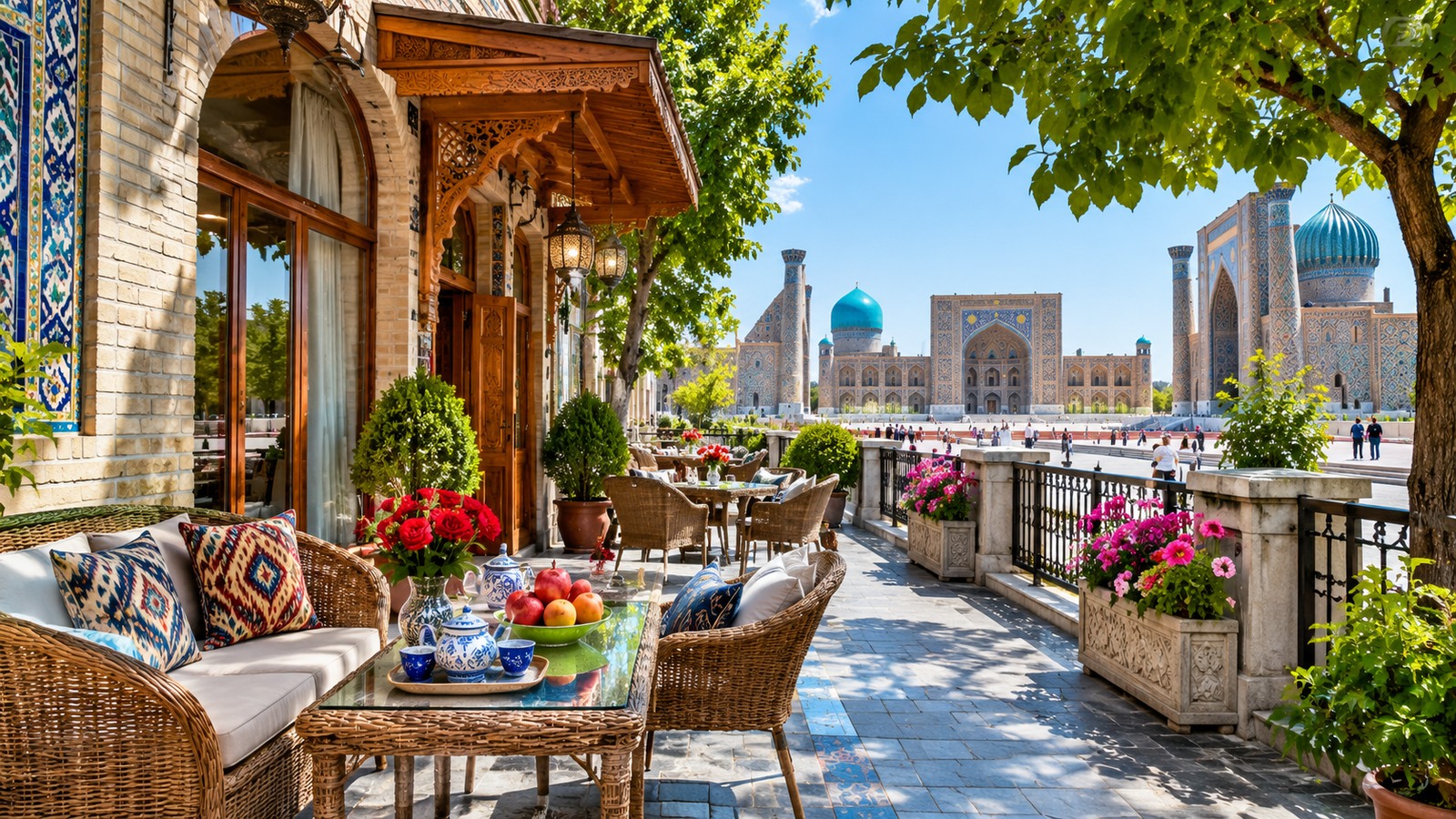
Walkable to the monuments; boutique and mid-range hotels.
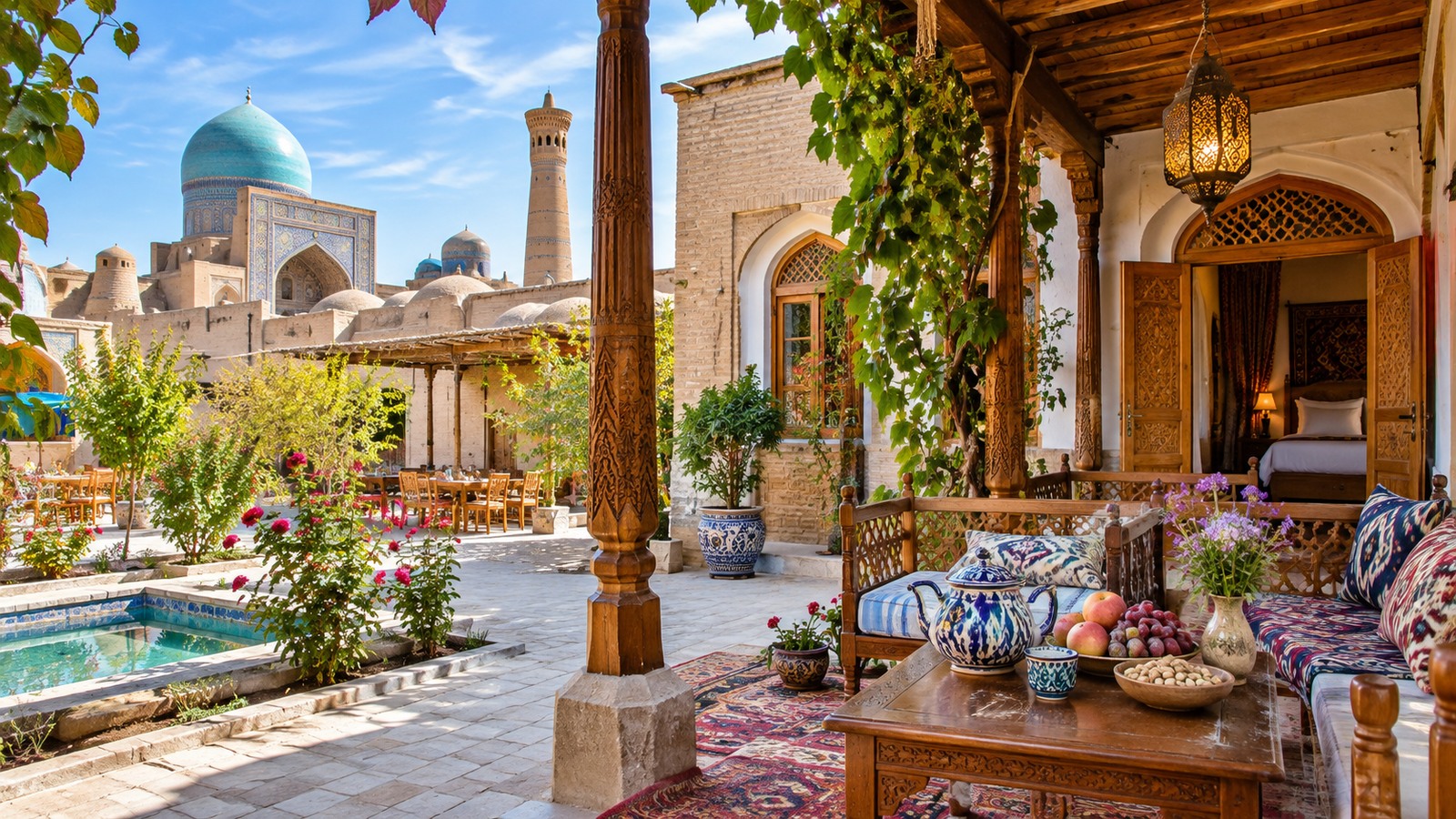
Atmospheric restored-madrasa guesthouses near the domes.
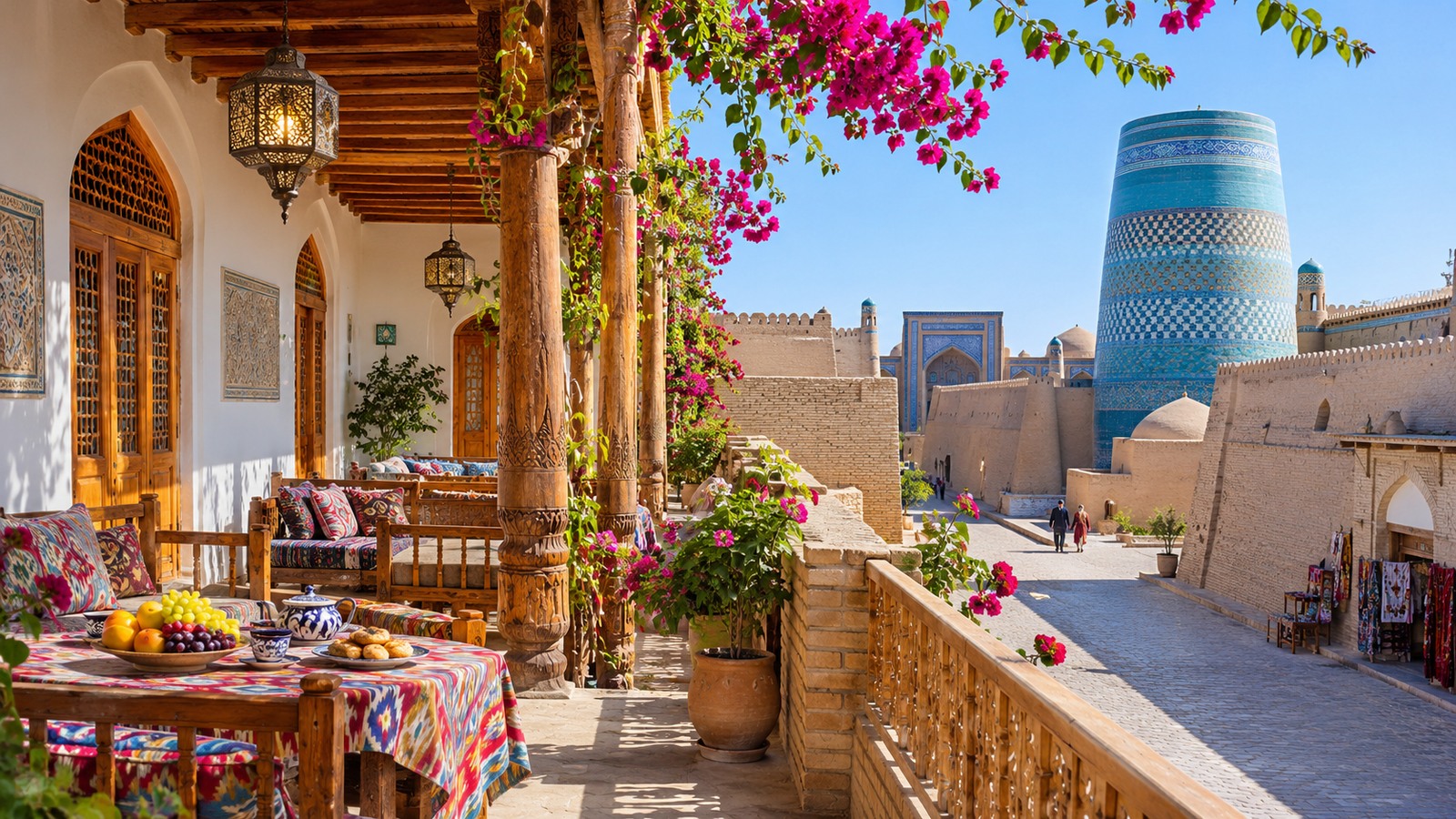
Stay within the walls for a magical early-morning old city.
Uzbek food is hearty — plov (rice pilaf), shashlik kebabs, samsa, lagman noodles, fresh non bread, salads and endless green tea — with a shared Central-Asian/Indo-Persian flavour.
Vegetarians can manage with bread, salads, vegetable samsa, noodle and potato dishes, dairy and fruit, though many staples are meat-based — plan ahead and ask. Jain travellers should seek vegetable dishes and specify no onion/garlic; carry some snacks for long days.
Tashkent and Samarkand have a few Indian restaurants, and the shared Indo-Persian heritage makes some flavours familiar — useful for vegetarians and Jain diets on the road.
Apply for the e-visa on the official government portal before travel (commonly a 30-day tourist visa); it is quick and inexpensive. A broad visa-free facility is not yet guaranteed for all Indians, so plan on the e-visa. Carry a printout, a passport valid 6+ months and hotel bookings.
The som runs to large numbers; carry a card plus som cash. International cards work in bigger hotels and some restaurants but not everywhere — keep cash for bazaars, taxis and small shops. UPI is not accepted; use ATMs or official exchanges in cities.
The Afrosiyob high-speed train links Tashkent, Samarkand and Bukhara comfortably and cheaply — book seats a few days ahead, especially in peak season. Khiva is reached by flight or an overnight train.
Hotels register your stay automatically (keep the slips); guesthouses do the same. A guide greatly enriches the Silk Road monuments. Dress modestly at mosques and mausoleums (cover shoulders; a scarf helps).
Buy a Beeline/Ucell SIM on arrival (passport needed) or use an eSIM. Uzbekistan uses 220V with the European Type C/F round-pin plug, so most Indian chargers fit; carry a universal adapter.
The comfortable, cheap way to link Tashkent, Samarkand and Bukhara — book ahead.
Reach distant Khiva by a short flight or an overnight train.
Yandex Go taxis, the Tashkent metro and cheap shared taxis.
Uzbekistan is welcoming, hospitable and very safe for tourists, including families and solo women travellers, with low crime and friendly locals. Take normal care with valuables, carry cash sensibly, use registered taxis (Yandex Go), dress modestly at religious sites, keep registration slips, and carry travel insurance for medical care.
❌ Myth: Central Asia is hard to travel.
✅ Fact: Uzbekistan is easy — a short direct flight, a simple e-visa, a comfortable fast train and warm hospitality make it one of the region’s most accessible trips.
❌ Myth: There’s not much to see.
✅ Fact: Samarkand’s Registan, Bukhara’s old city and walled Khiva are among the world’s most spectacular historic sights, filling a rich 6–8 day trip.
❌ Myth: It’s expensive.
✅ Fact: Uzbekistan is very affordable — cheap food, guesthouses and trains; only flights cost much, and they are short and reasonable.
❌ Myth: Vegetarians will starve.
✅ Fact: Staples lean meaty, but bread, salads, vegetable samsa, noodle and potato dishes and fruit work; Jains can request no onion/garlic and find Indian restaurants in Tashkent.
❌ Myth: You need to drive long distances.
✅ Fact: The Afrosiyob fast train links the main cities quickly and cheaply — no long road journeys needed.
Yes — Indians need a visa, most easily the official e-visa (commonly a 30-day tourist visa) applied for online before travel. A broad visa-free facility is not yet guaranteed for all Indians, so plan on the e-visa. Carry a passport valid 6+ months, a return ticket and hotel bookings.
Apply on the official government e-visa portal, pay online and receive approval by email in a few days; carry a printout. It is quick and inexpensive, and uses only the official site.
A 6-day trip is roughly ₹55,000–₹95,000 per person including flights, and about ₹1,10,000–₹1,80,000 for a couple. Flights are the main cost; food, guesthouses and the fast train are cheap.
Direct flights from Delhi to Tashkent take about 2.5–3 hours, making it one of the quicker Central Asian escapes; one-stop routes serve other cities.
Six days cover Tashkent, Samarkand and Bukhara via the fast train; eight days let you add the walled desert city of Khiva.
April–June and September–October are best — mild, clear days ideal for the Silk Road cities. Summer is very hot in the desert cities; winter is cold, quiet and atmospheric.
With planning — staples like plov and kebabs are meat-based, but bread, salads, vegetable samsa, noodle and potato dishes and fruit work, and Tashkent has Indian restaurants. Jains should request no onion/garlic and carry snacks.
The Afrosiyob high-speed train links Tashkent, Samarkand and Bukhara comfortably and cheaply — book a few days ahead. Khiva is reached by a short flight or an overnight train.
The som is the local currency and runs to large numbers; carry a card plus som cash. International cards work in bigger hotels and some restaurants but not everywhere, so keep cash for bazaars and taxis. UPI is not accepted.
Yes — it is welcoming, hospitable and very safe, with low crime. Take normal care with valuables, use registered taxis like Yandex Go, dress modestly at religious sites, and carry travel insurance.
Recommended — it covers medical care and trip delays for a small cost, giving peace of mind on a longer Silk Road trip.
Yes — it is safe, hospitable and surprisingly easy, with a short direct flight, a simple e-visa, a comfortable fast train and a shared Indo-Persian heritage (it is Babur’s homeland). The Silk Road cities are compact and walkable, making it a rewarding first trip to Central Asia.
Sources: Uzbekistan Travel (official tourism) · Uzbekistan e-Visa (official portal)
A licensed team that has guided thousands of Indians to their visas and admissions.
 Jitender SinghFounder & Managing Director
 Vikram SinghHead – Quality & Operations
 SanjayHead – Tourist Visa Operations
 TejaswaniHead – Counselling Team
 MahimaHead – Visa Filing & Processing
 Pratigya DuttaHead – Student Visa Processing
Free, no-pressure guidance from a real counsellor who handles your case end to end — from documents to decision.